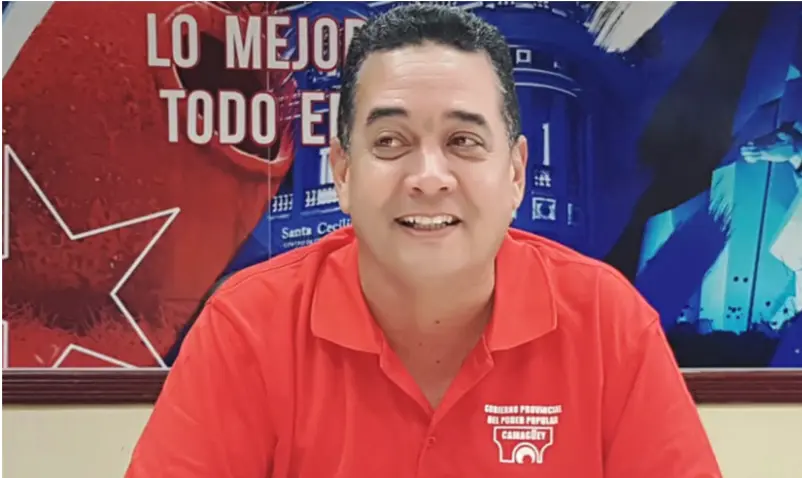
The deposed governor of Camaguey, Cuba, Jorge Enrique Sutil Sarabia
By Amado Viera
HAVANA TIMES – On Saturday, November 14, during the debut of a radio program he will appear on every two weeks to “establish direct communication with the people,” Walter Simon Noris, the Communist Party’s first secretary in Camagüey, was so intent on focusing on his achievements at the helm of the province that he ended up with almost 20 minutes of airtime to spare.
He could have used precisely that time to reveal the “errors incompatible with his responsibilities” that had cost Governor Jorge Enrique Sutil Sarabia his position four days earlier. The accusations against the latter were so serious that the official announcement of his dismissal described it merely as a “resignation at his own request,” rather than softening it with terms such as “release from duties” or “assignment to other responsibilities,” which Cuban bureaucratic language typically uses in cases involving disgraced officials who have not been implicated in corruption or other similarly serious offenses.
Sutil had been “elected” governor of Camagüey in May 2023. At the time, the position of first secretary of the Communist Party was held by Federico Hernandez a party official from Granma province who would be dismissed two years later so that his involvement in a beef-trafficking network extending all the way to Havana could be investigated. The last information about him, several months later, was that he was in the capital awaiting legal proceedings in which several farm owners, private business owners, and a sizable group of Agriculture Ministry officials would also stand trial.
To get an idea of the magnitude of Sutil’s blunder, it is enough to note that, even under those circumstances, Hernandez’s removal had been described in official statements as a “release from duties as part of a renewal process.” That was far more lenient language than the wording used now.
“And What Do You Expect Me to Do?”
Sutil had arrived at Quinta San Zenon—the seat of the Camagüey provincial government—to replace Yoseily Gongora Lopez, a young politician who had taken advantage of her position to undergo a marathon series of cosmetic surgeries in Havana between 2021 and 2022. Thanks to those procedures, she managed to lose nearly 50 kilograms (110 pounds) and overcome her obesity. The problem was that she did so at the most critical point of the pandemic, when the province was on the verge of collapse. Gongora not only neglected the crisis but also clung to her office, aware that the preferential treatment she was receiving was due to her status as governor.
“If you ask me, it wasn’t an improvised decision but one based on pure calculation. Faced with a choice between improving her health and sacrificing herself to fulfill the responsibilities for which she had been elected, she chose the former. She must have known it would cost her career as a government official. That’s why, when she returned to lead the province, she didn’t make the slightest effort. You could see her at meetings and during official visits and realize she was there simply to go through the motions,” explained an official with the Camagüey provincial government.
Despite the controversies surrounding her, when Gongora was removed from office, she received “recognition for the effort, work, and dedication devoted to government service.” She was also appointed to a comfortable administrative position at Artex, a state-owned company that markets cultural performances and products.
Sutil’s final weeks as governor are reminiscent of that period under his predecessor. In fact, the only photograph published by the state press of the meeting at which he was dismissed shows him sitting in the second row of the officials presiding over the meeting, staring blankly into space and almost leaning against the wall. It was much the same way Gongora could sometimes be seen during her final official appearances.
There has been considerable speculation on social media about the reasons behind Sutil’s dismissal. More than one online content creator has claimed credit for bringing it about through alleged revelations concerning fuel trafficking, influence peddling, and other economic crimes. But the truth is that no one has been able to provide evidence beyond the testimony of sources who requested anonymity. Not a single incriminating document has come to light.
What is beyond dispute is that during the weeks preceding the former official’s “resignation”—when he had already been effectively excluded from major decision-making—some changes did occur in the way the province was run.
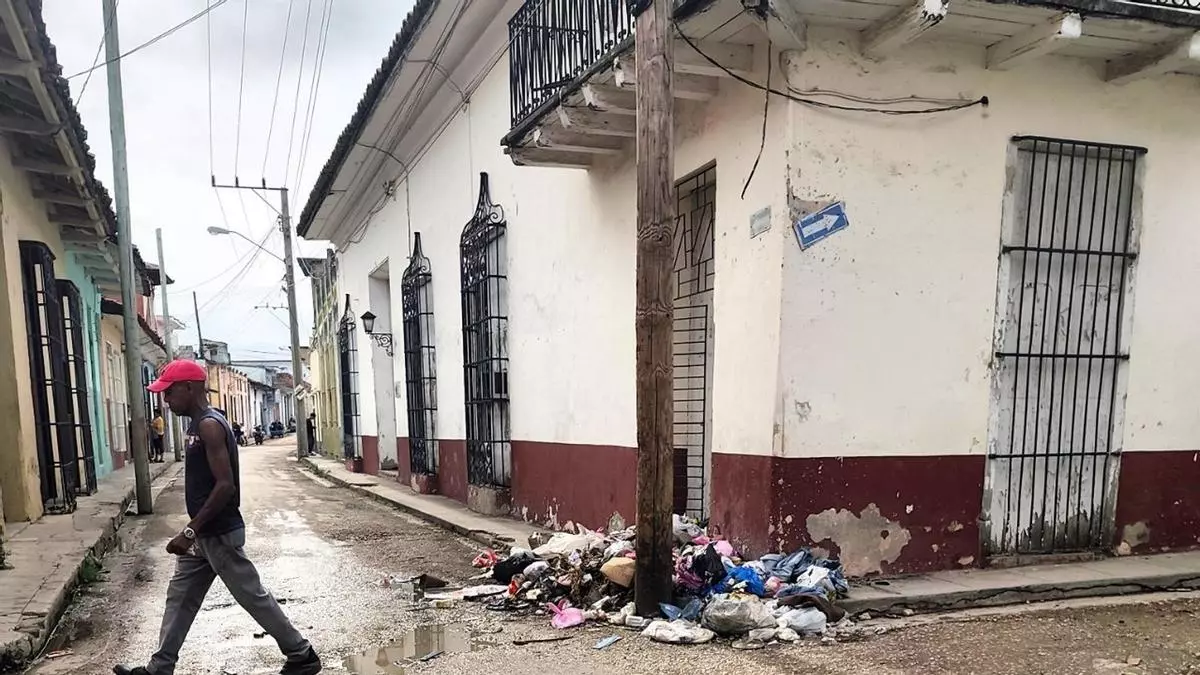
For example, the previous weekend, a massive cleanup campaign was launched in the city of Camagüey. The fuel needed to carry it out, which had been unavailable for weeks, suddenly appeared. State-operated minibuses also resumed service, transporting thousands of people daily at fares far lower than those charged by private operators. And several people connected to the Ministry of Public Health confirmed that the fleet of electric vehicles delivered to the province just a few months earlier to support healthcare services had been reorganized. These were the same vehicles that could often be found just about anywhere except at hospitals.
“It would be unfair to accuse Sutil of being directly responsible for so many things going wrong, but it’s equally true that he allowed them to happen. Even when problems were reported directly to him or were so obvious that there was no way to ignore them. I remember that about a year ago, a highly respected doctor approached him to denounce the shady dealings surrounding fuel sales in dollars. One specific example was the Sputnik gas station, where people who controlled places in line charged customers for their turns, and the regulations limiting the number of liters each customer could purchase were blatantly violated. ‘And what do you expect me to do?’ was Sutil’s response. That’s no way to run a province,” the official interviewed pointed out.
The former governor was not even capable of making simple decisions that would have been widely applauded by his fellow citizens, such as restoring order to Agramonte Park and Republica Street, the two busiest public spaces in the provincial capital, now overrun by skateboarders, beggars, and vehicles moving about as they please.
By the time rumors of his possible dismissal began to spread, Sutil had virtually no supporters left. In three years, he had exhausted the political capital he brought to office. Faced with that obvious reality, the government’s efforts have focused on preventing the details of his downfall from becoming public. There is little more they can hope to accomplish.
Read more from Cuba here on Havana Times.