- by croatiaweek
- June 25, 2026
-
in
News
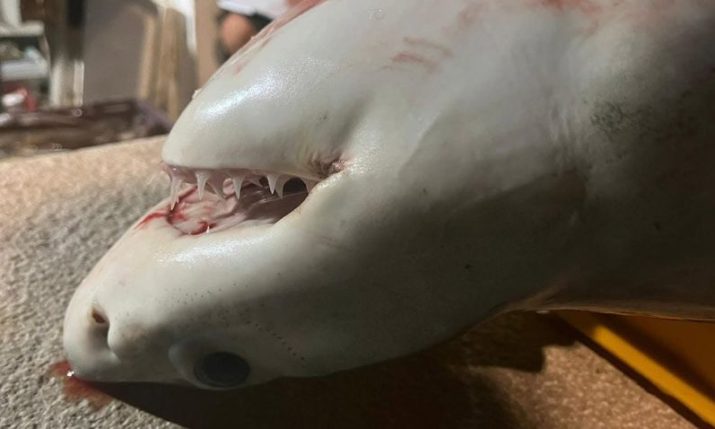
(Photo credit: Institut za oceanografiju i ribarstvo/Facebook)
A new scientific response has been published following questions over the identification of a young shark caught in the Croatian part of the Adriatic Sea near Rogoznica in 2023.
The Institute of Oceanography and Fisheries in Split announced that the response has appeared in the international journal Journal of Marine Science and Engineering.
The original scientific work, which involved Croatian researchers, identified the animal as a juvenile great white shark (Carcharodon carcharias).
Great white shark encounters in the Adriatic Sea are considered extremely rare.
Following publication of the original research, a later scientific comment challenged the identification of the shark.
The Institute said that critical, evidence-based comments are an important part of scientific discussion, as research findings must remain open to expert review and debate.
In response, Croatian scientists worked with an international team of specialists in great white sharks and related species from almost every continent. The group carried out a detailed review of the available information to assess the arguments raised and provide further explanation of the identification.
The Institute noted that photographs and reports from members of the public can be valuable sources of information in the Adriatic, particularly in cases involving rare marine species.
However, such records require careful professional verification before they can be used in scientific research.
When analysed systematically and critically, public observations can contribute to a better understanding, monitoring and protection of rare marine species, the Institute said.
The response to the comment has now been published in the Journal of Marine Science and Engineering, adding further scientific discussion to one of the Adriatic’s rare shark records.
The authors conclude that the shark is consistent with a juvenile great white, citing its pectoral-fin markings, dorsal-fin shape, lack of a white rear dorsal-fin tip and the overall combination of visible characteristics.
You can read the full response here.