Synopsis: Ouk Serei Sopheak says successful succession also requires senior leaders to share knowledge, resources and responsibilities, warning that entrenched positions, materialism and declining social morality could hinder Cambodia’s long-term development.
Cambodia’s next generation of leaders must combine strong academic knowledge, language skills, practical experience and artificial intelligence (AI) literacy with sound moral values, while the older generation must create genuine opportunities for leadership transition, a governance expert said.
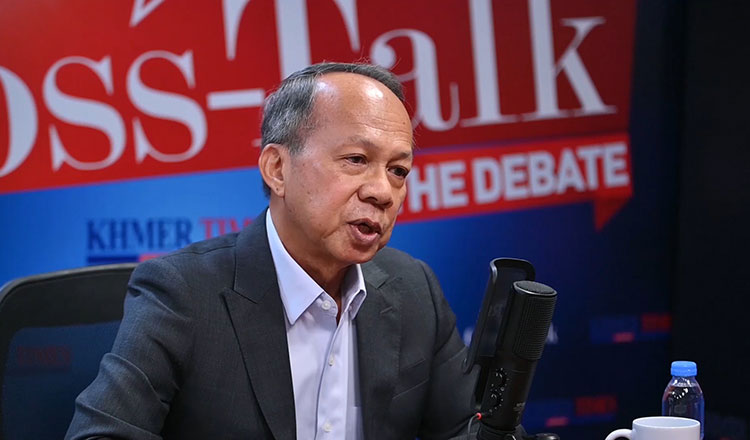
In an interview with Khmer Times Cross-Talk, Ouk Serei Sopheak said young people must prepare themselves to lead national institutions in an increasingly competitive world, but successful succession also depends on senior leaders’ willingness to pass on responsibilities and share their experience, knowledge and resources.
He said education, language proficiency, practical experience and AI literacy were essential foundations for future leaders, while warning that declining social morality, materialism and a culture of ostentation could undermine Cambodia’s development.
“Whether we like it or not, it is a natural law that the younger generation must eventually take the baton from the older generation,” he said.
However, he said young people cannot prepare for leadership alone. The older generation must also provide opportunities and create an environment in which emerging leaders can develop and take on greater responsibilities.
“If we keep saying that we are prepared to facilitate a leadership transition but fail to do so in practice, it simply will not work. Both sides must be ready,” he said.
He said some officials approaching retirement continue to hold on to their positions, limiting opportunities for younger people to advance.
“On paper, everything may appear to be part of a planned transition, but in practice, no transition takes place because people remain firmly entrenched in their positions,” he said.
While leaders at the highest levels of national institutions have begun implementing a transition, he said the process had not yet reached lower levels, where the status quo largely persisted.
Serei Sopheak said young people must first understand the institutions they may eventually be called upon to lead.
The term “national institution” is often interpreted as referring exclusively to the government, but he said it also encompasses legislative institutions, including the National Assembly and the Senate, as well as the judiciary.
He said different parts of the judicial system have different institutional arrangements. While the prosecution service and Ministry of Justice are part of the Royal Government, judges belong to a separate institutional framework overseen by the Supreme Council of the Magistracy, which is presided over by the King.
A clear understanding of these distinctions would help young people better appreciate the roles and responsibilities of national institutions, he said.
National institutions operate within Cambodia’s legal framework, including the Constitution, laws, decrees, codes and proclamations. International institutions, by contrast, operate under their own governing frameworks, which may be established through agreements between countries or the rules of international organisations.
He said this institutional knowledge was particularly important as Cambodia navigates an increasingly competitive international environment.
Referring to the Cambodia-Thailand conflict, he said young people must understand geopolitical developments and the challenges facing smaller countries.
“To lead national institutions and our nation, one must, above all, possess knowledge,” he said.
Serei Sopheak said young people should pursue the highest level of education possible and take advantage of scholarships that allow them to study abroad.
He said Cambodia had benefited from international support for education in the decades since the war, providing students with opportunities to gain knowledge and experience overseas.
However, he said such opportunities might become less readily available as the country develops, urging young people to seize them while they can.
Studying abroad offers more than academic qualifications, he said. It also exposes students to different cultures, international communities and new perspectives, helping them develop the maturity required of future leaders.
He added that the growing language proficiency of Cambodian youth, noting that online platforms such as YouTube, affordable internet access and widespread smartphone use have made language learning more accessible.
Beyond formal education, he said students should volunteer and undertake internships, even when these positions provide little or no salary.
Serei Sopheak said AI was another critical area in which young people must develop their capabilities.
“AI is no ordinary matter; it will be a decisive factor in determining people’s ability to succeed, prosper and thrive in life. Those who fail to master it will inevitably fall behind,” he said.
He said that without AI skills, Cambodia could struggle to compete in international markets and attract investment in technology-intensive industries.
Despite his confidence in progress on education, languages and AI, Serei Sopheak said his greatest concern was social morality.
“I am deeply concerned about this fourth factor—morality—because I believe there has been a serious decline in this area. Millions of young people still lack the necessary moral grounding to contribute effectively to the nation,” he said.
He said materialism, extravagance and the pursuit of social status were widening the gap between rich and poor.
Serei Sopheak said senior officials and wealthy individuals should promote modesty and responsible spending, warning that lavish lifestyles and social pressure could encourage improper financial practices. He cited leaders who demonstrate humility and engage directly with citizens as positive examples, calling for these values to be taught in schools and pagodas.
He also said political culture and restricted professional opportunities continued to hinder knowledge-sharing and leadership succession within state institutions.
While digital platforms had expanded knowledge-sharing among young Cambodians, he stressed that preparing future leaders required practical experience, international awareness, strong moral values and genuine opportunities for younger generations to advance.
Related Posts
-
May 22, 2026
-
November 27, 2025
-
August 6, 2026
-
August 11, 2026