Synopsis: Hang Chuon Naron calls for enhanced analytical expertise to boost evidence-based decisions as Australia and The Asia Foundation stress long-term institutional funding.
Cambodia needs stronger research and data-analysis skills to improve policymaking, Education Minister Hang Chuon Naron said, pointing out that the nation has considerable statistical data but lacks sufficient expertise to analyse it.
Speaking at the National Policy Forum 2026 yesterday in Phnom Penh, Naron said investing in human resources and critical thinking matters as the country prepares for its next stage of development.
“We have a lot of statistical data produced by the Ministry of Planning, but we don’t have enough people to analyse that data,” he said.
Naron said developing countries face challenges collecting information, analysing evidence, developing policies and establishing implementing institutions.
Researchers must strengthen statistical and analytical skills while keeping findings objective and free from political interference, he added.
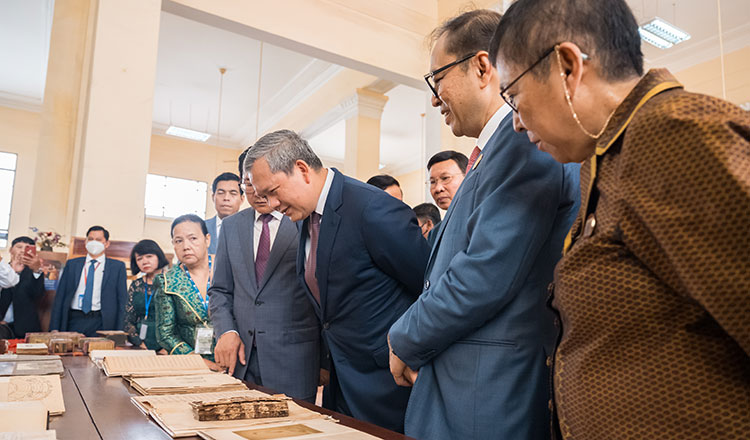
The forum, convened by Australia and The Asia Foundation under the Ponlok Chomnes II programme, brought together more than 100 participants from government institutions, universities, research organisations, civil society, the private sector and development partners.
Held under the theme “Cambodia’s Knowledge Future: Sustaining Evidence, Talent and the Knowledge – Policy Partnership Toward 2030,” the event focused on strengthening evidence-informed policymaking as international development financing changes.
Naron said academic research alone is insufficient to produce successful policies and that findings must combine with practical experience.
He said close cooperation between researchers, government institutions and policy specialists ensures findings translate into workable solutions.
Naron warned against over dependence on artificial intelligence.
“You can use AI to learn very fast if you use it to learn. But if you use AI to think for yourself, gradually you will lose the ability and you will become dependent on AI,” he said.
He urged students and researchers to use AI as a learning tool rather than a substitute for critical thinking.
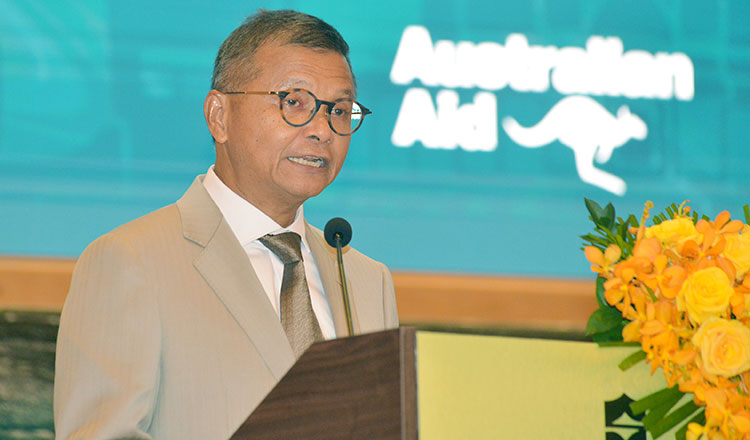
Australian Ambassador to Cambodia Derek Yip said developing a sustainable knowledge sector is important as the Australian-funded Ponlok Chomnes programme approaches its conclusion in mid-2027.
“Strong research and knowledge capability needs to be a national priority — not a priority that is only met when donors fund it,” he said.
Ambassador Yip said Australia has supported Cambodia’s research sector since 2019, including strengthening institutions, mentoring researchers and building connections with policymakers.
He said greater inclusion of women, people with disabilities, young researchers and people outside Phnom Penh ensures research reflects community needs.
Cambodian ministries should commission more research from local institutions and use local researchers in policy evaluation, he said
He added that Australia will continue supporting evidence-informed policymaking through broader development partnerships after the programme concludes.
Asia Foundation country representative Meloney Lindberg said strengthening domestic institutions is important to sustain progress in the research sector.
She said the Cambodia Research Network, the National Research Foundation and the National Institute of Statistics help build a connected national research system.
Lindberg said the forum will explore priorities for a Cambodia Knowledge Sector Agenda toward 2030 and consider mechanisms to strengthen cooperation.
“The Asia Foundation’s role is to convene this conversation, not to decide the outcome. The answers belong to Cambodia’s institutions,” she said.
The discussions come as Cambodia prepares to graduate from least developed country status, with changing development financing placing greater importance on domestic research capacity and sustainable institutions.
The National Policy Forum is part of Ponlok Chomnes II: Data and Dialogue for Development in Cambodia, funded by the Australian government and implemented by The Asia Foundation.
With the programme concluding in mid-2027, the forum focused on sustaining research partnerships, institutional capacity and evidence-informed policymaking.
Related Posts
-
August 6, 2026
-
October 1, 2026
-
May 29, 2026
-
October 5, 2026