- Nepal’s government is allowing hydropower development inside protected areas, despite a January 2025 Supreme Court ruling that invalidates the legal provision for this activity.
- With the court’s full verdict still unpublished, the government has interpreted the ruling and continued to issue land-use and environmental permits.
- Mongabay’s investigation finds that 10 private hydropower projects, totaling more than 360 MW, have received permits since January 2026, affecting about 85 hectares across the Annapurna, Gaurishankar and Kanchanjunga protected areas, and the buffer zones of Makalu Barun and Langtang national parks.
- Officials say they are relying on 2023 guidelines and cabinet decisions covering projects licensed before July 2024, while the country’s wildlife department has continued approving feasibility studies, environmental assessments and transmission lines in protected-area buffer zones.
See All Key Ideas
KATHMANDU – Nepal’s government has allowed several private hydropower producers to develop projects inside protected areas and the buffer zones surrounding them, contravening a Supreme Court order, a Mongabay investigation reveals.
In January 2025, the Supreme Court declared that a 2024 amendment to a key conservation law opening up protected areas to commercial projects was “invalid” as it was against the constitutionally defined state policy of environment-friendly development and the principle of intergenerational equity.
As the court is yet to publish the full text of the verdict, the government has interpreted the law and issued permits for development, the investigation aided by a right to information request finds.
“To issue permits [for hydropower projects] inside protected areas is a misinterpretation of the court verdict,” said senior lawyer Prakash Mani Sharma Bhusal, one of the petitioners who took the government to court on July 28, 2024, over its decision to open protected areas to infrastructure such as hydropower plants and hotels.
Kaligandaki hydropower dam in Nepal. Image by Krish Dulal via Wikimedia Commons (CC BY-SA 3.0).
The court’s 2025 verdict came in response to a petition filed by lawyers led by Dil Raj Khanal, who argued that the 2024 amendment to the parks and conservation act, which came into effect on July 8, 2024, violated Article 30 of the Constitution, which guarantees the right to a clean and healthy environment, and contradicted Nepal’s obligations under international treaties such as the Convention on Biological Diversity.
Yet the Supreme Court has still not issued the full text of its landmark ruling. In that ongoing legislative gap, the government has issued land-use permits for 10 private projects in key habitats of Himalayan freshwater species and animals, such as snow leopards (Panthera uncia), red pandas (Ailurus fulgens) and pangolin species, raising concerns about the future of Nepal’s national parks and conservation areas.
A hydropower project along the Bhote Koshi River in Nepal. Image by Jonas Gratzer for Mongabay.
Nepal is home to 13 national parks, a wildlife reserve, a hunting reserve, six conservation areas and 13 buffer zones. These extend from the lowland Terai Arc to the high Himalayas, covering nearly a quarter of the country’s total land area, according to the Department of National Parks and Wildlife Conservation.
Ten projects, three protected areas
The permits break the silence maintained by the government for a year following the court verdict. The government, under then interim Prime Minister Sushila Karki, issued fresh permissions to develop in January 2026 and the trend continued under new Prime Minister Balendra Shah, according to government data reviewed by Mongabay. The 10 newly permitted projects, with a combined installed capacity of more than 360 MW, use a total of about 85 hectares (210 acres) of forest land in three protected areas, Kanchanjangha, Gaurishankar and Annapurna, and the buffer zones of Makalu Barun and Langtang national parks.
Protected areas of Nepal. Chhayanath National Park, the country’s newest protected area, not depicted in the map. Image not in scale. Image courtesy of DNPWC.
“We have issued permissions based on the prevailing laws before the amendment came into effect,” Buddhi Sagar Paudel, chief of the Department of National Parks and Wildlife Conservation, told Mongabay. Paudel is mainly referring to the Guidelines to Provide Lands for Infrastructure Development Within the Protected Areas, issued in 2023. The petitioners had also challenged the same guideline as part of their 2024 case, but the Supreme Court’s brief 2025 verdict did not address it.
An official at the Department of National Parks and Wildlife Conservation says it is caught between corporate interests and a lack of clarity on infrastructure projects in protected areas. They didn’t want to speak on the record, fearing retribution, and admit that the department can’t make important decisions about national parks and protected areas until the verdict and its legal explanation are available.
Approvals move ahead
The fate of a much larger group of hydropower projects is now uncertain, according to the industry. After the Supreme Court’s January 2025 ruling, the Independent Power Producers’ Association of Nepal (IPPAN) lobbied the previous governments, arguing that annulling the law affected the future of 242 hydropower projects with a combined capacity of about 17,000 MW.
The issuance of permits allowing the use of forest land in buffer zones of national parks and in protected areas for hydropower projects has been sped up since Shah became prime minister in March 2026. Officials say they have followed cabinet decisions word for word.
Separately, the department has issued permissions for Initial Environmental Examination (IEE) by two power plant operators, Isuwa Khola Peaking Run of River Cascade-2 hydropower Project and Isuwa Semi Storage Cascade-3 hydropower project, in the buffer zones of Makalu Barun National Park. Both projects include solar project components and were also licensed before the now invalidated law became effective in July 2024.
A red panda found in a forest in Nepal. Image courtesy of Red Panda Network.
The Department of National Parks and Wildlife Conservation says these decisions were also made according to cabinet decisions from November 2025, led by Former Interim Prime Minister Sushila Karki. However, the cabinet’s decision lacks clarity on the definition of protected areas, which legally includes only national parks, conservation areas and wildlife reserves, and not buffer zones. In practice, however, the buffer zone is also covered under protected areas, according to the department’s wildlife official who didn’t want to be named.
Since the court’s verdict, the wildlife department has also issued permissions for feasibility studies and IEEs to three separate transmission lines that pass through buffer zones of eastern Nepal’s Makalu Barun National Park. These transmission lines will evacuate power from the Upper Sankhuwa Khola Hydropower Project, Chhujung Khola Hydropower Project and Bakan Khola Hydropower Project.
Permission for a feasibility study has also been issued for a transmission line in the buffer zone of Langtang National Park to supply power to the Super Melamchi Hydropower Project. Two other permits for feasibility studies and brief environmental studies have been issued for two transmission lines that pass through Annapurna Conservation Area to supply power to the Chinikhola Hydropower Project.
Full text still uncertain
While the government issues permissions for environmental impact assessments and feasibility studies, it remains uncertain when the full text of the Supreme Court’s verdict will be endorsed.
A constitutional lawyer who does not want to be quoted says the full text may never be published while government officials say the issue remains unclear without it. Officials at the Supreme Court have not provided a fixed date for the release of the full text.
According to court spokesperson Arjun Prasad Koirala, documents related to the case were burned during the Gen Z protest in September. The court later collected the documents and submitted them to a justice to write the verdict.
Former Energy Minister Kulman Ghising says the cabinet took a decision to allow some hydropower projects to use forest land in buffer zones of national parks and conservation areas.
Ghising argued that such permissions, under existing laws, are limited to projects licensed before the invalidated law came into force. He said they had no intention of violating the spirit of the court’s verdicts.
“Amid the delays in releasing the full text of the court verdicts, I made presentations about the projects twice during meetings of the Council of Ministers to push for those projects because independent power producers had suffered a lot due to uncertainties, though they did not categorically fall in the significant parts of the protected areas,” Ghising adds, saying that the court verdict is still important for the fate of several other pending hydropower projects.
Industry pressure mounts
The Independent Power Producers’ Association of Nepal (IPPAN) has welcomed the government’s permission to use forest land to build hydropower projects, but it is not satisfied, saying the “permission process is too slow and many other license-holders are not covered in the cabinet decision.”
Independent power producers are still lobbying for developers with permits issued after July 8, 2024, to be allowed to develop their projects. “We have also asked the government to issue permission to use the forest land for the project licenses issued after July 8, 2024, because they have already made investments and progress as well,” Ganesh Karki, former president of IPPAN told Mongabay three weeks ago before being appointed an advisor to Minister of Energy, Water Resources and Irrigation Biraj Bhakta Shrestha recently.
Nepal is pushing for the expansion of its electricity transmission lines through its hills and plains. Image by Abhaya Raj Joshi.
“If the government does not permit them, they will challenge the government at the court,” he adds. He added that as the government has already issued survey licenses to the projects, and this creates a legal expectation for developers that they will receive permits to build the projects.
However, there are also those who say there are no legal or financial consequences for the state when it comes to issuing licenses for surveys, as the license holders voluntarily carry out feasibility studies at their own risk. There is no public procurement involved and such licenses are generally issued on a first-come, first-served basis for five years.
“Awarding the license does not create any financial burden to the state and several hydropower developers’ licenses have been terminated after they failed to complete the requirements in the given time,” says Madhu Prasad Bhetwal, former director general of the Department of Electricity Development.
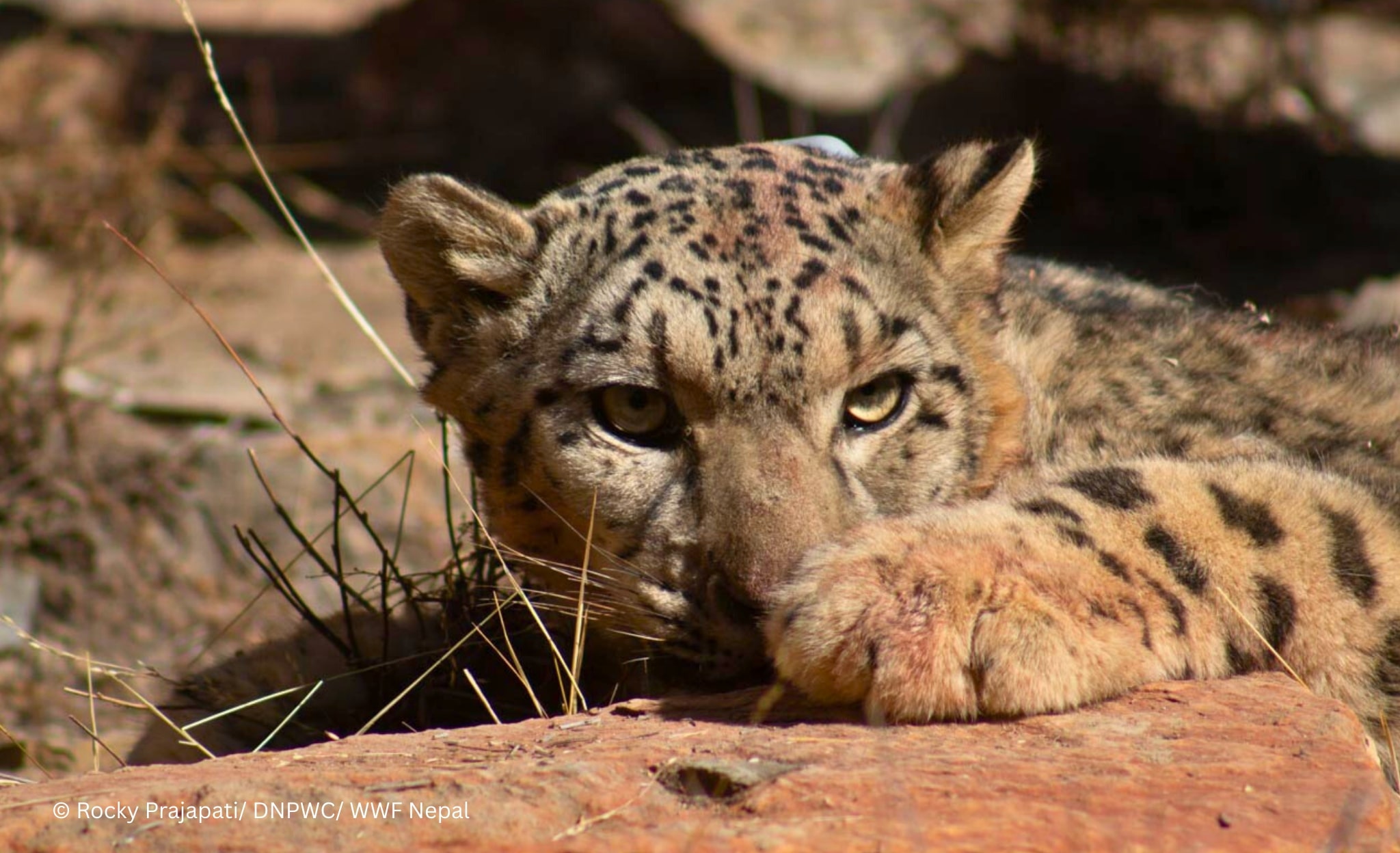
Banner image: A snow leopard photographed in Nepal. Image courtesy of WWF Nepal.
Nepal’s hydropower boom is killing birds via power lines
Nepal’s hydropower developers watch closely as court nears key verdict
Cite this article
Rudra Pangeni (2026). Nepal pushes for hydropower in protected areas through legal grey area. Mongabay Conservation news. DOI: https://doi.org/10.66709/news-326743