From Gaza to Ukraine, public trust in official human rights discourse has been eroded by the perception that its application is conditional rather than universal.
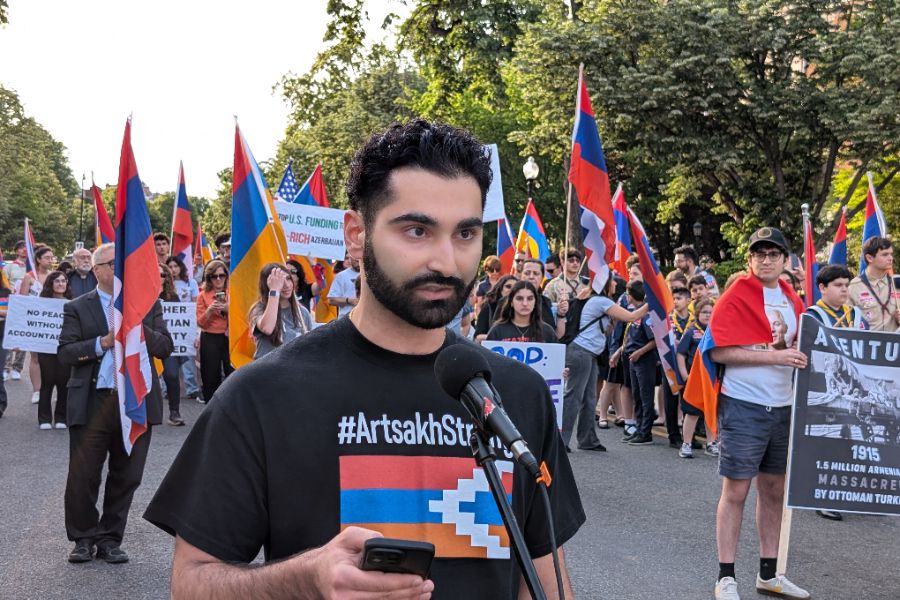
On April 24th, Armenians around the world marked the 111th anniversary of the Armenian genocide. The standard ritual followed: political officials released statements following a familiar script — solemn remembrance yet a careful effort to keep the past safely distant from the present.
That separation is not neutral. It allows power brokers to recognize atrocity in the past while avoiding or ignoring the ongoing violence in its wake.
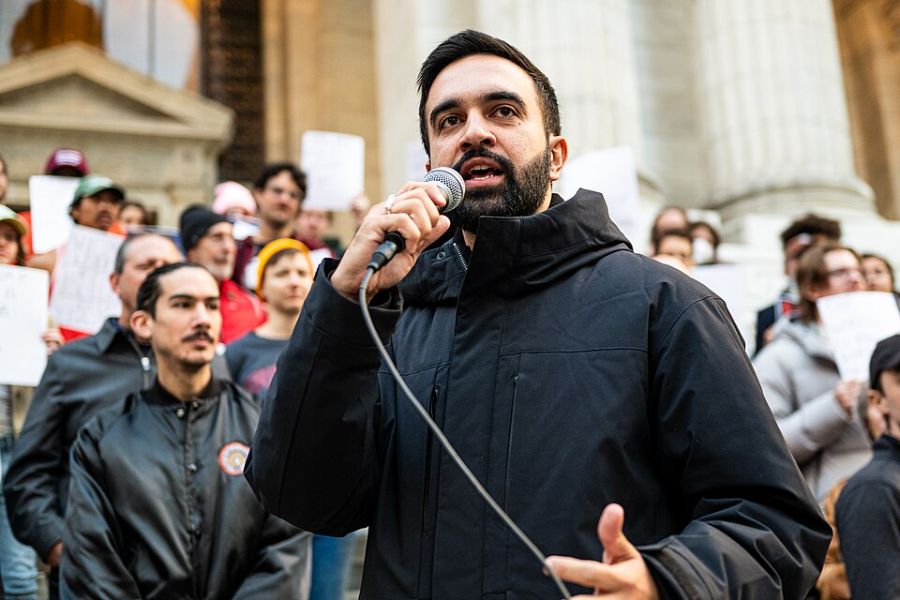
Zohran Mamdani disrupted that pattern.
Rather than treating the Armenian Genocide as a closed chapter, Mamdani, like Armenians across the globe, framed it as part of a longer continuum of violence — linking it to a century-long, genocidal campaign on Armenia through Azerbaijan’s 2023 ethnic cleansing of over 100,000 Armenians from Nagorno-Karabakh. Mamdani rejected the long-standing convention in Western foreign policy — recognition of a past crime that must remain detached from accountability in the present.
Advertisement
The Armenian issue is no longer confined to symbolic recognition or diasporan remembrance. It is increasingly emerging as a quiet but powerful litmus test for contemporary foreign policy. One that exposes the gap between universal moral language and selective political application.
For decades, the United States and its European allies have invoked their identity as the staunch defenders of human rights, arbiters of justice and protectors of the vulnerable. In practice, these values have been applied unevenly — shaped less by moral consistency than strategic value. Armenia generally sits at the periphery, absent at the stage of major power competition. It is this marginality that makes it so revealing — exposing a system that harps on universality but acts only on hierarchy.
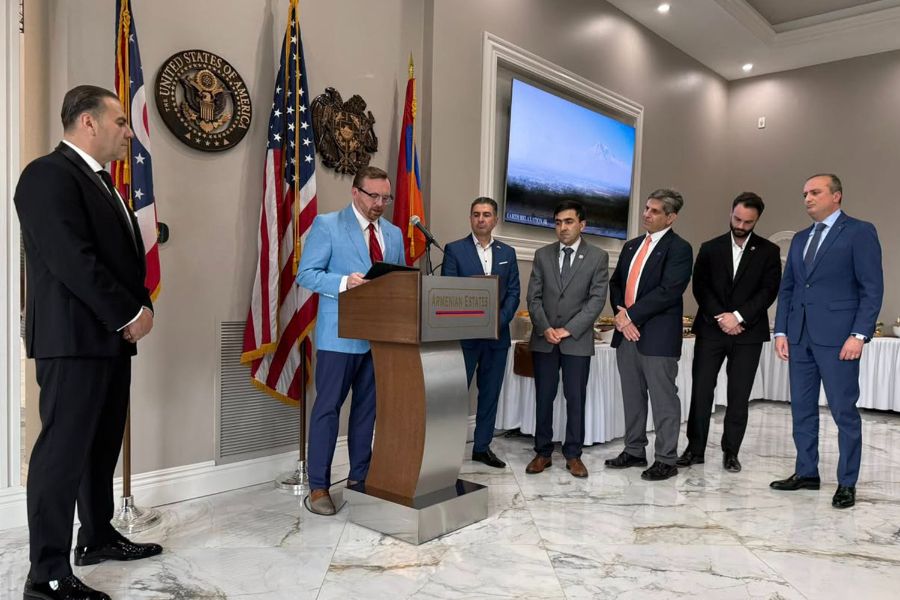
The contrast with the conservative right is equally revealing. Vice President JD Vance, often cast as the champion of Christian solidarity within the contemporary right, visited Armenia earlier this year — the first sitting U.S. Vice President to do so. During his visit to Tsitsernakaberd, the Armenian Genocide Memorial, Vance publicly paid his respects to the victims of the Armenian Genocide, yet his social media acknowledgement was subsequently deleted hours later. This denialist action lines up with the Trump administration’s consistent refusal to label Turkey’s attempted extermination of Armenians in 1915 a genocide — a stance reffirmed now for the sixth time. A recent example on how conservatism can gesture towards moral clarity and Christian solidarity but only so long as it does not interfere with its own geopolitical goals.
Liberal interventionism offers a different kind of failure. The Biden administration entered office promising a renewed commitment to democracy, human rights and minority protection — yet its handling of the Artsakh conflict showed how quickly those principles could be subordinate to geopolitical limits. Figures like Samantha Power, whose career was built on this moral imperative, found themselves constrained and inactive when those moral principles collided with diplomacy. Power herself had previously acknowledged this tension — in 2017, Power apologized for the Obama administration’s failure to formally recognize the Armenian Genocide while serving as U.S. Ambassador to the United Nations. Yet, in her most recent role leading USAID under the Biden administration, that same moral urgency never translated into action. Power consistently avoided taking action regarding humanitarian assistance for Armenians in Artsakh during Azerbaijan’s blockade, underscoring the gap between rhetorical commitment when confronted with geopolitical constraint.
The significance in Mamdani’s stance is in its reflection of the political generation it represents. Across segments of young lawmakers, organizers and commentators, there is growing discontent with the idea that moral clarity can be deferred in the name of political caution. Unlike an older political establishment fluent in separating ethical language from consequence, the next-gen treats this separation as a problem in and of itself. Even in the context of the local political establishment, Mamdani’s predecessor Mayor Eric Adams, publicly touted his connection to Erdogan and was charged with bribery in connection to the Turkish government. Mamdani is less an outlier than a signal of a broader shift. The Armenian case is resonant precisely because it mirrors the wider collapse in selective moral frameworks.
Mamdani’s intervention matters not because it resolves this contradiction, but because it refuses it. It rejects the foundational lie of modern atrocity discourse — that naming a crime is sufficient in the absence of present-day engagement with its consequences. It is in these gaps between recognition and response that the structure of modern foreign policy becomes visible. The Armenian issue has become a moral stress test and Mamdani passed on his first try.