When Galoust Torosian was about four years old, his grandfather was driving near their neighborhood when he noticed a Gracie Barra jiu-jitsu gym. The grandfather, who took care of Torosian and his brother while their parents worked, needed something for the kids to do.
“We tried out a class, and after one class, me and my brother fell in love with the sport,” Torosian said.
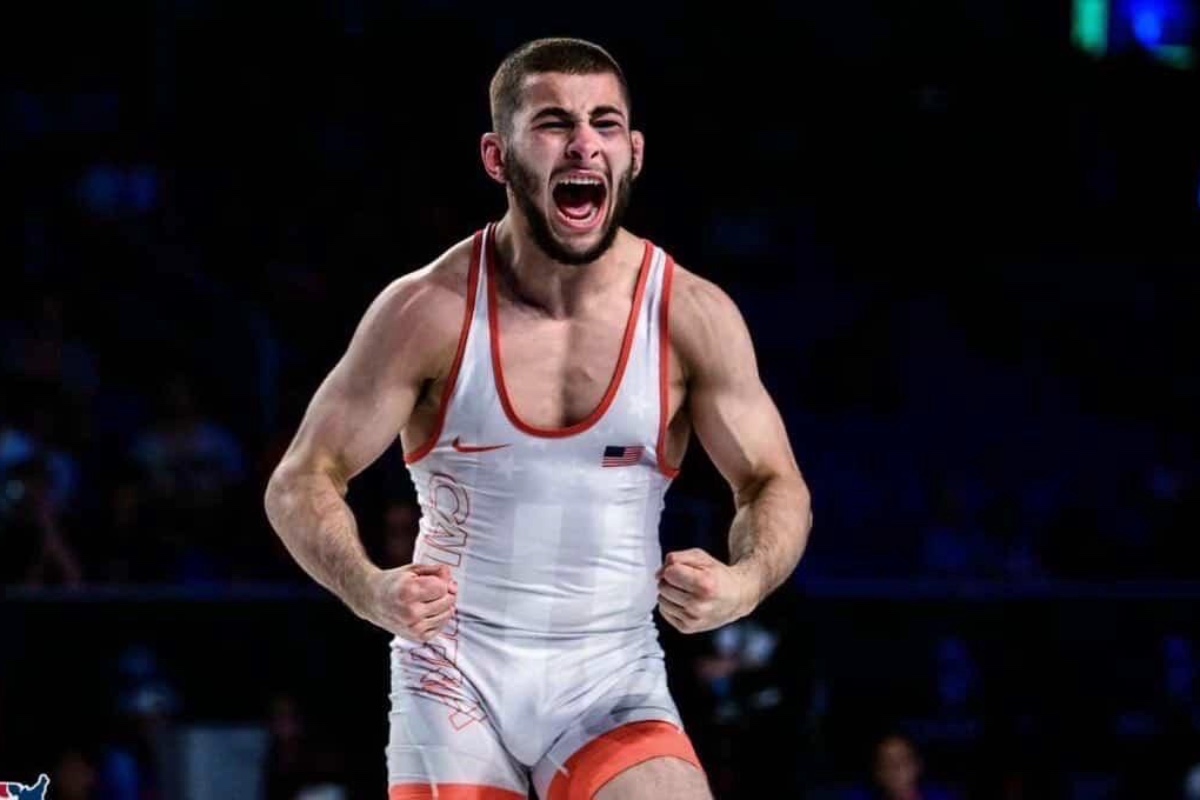
That one decision became the foundation of everything that followed. More than a decade later, the 17-year-old Torosian is a standout wrestler at Birmingham Community Charter High School in Southern California, a Harvard commit with a 4.87 GPA, and a proud Armenian. The high school junior has represented Team USA, won at national and international levels, and set his sights on the Olympic stage.
Torosian’s story is remarkable, but it almost didn’t happen.
His story begins at the back of the line. It’s about starting late in a sport that rarely rewards late beginnings, being told he might never wrestle again, and refusing to accept it. It’s also about a young athlete whose sense of identity and purpose runs deeper than the mat.
Advertisement
Torosian’s path into wrestling began less with a plan and more with curiosity. In April 2023, while preparing for a jiu-jitsu tournament, he heard about a wrestling club in Simi Valley called Legion Wrestling. Wanting to improve his takedowns, he asked his grandfather to take him there. What he found immediately resonated with him.
“There were no belts, no colors, no stripes,” he said. “I loved the intensity. There was no break.”
Torosian connected instantly with Coach Mazz, who became the first person in wrestling to truly believe in him. Within a month, Torosian hit the mat and entered a varsity tournament before even starting high school. From the beginning, he was all gas and no brakes.
Torosian describes himself as a first-generation Armenian American, and nearly everything about how he approaches life traces back to his family. His grandfather helped introduce him to martial arts and took him to practices. “Seeing him in my corner, every practice, every match, it motivated me more because I knew he was the guy that got me into this sport, who made me fall in love with this sport,” Torosian said.
Meanwhile, his parents instilled the discipline and work ethic that now define him. That influence is especially clear in the classroom.
Even as his wrestling career accelerated, Torosian maintained elite academic performance, building a daily routine that balanced training, schoolwork and SAT preparation. He has carried a 4.87 GPA, with even higher marks during his junior year, and speaks about education with remarkable maturity for his age.
“Life beyond wrestling is academics,” he said. “It’s your knowledge that’s going to take you places.”
Torosian said that he is currently carrying a 5.0 GPA during his second semester of his junior year.
He plans to study finance at Harvard and continue into graduate school, viewing education not as a fallback but as a central pillar of his future. That balance between ambition in sports and a long-term perspective is part of what separates him.
His path to Harvard was far from easy. When college recruiting opened after his sophomore year, midnight passed without a single message. His father encouraged him to stay patient and return to work. The next morning, he woke up to a text from West Point, marking the first sign that his efforts were being noticed.
Rather than waiting for more opportunities, Torosian took control. He remembers advice from a Stanford coach that it was his responsibility to get on a program’s radar, so he created his own wrestling résumé and emailed it to coaches, introducing himself and outlining both his athletic and academic achievements.
Within days, the responses poured in. Programs like Brown, Stanford, Penn, Harvard and Columbia reached out, along with several traditional wrestling powerhouses. Still, Torosian made a deliberate decision to prioritize his education. When it came time to commit, he personally called each coach to thank them, “Every call was harder than the last,” he said. “They saw something in me.” That moment reflected the way he now carries himself, with both ambition and respect.
When Torosian entered high school wrestling, he was already behind. Many of his peers had been competing for years, while he had only months of experience. Coming from a martial arts background and entering traditional wrestling, Torosian was seen as an outsider.
He responded by immersing himself in competition, wrestling more than 70 matches in local tournaments before his freshman season even began.
Even so, the adjustment was difficult. At one of his first major high school tournaments in Fresno, he fell short. He remembers the long, quiet drive home with his dad. He recalls hearing others, including parents of other competitors, suggest he had started too late to succeed at the highest level. Those comments stayed with him.
Then his freshman year took a far more serious turn.
During practice, he suffered a significant back injury that initially seemed minor but quickly worsened. He was eventually diagnosed with a fractured lower spine.
On Christmas Eve, Torosian says the head pediatric surgeon at UCLA told him he wouldn’t be able to wrestle again.
Torosian and his family refused to accept that outcome. They fully committed to recovery, pursuing advanced treatment methods including hyperbaric oxygen therapy, laser therapy and intensive physical rehabilitation. In less than two months, Torosian roared back to the mat.
The comeback was immediate. He reclaimed his spot, won regionals, won his city section and qualified for the California state tournament as a freshman. But at state, he went 0-2 and spent three days watching from the stands, leaving a lasting impression.
His father offered a simple perspective: “You’re either in the stands cheering for people, or you’re down there with people cheering for you.”
That’s when something clicked.
In the following months, Torosian’s trajectory changed dramatically. He became a double All-American at the U.S. Open, earned honors at Fargo, captured a Triple Crown at state and earned a place on the California National Duals team. On the international stage, Torosian traveled to compete in Kazakhstan for Team USA. On the other side of the planet, he became a double gold world champion in grappling at the U15 level.
He was no longer catching up. He was establishing himself.
Part of that growth comes from how he approaches wrestling itself. Rather than limiting himself to one discipline, Torosian blends elements of folkstyle, freestyle, Greco-Roman and jiu-jitsu into his approach. He believes every style offers something valuable and opens new avenues for growth.
“Even if you learn one move, that’s one more weapon in your arsenal,” he said.
That philosophy has helped him become a multi-dimensional wrestler, capable of adapting and constantly evolving.
Looking ahead, Torosian’s goals are clear. He plans to continue competing at the highest levels nationally while preparing for his collegiate career at Harvard. Beyond that, his ultimate ambition is to become a Greco-Roman Olympian.
Whether representing Team USA or Team Armenia, he wants to reach the Olympic stage and win a medal. He has already set his sights on the 2028 Olympics in Los Angeles.
“I know it’s not going to be easy,” he said. “But I’m going to do everything possible to make that dream a reality.”
On April 24, 2026, Torosian took a big step forward toward his Olympic dreams. In Las Vegas, he became a national champion in the 71 kg division in Greco-Roman wrestling at the U.S. Open, exactly three years to the day he began his wrestling journey. Now, he has qualified for the U17 World Team. The 2026 U17 World Championships are scheduled for July 27 to Aug. 2 in Baku, Azerbaijan.
For Torosian, wrestling and academics are only part of the story. His Armenian identity plays a central role in his life.
“My Armenian identity is everything to me,” he said.
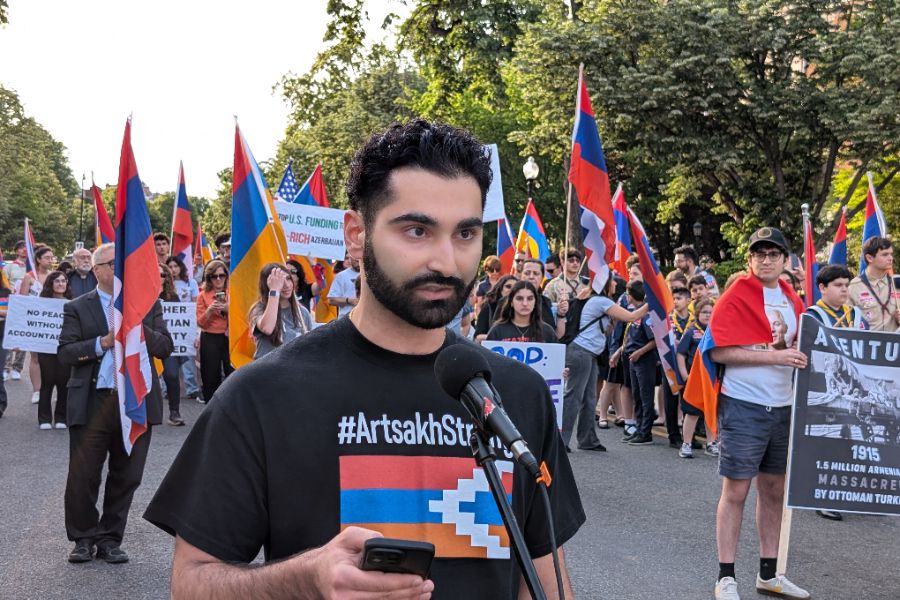
He and his brother bring Armenian and Artsakh flags with them to competitions, raising them on podiums whenever possible. But his connection to Armenia extends beyond symbolism. During the 2020 Artsakh war, he and his family actively supported humanitarian efforts, helping send supplies and contributing to relief work.
“During the 2020 war, we were with our dad all day, trying to support the soldiers in Armenia, and we were all day going to army surplus stores, buying equipment to ship out to Armenia. Organizing protests, sleeping in front of the Azerbaijani consulate, in front of the CNN building, and basically fighting for our people.”
His family also started a project to help fortify Armenia’s borders, helping send over 5,000 Hesco barriers to Armenia. “I have special certificates from the Ministry of Defense for the work we did,” he said.
He continues that commitment today as the founder and president of the Armenian Club at his high school and through involvement with Armenian organizations supporting projects in Armenia.
For him, identity is not something worn. It is something lived. When asked what he hopes people will remember about him, Torosian did not point to titles or accolades, but instead emphasized perseverance.
“I never gave up,” he said. “Despite all the doubt, all the setbacks, I never gave up.”
He hopes his journey can inspire others who feel they started too late or question whether they are good enough to keep going.
It would be easy to define Galoust Torosian by his accomplishments. But what stands out more is how he carries them, with gratitude toward his family, respect for those who helped him and a deep sense of responsibility to something larger than himself.
Harvard is next. The Olympics may follow.
What matters most is everything he’s bringing with him along the way.