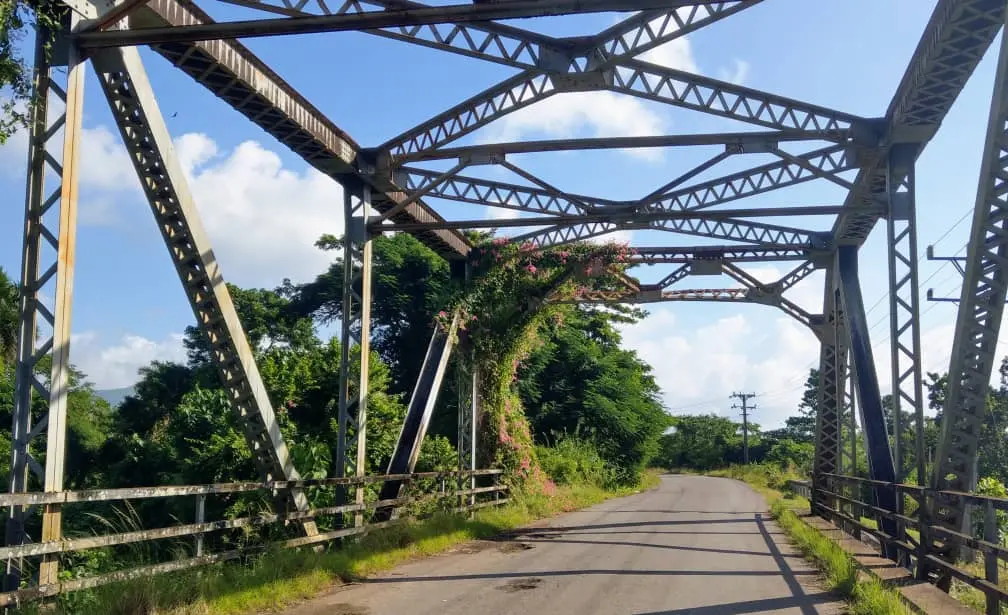
Photos by Fabiana del Valle
Photo Feature by Fabiana del Valle
HAVANA TIMES – Roads are the veins that connect towns and cities, lives, cultures, and dreams. Along them travel people carrying their products and aspirations, opening doors to progress and development.
The history of Cuba’s roads began several centuries ago. In fact, records show that the minutes of a Havana City Council meeting dated February 14, 1575, referred to the need to open new roads to facilitate communication and trade between communities.
Those paths gradually changed over time. In 1796, paving began on the old Jesus del Monte road, and in 1823, some of the country’s first regulations governing road construction were established.
The idea of creating a route that would connect Cuban territory more efficiently gradually took shape, and during the 19th century, construction of the so-called Central Road of the Island became a concern for the authorities of the time.
Back then, a network of rudimentary roads connected towns and crossed fields, rivers, and small settlements. However, the deterioration of those routes made the need for a modern highway increasingly evident.
The project began to materialize during the government of Gerardo Machado. Construction of the Central Highway began on March 1, 1927, in San Francisco de Paula, Havana.
It was a massive undertaking, stretching approximately 1,139 kilometers (708 miles) and connecting towns and cities across the country’s six provinces at the time. Its construction required enormous human and material resources: cement, steel, stone, sand, and thousands of workers to build a roadway with a solid foundation of hydraulic concrete.
The result was an extraordinary engineering achievement for its time. The cost exceeded 107 million pesos, a figure that rose to approximately 111 million when the expenses of surveys, design, and supervision were included.
Cuba’s Central Highway is much more than a road stretching from one end of the island to the other. At the time, it represented a profound transformation for the country. Beyond its size and cost, it facilitated the transportation of people and goods, stimulated trade, brought communities closer together, and contributed to the economic and social development of numerous localities. For the first time, Cuba had a land route that made it possible to travel across much of its territory more quickly and safely.
It has been recognized as one of the seven wonders of Cuban civil engineering and one of the country’s great construction projects of the 20th century. It is a work that forms part of the history, identity, and collective memory of several generations of Cubans.
That highway, which was a source of pride for decades, now faces a very different reality. I can testify to this firsthand because, out of necessity, I travel every weekend along a stretch of the road—approximately 38 kilometers (24 miles) of potholes, mud, and overgrown vegetation.
Unfortunately, this is not limited to that particular stretch. The passage of time, lack of maintenance, and deterioration of road infrastructure have made numerous sections of the highway almost impassable.
Every weekend, I pass through communities where the pavement has sunk, vegetation encroaches on sections of the road, traffic signs are nonexistent, and culverts and bridges are damaged.
This deterioration affects the transportation of agricultural products, the distribution of goods, passenger travel, and connections between communities. Despite the existence of the National Expressway, the Central Highway remains an essential route for many towns.
For nearly a century, this highway has been part of Cubans’ lives, witnessing the country’s development and transformations. Recognizing its historical value or recalling the greatness of its construction is not enough. Preserving and restoring it should be a priority.
During my travels, I can see the paving stones that have become exposed, originally used along the first few meters of each road intersection. I can also enjoy the shade provided by the few remaining trees from the 30,000 that were planted along both sides of the highway to offer shade and comfort to travelers.
Today, I find two intertwined stories: that of an extraordinary engineering project that represented progress and modernity in its time, and that of an infrastructure urgently in need of care if it is to continue fulfilling its purpose.
The Central Highway is undoubtedly part of Cuba’s history—a history that deserves to be preserved for present and future generations.
See more photo features here on Havana Times.