The Sierra Leone Extractive Industries Transparency Initiative (SLEITI), in collaboration with Audit Service Sierra Leone (ASSL), has held a stakeholder round-table discussion aimed at strengthening transparency, accountability and national ownership in preparing the country’s 2024–2025 Extractive Industries Transparency Initiative (EITI) Report.
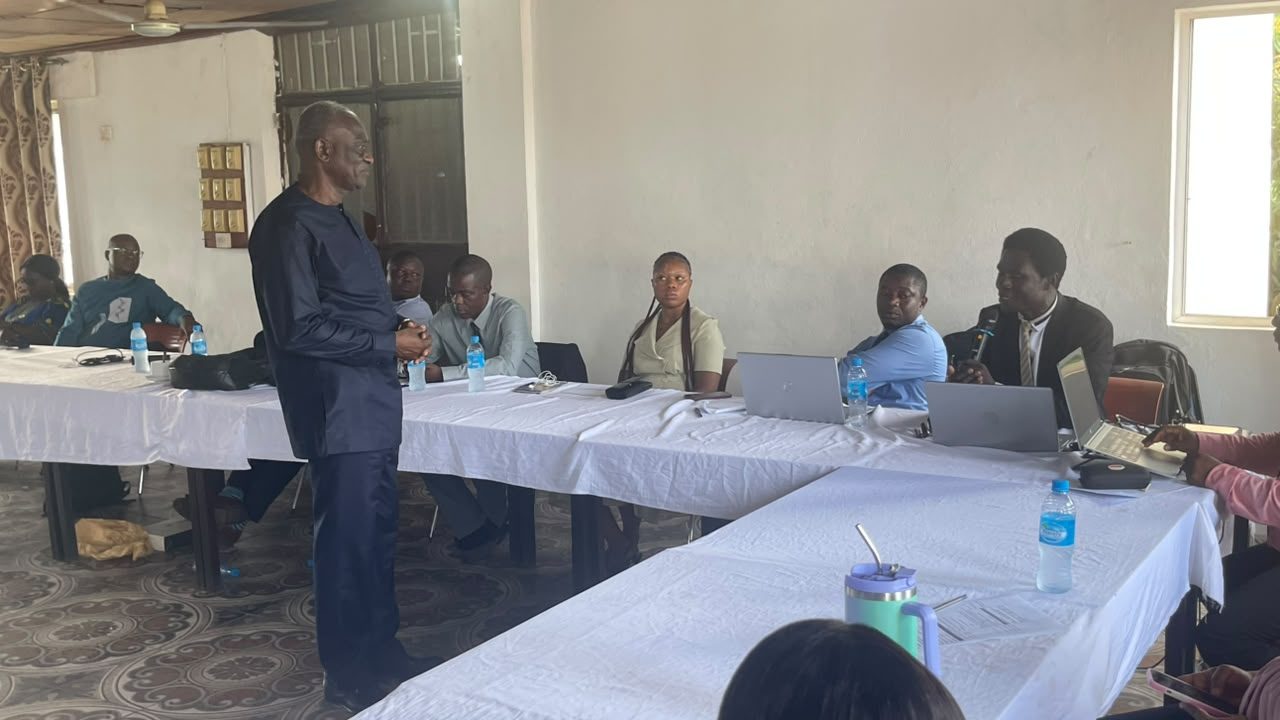
The engagement, held on Tuesday, 10 November 2026, at the Marianella Pastoral Centre, Syke Street, Freetown, brought together Civil Society Organisations, journalists and other stakeholders to discuss credible reporting and institutional cooperation in managing Sierra Leone’s mineral resources.
Speaking on behalf of the SLEITI Multi-Stakeholder Group, Mabinty Sesay described the partnership as an important development in promoting responsible natural resource management.
Mabinty Sesay explained that combining SLEITI’s transparency mandate with the Audit Service’s independent oversight responsibilities would improve information verification, institutional accountability and public confidence.
She noted that Sierra Leone’s mineral wealth could support economic growth, employment and improved livelihoods, but stressed that achieving those benefits require credible information and strong institutions.
According to Mabinty Sesay, the initial scoping report identified information gaps, assessed data quality and clarified institutional responsibilities. She said the collaboration would strengthen transparency in mineral payments, licensing, contracts, beneficial ownership, revenue collection and public expenditure.
Representing Civil Society Organisations and the media, Cecilia Christina Mattia emphasized the importance of public participation ahead of Sierra Leone’s forthcoming EITI validation, scheduled for January 2027.
Cecilia Christina Mattia explained that although civil society and journalists supported the process, primary responsibility rested with Government institutions represented on the SLEITI Multi-Stakeholder Group.
She disclosed that Sierra Leone previously engaged international auditing firms for EITI reporting at an annual cost of at least US$70,000, prompting calls for greater involvement of the Audit Service.
Cecilia Christina Mattia described the new arrangement as a significant opportunity to demonstrate national institutional capacity, while expressing concern about limited public awareness of the upcoming validation.
She urged journalists and Civil Society Organisations to identify reporting gaps, monitor implementation and extend public education to mining communities, particularly Kono District, through radio discussions and community engagements.
Delivering the keynote address on behalf of Audit Service Sierra Leone, Sineh Kargbo reaffirmed the institution’s commitment to producing a credible 2024–2025 EITI Report consistent with international requirements.
Sineh Kargbo explained that the Audit Service had participated in the SLEITI Multi-Stakeholder Group since 2008, initially observing proceedings and certifying Government reporting templates.
Following consultations earlier in 2026, the Auditor General accepted SLEITI’s request for the institution to serve as Independent Administrator.
He clarified that the assignment differed from the Audit Service’s constitutional auditing responsibilities under Section 119 and would follow the International Standard for Related Services governing agreed-upon procedures.
Sineh Kargbo further disclosed that Sierra Leone had become the first country within the English-speaking African Organisation of Supreme Audit Institutions regional bloc, AFROSAI-E, to assign national EITI reporting to its Supreme Audit Institution.
He confirmed that a Memorandum of Understanding and agreed terms of reference had been signed, with separate teams established to protect institutional independence.
The partnership is expected to strengthen national ownership, improve extractive sector reporting and reinforce public confidence in Sierra Leone’s natural resource governance.