The Independent Commission for Peace and National Cohesion (ICPNC) has renewed its commitment to promoting sustainable peace and strengthening community-based conflict resolution mechanisms following its participation in a training workshop designed to equip local stakeholders with practical skills in conflict prevention, mediation and peaceful coexistence.
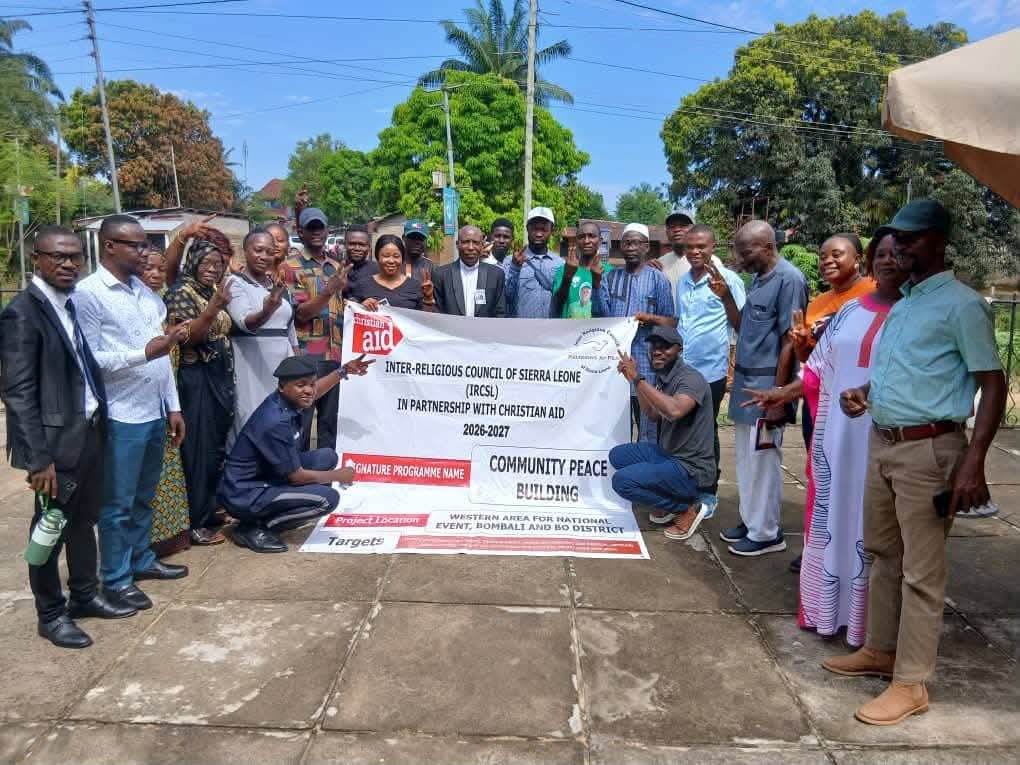
The training, held on Wednesday, 4 November 2026, at Peace and Love Sisters Dinner, Shellmingo, Bo, was organized by the Inter-Religious Council of Sierra Leone (IRCSL), in partnership with Christian Aid, under a four-year initiative aimed at strengthening community peace committees and promoting lasting peace at the grassroots level.
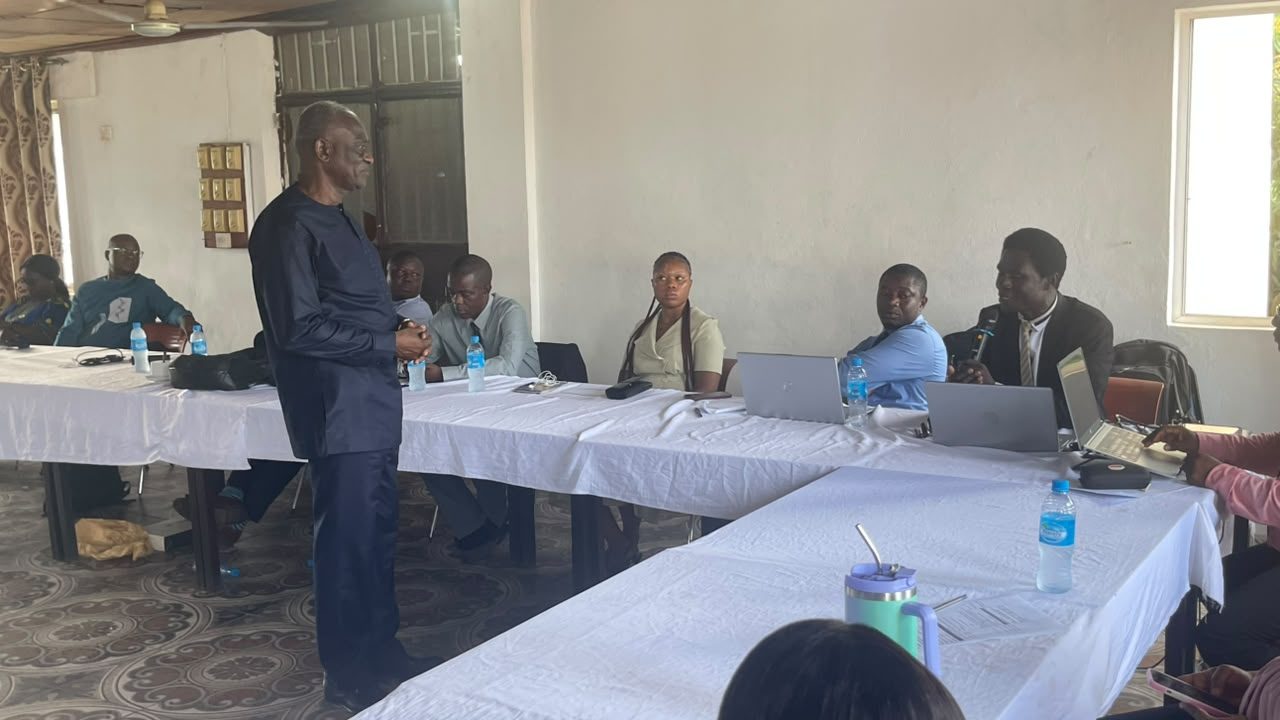
The engagement brought together religious representatives, community leaders and other local stakeholders to improve their understanding of conflict management, constructive dialogue and the importance of community participation in maintaining peaceful relationships.
Representing the ICPNC, Regional Coordinator South, Belinda Ndanema, facilitated an interactive session on conflict-sensitive dialogue, effective leadership and rights-based civic engagement, highlighting practical approaches to preventing and resolving disputes within communities.
Belinda Ndanema emphasized that sustainable peace requires continuous dialogue, mutual respect, active listening and the meaningful involvement of all community members, particularly when addressing disagreements that could threaten social harmony.
She began her presentation with a pre-training assessment to determine participants’ existing knowledge of peacebuilding and conflict resolution before introducing practical methods for identifying tensions, managing disagreements and encouraging peaceful engagement.
According to Belinda Ndanema, community peace committees have an important responsibility to identify early warning signs of conflict and create opportunities for dialogue before misunderstandings develop into serious confrontations.
She further stressed that effective leadership, respect for individual rights and inclusive decision-making remain essential to building trust and strengthening relationships among people from different social, religious and cultural backgrounds.
The session also provided participants with practical guidance on how community leaders and peace committee members can intervene constructively in disputes, encourage reconciliation and promote cooperation among conflicting parties.
Speaking on the objectives of the initiative, Project Safeguarding Officer of the Inter-Religious Council of Sierra Leone, Phebean Gbondo, explained that the four-year programme seeks to establish stronger, more effective and sustainable community peace structures capable of responding to emerging conflicts.
Phebean Gbondo underscored the importance of local ownership, noting that peacebuilding initiatives are more likely to succeed when community members actively participate in identifying problems and developing solutions.
She encouraged participants to work collectively, strengthen existing relationships and ensure that community peace committees remain functional beyond the training period.
The workshop featured interactive discussions during which participants shared experiences from their respective communities, identified common causes of disagreements and explored practical ways of promoting tolerance, understanding and reconciliation.
Representing the Inter-Religious Council in Bo District, District Coordinator for Muslims, Alhaji Kowa, welcomed the initiative and commended the organizers for creating a platform that brought together important community stakeholders.
Alhaji Kowa described the training as a valuable opportunity to strengthen grassroots peacebuilding and encouraged participants to apply the knowledge gained in their communities.
He urged community representatives to become active promoters of peace, stressing that preventing conflict requires commitment, cooperation and a willingness to resolve differences through dialogue rather than confrontation.
One of the major outcomes of the workshop was the nomination of ICPNC Regional Coordinator South, Belinda Ndanema, as Chairperson of the Community Peace Committee structure.
The nomination demonstrated participants’ confidence in Belinda Ndanema’s experience in peacebuilding and recognised the Commission’s important role in promoting national cohesion and peaceful conflict resolution.
Her nomination is expected to strengthen cooperation between the ICPNC and community peace committee members, particularly in identifying potential conflicts, coordinating mediation efforts and supporting reconciliation at the local level.
To maintain communication and improve coordination, participants also established a WhatsApp group through which members will exchange information, discuss emerging concerns and remain connected on community peacebuilding activities.
Although the organisers could not conduct a post-training assessment because of time constraints, the workshop provided an opportunity for participants to identify priorities and establish an initial framework for continued engagement.
The training further highlighted the importance of empowering local communities with the knowledge and skills required to address tensions arising from misunderstandings, competing interests and other social challenges.
The ICPNC’s participation reflects its continuing efforts to strengthen partnerships with religious institutions, civil society organisations and community leaders in promoting dialogue, tolerance and peaceful coexistence.
With support from the Inter-Religious Council of Sierra Leone and Christian Aid, the four-year initiative is expected to improve the effectiveness of community peace committees and strengthen their ability to prevent disputes from escalating.
As implementation progresses, the initiative is anticipated to provide stronger mechanisms for early conflict detection, mediation and reconciliation, while encouraging communities to take greater responsibility for maintaining peace.
The engagement in Bo represents another step towards building resilient communities where disagreements are addressed peacefully, relationships are strengthened through dialogue and local stakeholders play an active role in advancing sustainable peace and national cohesion across Sierra Leone.