Synopsis: Reform consolidates scattered military units into larger battalions, improving operational readiness and clarifying responsibilities between armed forces and police.
Prime Minister Hun Manet announced the abolition of the district-level military structure nationwide to strengthen the Royal Cambodian Armed Forces (RCAF), improve operational readiness and refocus the military on national defence.
The duties of maintaining public security, safety and social order will rest with the National Police and the national military police, with support from village security volunteers when necessary.
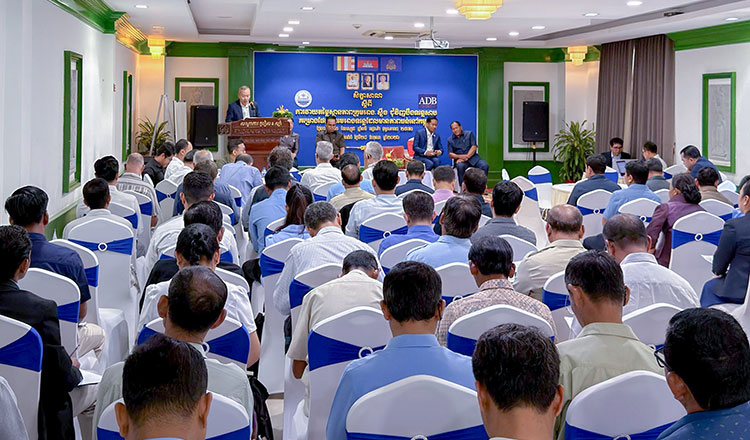
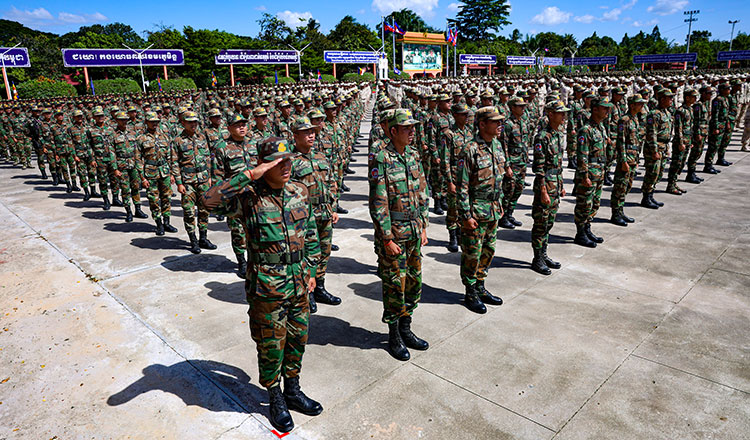
Speaking on Monday in Kampong Speu province at the opening of a training course for the first batch of 5,000 volunteer conscripts, Mr Hun Manet said the reform reorganises military forces in line with their core mission.
He said the previous arrangement, under which about 16 soldiers were stationed in each district, fragmented forces into small, scattered units, limiting their operational effectiveness. Under the new structure, these units are consolidated into battalion-level formations within the Sub-Regional Military Operational Zones to improve command, training and deployment.
“We no longer maintain the 16-person district military detachments. Previously, splitting forces into groups of 16 resulted in units that were too small to be effective. We are now focusing on our core mission: training and preparing for national defence operations,” he said.
He said the military must prioritise regular training, capacity building and readiness to defend the country’s territorial integrity. He added that it assists with security duties only when necessary, particularly during major floods or serious security emergencies.
Battalions, which previously consisted of about 250 personnel, are reorganised into three categories: Type 1, with more than 600 personnel; Type 2, with more than 500; and Type 3, with more than 300.
Equipment and training are tailored to each unit’s specific mission to strengthen operational capabilities and ensure timely mobilisation.
“Instead of remaining scattered, we are consolidating into organised battalions and restructuring them within the Sub-Regional Military Operational Zones. Previously, a battalion had only 250 personnel; now, we have reorganised them into three types… so that if a situation arises, we can deploy 100 personnel at once, rather than just 16 at a time,” he said.
The 5,000 volunteers who began training on Monday are assigned to battalions within Military Sub-Regions and other military units.
Mr Hun Manet said commanders must ensure conscripts receive the same benefits and opportunities as professional soldiers in training, assignments and duties, adding that there must be no discrimination between the two groups.
Seun Sam, a policy analyst at the Royal Academy of Cambodia, said abolishing the district-level military structure formed part of broader institutional reform aimed at improving the RCAF’s organisational efficiency.
He said the restructuring reduces fragmented units with unclear operational mandates, strengthens the chain of command, redirects resources from administrative functions towards operational capabilities and clarifies responsibilities among institutions.
Sam added that the military prioritises training, exercises, professional skills development and modern military technology, while public security and local law enforcement remain the responsibility of police and relevant authorities. He added that this allows the armed forces to concentrate on defending national sovereignty, territorial integrity and national security.
He said the reform represents a clearer division of institutional responsibilities rather than a weakening of any institution.
Abolishing district-level military structures does not automatically strengthen border defence, Sam said, noting that effectiveness depends on proper implementation, resource allocation, adequate equipment and maintaining a military presence in strategically important areas.
He added that the capabilities of the Army, Navy and Air Force must be strengthened, along with coordination among the armed forces, National Police and other institutions to safeguard national security.