Synopsis: Historian Julio A Jeldres hails King-Father Norodom Sihanouk’s founding role in the international French-speaking community as Phnom Penh prepares to host the 20th summit, with 79 member states confirming participation.
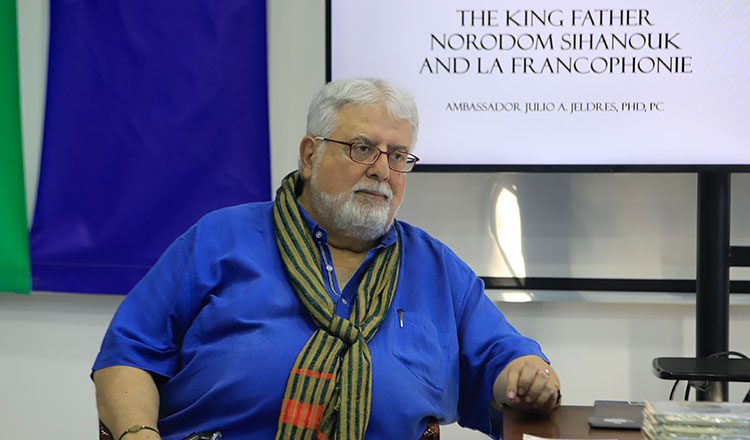
King Father Norodom Sihanouk’s vision and diplomatic efforts in establishing the Francophonie have shaped Cambodia’s place in the international community, Ambassador Julio A Jeldres, the royal adviser, said.
The Kingdom’s hosting of the organisation’s summit would have been a source of pride for the late monarch, he added.
Speaking at a guest lecture entitled “The King Father Norodom Sihanouk and the Francophonie” at the Department of Media and Communication yesterday, Jeldres said Sihanouk played a role in bringing an Asian dimension to the international organisation and establishing its global character.
Jeldres, who is High Privy Counsellor to King Norodom Sihamoni, said Sihanouk began advocating for the establishment of the Francophonie in 1962, at a time when Cambodia was the only Asian country involved in the initiative.
“If the King Father had not got involved in the efforts to establish the organisation of the Francophonie, the organisation would not have been universal, because there would have been no Asian component to it,” he said.
He said Vietnam was preoccupied with war and was not involved in the initiative, making Cambodia’s participation in extending the organisation beyond its African origins.
Sihanouk’s involvement, Jeldres said, gave the Francophonie the international reach necessary to become a global organisation rather than remaining primarily a grouping of French-speaking African countries.
Reflecting on Cambodia’s preparations to host the 20th Francophonie Summit on Sunday and Monday in Phnom Penh, Jeldres said the late King Father would have been moved by the occasion.
“If he had been alive, I think he would have been very emotional about it, because it would have been the first time that Cambodia hosted that after Hanoi,” he said.
“He would have felt very proud also that Cambodia could organise such a summit.”
The Phnom Penh gathering will be the second Francophonie Summit held in Asia, following the 1997 summit in Hanoi, Vietnam. It will bring together leaders from the organisation’s 90 member states and governments to discuss political, economic, cultural and educational cooperation.
Jeldres said concerns existed over the declining use of French among younger generations of Cambodians as English and Chinese become prominent in international communication.
He added that French had become a “dormant language” in parts of the world as other languages gained popularity.
He said the decline in the number of French speakers would not undermine Cambodia’s standing or influence within the Francophonie.
“I don’t think it will affect the role that Cambodia can play in the Francophonie,” he said, adding that the country’s founding membership earned respect among other members.
He added that several Cambodian leaders involved in preparations for the summit speak French, reinforcing the country’s ability to engage with its Francophone partners despite changing language trends.
Beyond language and culture, Jeldres said Sihanouk maintained close relations with France following Cambodia’s independence.
He added that critics viewed Sihanouk’s involvement in establishing a Francophone organisation as contradictory to his efforts to secure independence from French colonial rule.
He said the late monarch recognised that maintaining constructive relations with France brought Cambodia cultural and economic benefits, including opportunities for exports and broader cooperation.
Jeldres added that France provided diplomatic support for Cambodia during border disputes discussed at the United Nations, noting the importance of having a permanent member of the UN Security Council on the Kingdom’s side.
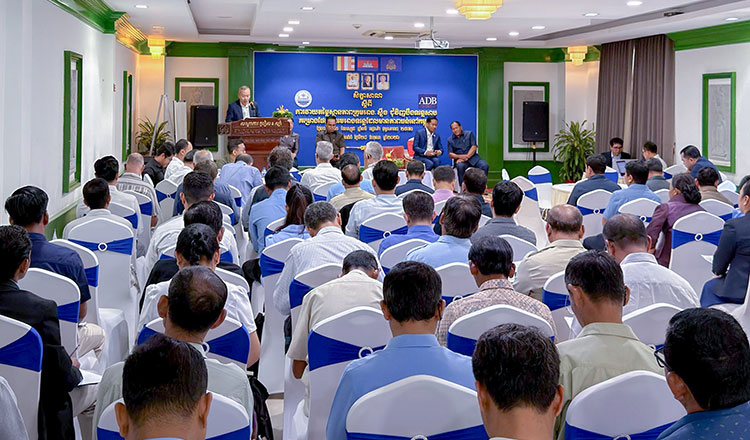
The lecture was facilitated by Youk Chhang, director of the Documentation Center of Cambodia and Ambassador to the Cabinet of His Majesty the King, who said understanding Cambodia’s relationship with France mattered through its historical, political and diplomatic dimensions.
Youk, who learnt French when he was five, said the relationship developed over time through historical connections, political considerations, economic interests and diplomatic engagement, and added that relations between countries were influenced by the personalities of their leaders.
“There is nothing that would indicate this visit marks a new chapter, but one can always see there are new opportunities for increasing cooperation,” he said, referring to the broader importance of diplomatic engagement.
He added that meetings between national leaders could create opportunities to establish personal rapport and strengthen cooperation, with the direction of bilateral relations sometimes depending on the ability of leaders to understand one another’s perspectives and priorities.
The summit marks a milestone for Cambodia, which became a full member of the International Organisation of La Francophonie (OIF) in 1993.
Under the theme “Reinvest in Peace for Shared Prosperity and Sustainable Stability”, the gathering coincides with an election for the organisation’s next Secretary-General, shaping the Francophonie’s strategic direction in the coming years.
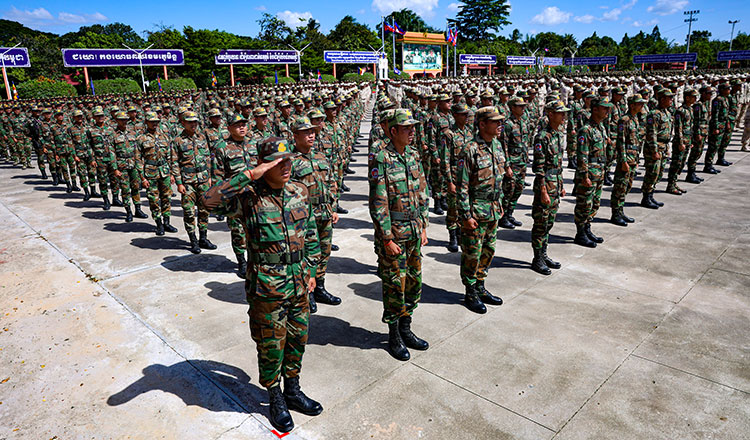
Cambodia has established a National Organising Committee, supported by a secretariat and six subcommittees, to coordinate preparations with the OIF.
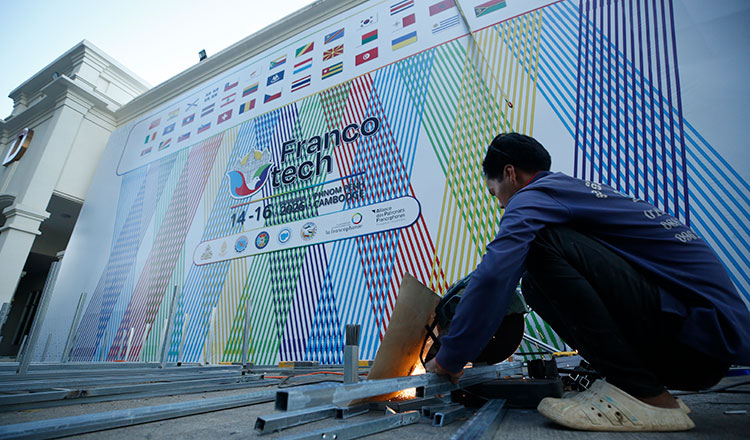
Beyond high-level diplomatic meetings, the programme includes a Francophonie Village showcasing cultural diversity, economic and digital initiatives under FrancoTech, and activities promoting French-language education.
The summit provides a platform for strengthening political dialogue, cultural exchanges and economic partnerships among Francophone countries, giving Cambodia an opportunity to reaffirm its commitment to multilateral cooperation.
Speaking to the press yesterday, Foreign Affairs and International Cooperation Minister Prak Sokhonn said that among the 90 member states of the Francophonie, 79 countries have confirmed their participation. He added that over 1,000 delegates will attend, with 900 taking part in ministerial meetings and the summit.
“We will have 20 heads of state and heads of government, deputy prime ministers, and ministers attending. Additionally, 26 under-secretaries of state serving as heads of delegation will also participate,” he said.
“We have already registered 1,200 journalists, nearly 400 of whom are foreign journalists. This does not yet account for the support staff accompanying the main delegations.”