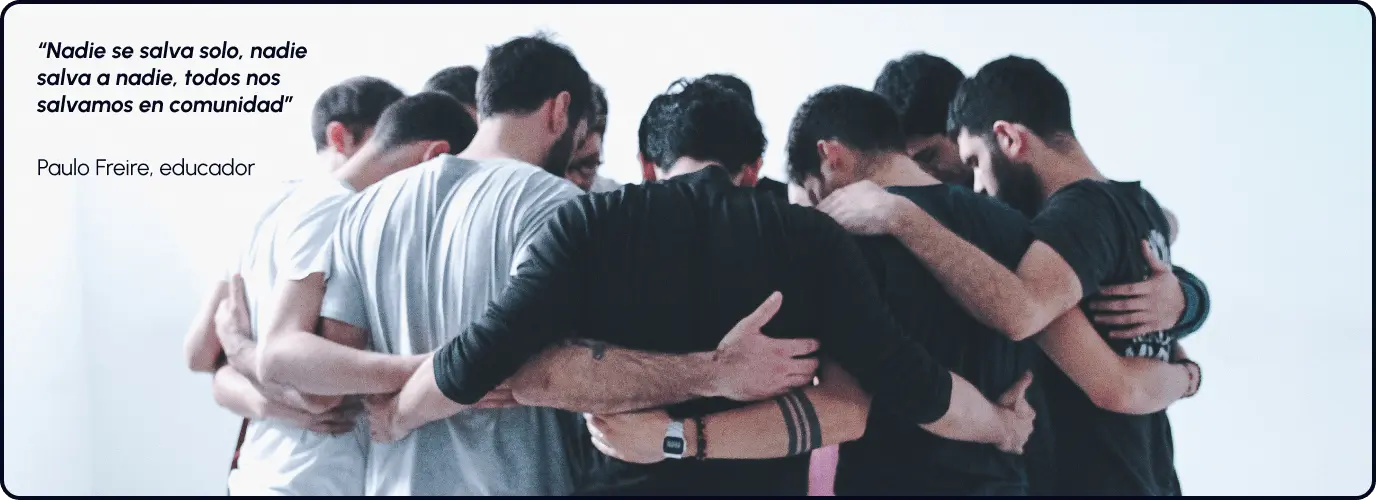
“No one is saved alone, no one saves anyone else; we all save the community.” -Paulo Freire
By Andres Kogan Valderrama
HAVANA TIMES – We’ve been talking about gender equality for years now, but it’s still hard to get men to enter the conversation. A number of academic and activist organizations in Chile have been working for a while on the topic of masculinity, often in collaboration with the feminist movement. However, these efforts need greater scope and continuity.
In my work and in the different spaces where I participate here in Chile, I often wonder how we could reach more men with this discussion, and how to raise it to the level of a public concern. I believe we need to stop treating the topic of masculinity as the exclusive issue of certain individuals or isolated initiatives. Instead, I’m proposing the creation of a National Masculinity Agency that would function under the Ministry of Women and Gender Equity, with its own budget, professional staff, and with a presence in the different regions of the country.
This service would work in coordination with the National Service for Women and Gender Equity, in the municipalities, education centers, and with the social and feminist organizations that have been active in the field for years. Its function would be to strengthen those experiences, provide guidance, promote programs, train professionals and advocate for public policies that facilitate the incorporation of men in the process of transforming gender relations.
There are some international precedents for this proposal. Canada has implemented strategies for incorporating men and boys into the work towards gender equality, while Australia has proposed the need to develop coordinated responses capable of addressing issues of masculinity and violence prevention. I think that Chile needs to take yet another step forward and move from disperse programs and initiatives towards a specialized government agency. That discussion remains pending.
One of the priorities of such a masculinity agency would be to work with boys and adolescents. I too went through a phase when it was very hard for me to connect with other people: I was ashamed of revealing my insecurities and over-preoccupied with what others thought of me. Many young men experience similar feelings, but they don’t always find a space to talk about them. We need to speak about rejection, peer pressure, our feelings, and the expectations that exist regarding how a man is supposed to behave.
We also need to address the violence that men perpetrate. It’s not enough to condemn acts of aggression once they’ve occurred. Specialized programs are needed to work with perpetrators of violence, train professionals and develop prevention strategies, while assuring the safety of victims and coordinating with the institutions responsible for their protection.
Another important area is that of masculine suffering. Many men, like myself, find it very difficult to ask for help, because we’ve learned to stifle our feelings and resolve problems on our own. This doesn’t justify venting our frustrations on other people, but it highlights the need to develop spaces for guidance and accompaniment. We also need to question a masculine education based on lifelong competition, isolation and show of force.
In my work in the towns, I see another difficulty: parenting programs almost always assume that the majority of those participating will be women. We speak of shared responsibility, but the actual work of child-raising continues to fall mostly on the females. A National Masculinity Agency, in coordination with the municipalities, could promote strategies for incorporating fathers and other male caregivers into the tasks of child-raising and caregiving,
The manosphere presents an additional challenge. There are young men seeking relief from their insecurities online, who then encounter rhetoric that targets women as the sole cause of their frustrations. It’s not a matter of stigmatizing them, but of understanding why such perspectives are eagerly received and offering other ways of constructing masculine identity. The government could facilitate research, educational initiatives and prevention programs to combat the rise of digital misogyny.
We also need to broaden this discussion to include our relations with animals and nature. The logic of dominance isn’t limited to relations between people – it also embraces the exploitation of other living beings and eco-systems. A perspective of eco-masculinity could allow the incorporation of ecological care, interdependence and responsibility into our public policies.
The creation of a National Masculinity Agency won’t by itself resolve the gender gap. Nor will it replace the work that so many organizations have been carrying out for years. But it would provide continuity, resources and national scope to a task that continues to rely too greatly on disperse initiatives. If we wish to transform gender relations, we need the Chilean government to assume the work with men as an equal public responsibility.
Read more from Chile here on Havana Times.