By Suleiman Siri for Radio Dabanga
Residents of Wad Madani in Sudan’s El Gezira state are facing worsening living conditions, with prolonged power cuts, severe fuel shortages, soaring prices of essential goods, and deteriorating healthcare services. A resident says members of the regular Sudanese Armed Forces (SAF) “are exploiting their positions to secure preferential access to fuel, while effectively controlling the parallel market”.
Residents are increasingly frustrated and angered by the dire situation in El Gezira state, where even the most basic necessities of life are lacking. Electricity, water, and healthcare services are in crisis, while prices of essential consumer goods continue to rise. Long queues have formed outside fuel stations, and power cuts lasting many hours have brought daily life to a virtual standstill.
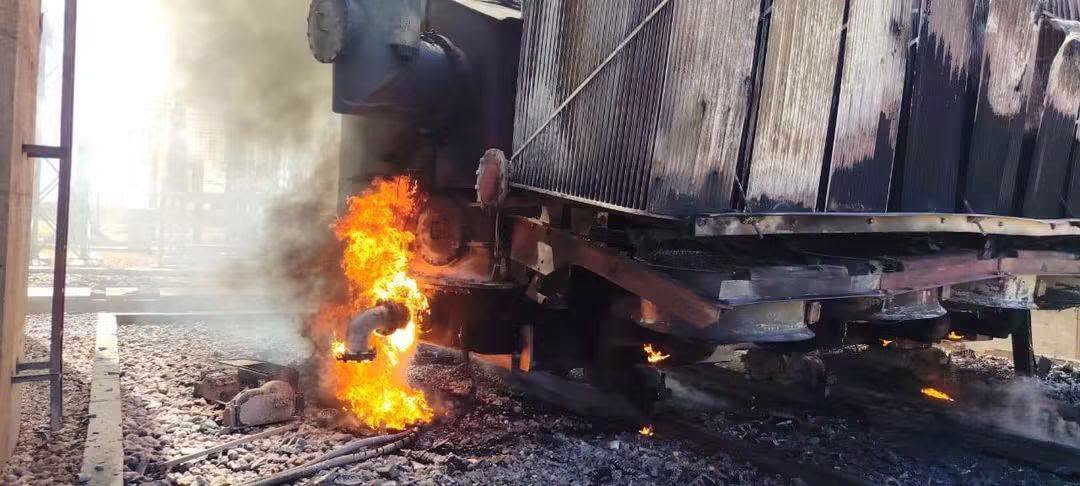
A resident of Wad Madani told Radio Dabanga that people are enduring severe hardship as a result of these persistent crises, which affect every aspect of daily life. The city is experiencing prolonged blackouts following recent drone attacks on electricity-generating stations.
He said electricity supplies are interrupted for extended periods. At times, power is available from 06:00 until 13:00, after which it is cut off for the rest of the day. Supply may then resume at 21:00 the following evening and continue until the morning, when it is cut off again. The cycle continues.
Severe fuel shortages
Meanwhile, Wad Madani is experiencing an acute fuel shortage, with reduced allocations for consumers. Members of the regular forces are exploiting their authority to obtain large quantities of fuel, turning operations at filling stations into what the resident described as “chaos”.
“Despite all this suffering, members of the regular forces are abusing their authority to secure priority when fuel is distributed. Meanwhile, ordinary citizens spend two or three days and nights queuing outside filling stations without receiving their allocated quantities,” he said.
He pointed out that all regular forces, including the Sudanese Armed Forces, police, and armed groups allied with the army, such as the Joint Force and Sudan Shield, have issued clear and strict instructions to their members. Notices circulated on social media warn against storming filling stations or taking fuel allocations at the expense of ordinary citizens, and state that anyone engaging in such conduct will be held accountable.
However, he expressed regret that these decisions exist only in the media and are not being enforced in practice.
He said members of the regular forces, through their disorderly conduct, forcibly taking fuel allocations, and abusing their authority, had effectively become the operators of the ‘parallel market’, controlling prices that range between SDG 150,000 and SDG 170,000.
He described the situation as complete chaos, saying the government had failed to manage and organise the operation of fuel stations. Even the Public Transport and Petroleum Department was unable to manage the stations, with its employees arriving only to leave again because they were incapable of running them.
Deteriorating healthcare services
On healthcare, the resident told Radio Dabanga: “Medical treatment has become extremely expensive, with medicine prices rising dramatically. Some medicines are almost impossible to find in pharmacies. Hospitals and healthcare facilities themselves are also struggling with the spread of dengue fever and increasing numbers of malaria cases.”
He added that Wad Madani Hospital had been on a full strike for two days until the finance minister intervened the previous day and undertook to resolve the crisis.
Describing the situation facing residents as deeply distressing, he appealed to the governor of El Gezira and the entire state government to take people’s needs into account, particularly regarding healthcare and the cost of living.
He called for greater consideration of the circumstances facing low-income households and people running small businesses. He also urged the authorities to take account of the difficulties faced by low-income earners and street vendors, who are suffering harassment and enforcement campaigns by local authority personnel that prevent them from earning enough to feed themselves amid the difficult conditions.
The resident said people were deeply angered by the harsh living conditions.
“Honestly, I cannot convey the full picture or describe the distressing situation. People are profoundly frustrated. Some are talking to themselves because of the extent to which conditions have deteriorated as a result of the economic collapse,” he said.
He concluded that resolving all these crises depended on ending the war.
“The words ‘No to war’ are not a slogan belonging to the Forces of Freedom and Change or any political organisation. They are a call from citizens who have suffered its consequences and are demanding an end to it so that this suffering can finally come to an end,” he said.