Report by Sara Taj Elsir for Radio Dabanga
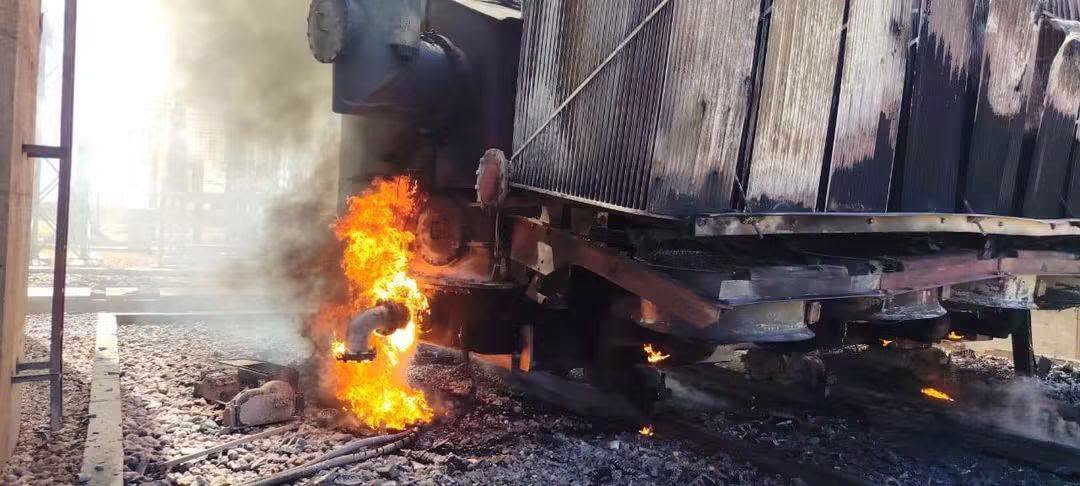
Residents of El Dueim in White Nile state are counting the economic and social costs of a four-day electricity blackout following a drone attack on the Mashkour substation on 26 October. The outage disrupted hospital services, paralysed workshops, and small businesses, and forced daily-wage workers to borrow money to meet their families’ basic needs.
The restoration of electricity to El Dueim in White Nile state has not been enough to erase the impact of four consecutive days without power. The outage, following a drone attack on the Mashkour substation on 26 October, placed additional operational burdens on healthcare institutions, caused financial losses for workshop owners and small businesses, and left workers dependent on daily earnings accumulating debts to support their families.
According to residents who spoke to Radio Dabanga, the city is now operating under a system that alternates electricity supplies between two networks, eastern and western. Under the schedule, one network is disconnected for eight hours, from 06:00 to 14:00, while the other continues receiving electricity. The following day, the arrangement is reversed. Additional interruptions may occur if technical faults arise.
The return to this system followed maintenance and repair work at the Mashkour substation. Residents told Radio Dabanga that the work was carried out amid considerable secrecy surrounding its details and implementation.
Before the regular supply schedule resumed, electricity provision remained erratic. Power returned for about five hours before being cut off again. It was restored on Friday afternoon and remained intermittent over the following two days, before the normal schedule resumed.
During the four-day blackout, El Dueim Hospital’s administration was forced to rely on generators to maintain surgical operations and provide lighting. An employee at the hospital, who requested anonymity and was identified only by the initials A.H., told Radio Dabanga that the hospital had to operate its generator to provide electricity for surgical procedures and lighting during the night.
He explained that running the generator required large quantities of diesel at a time when fuel was acutely scarce in local markets and increasingly expensive, adding considerably to the hospital’s operating costs.
He said the administration had managed to secure fuel despite the difficulties in obtaining it, and operated the generator during daytime hours, particularly when surgical procedures were being performed.
Solar power keeps dialysis centre running
In contrast to the difficulties faced by El Dueim Hospital, the city’s dialysis centre managed to maintain its services throughout the blackout, relying on a solar power system that provided a stable alternative to the public electricity supply.
A female employee at the centre, who requested anonymity, told Radio Dabanga that staff and patients had previously struggled whenever electricity was interrupted because of the difficulty of securing enough power to operate medical equipment and machinery.
However, efforts by charitable individuals, in coordination with the centre’s administration, had helped provide a solar power system, significantly improving the stability of its operations.
She added that the system had enabled the centre to overcome the electricity crisis and continue treating patients. Previously, power cuts had repeatedly placed both staff and patients in difficulty, particularly given the critical nature of dialysis services.
Livelihoods brought to a standstill
While some healthcare facilities managed to find alternative power sources, the situation was very different in the industrial area and El Dueim market, where the blackout brought workshop activities to a standstill.
Haroun Mohamed Ali, who owns a furniture-making workshop, told Radio Dabanga that the power cuts had compounded the difficulties facing workshop owners, who were already struggling with harsh economic conditions. The interruption to electricity had halted their work and left them facing their obligations to customers.
He explained that his workshop had been due to deliver several pieces of furniture, including wardrobes and beds, during the blackout. However, he was unable to complete their manufacture because of the power cuts, despite customers having paid in advance.
The delayed deliveries placed him in an extremely difficult financial position. He was now obliged either to refund customers or fulfil his contractual commitments, while the workshop had stopped production and generated no income throughout the period.
Workers forced to borrow to survive
Furniture workshops were not the only businesses affected. The consequences of the blackout also extended to owners of meat-mincing and grain-milling machines.
Abbas Brir told Radio Dabanga that they had been left without work throughout the outage. He explained that their livelihoods depended on earning money day by day, and that the electricity cuts had removed their only source of income for meeting their families’ basic needs.
He added that the interruption had forced them to borrow money to cover their daily expenses. The financial pressures, he stressed, had become unbearable. People working in these trades could not afford even a single day without work, let alone four consecutive days of inactivity and losses.
Yass El Tayeb, who owns a wood-turning workshop in El Dueim market, said the electricity cuts had compounded the difficulties already facing skilled tradespeople, whose businesses had been declining even before the latest crisis.
He explained that work had been irregular before the blackout, but he had managed to get by on the limited income available. The power cuts, however, had brought his business to a complete standstill, leaving him unable to meet his daily needs.
Although the restoration of electricity has ended the continuous blackout, its economic and social consequences remain. El Dueim continues to depend on scheduled electricity distribution and rotating power cuts to supply its different neighbourhoods.