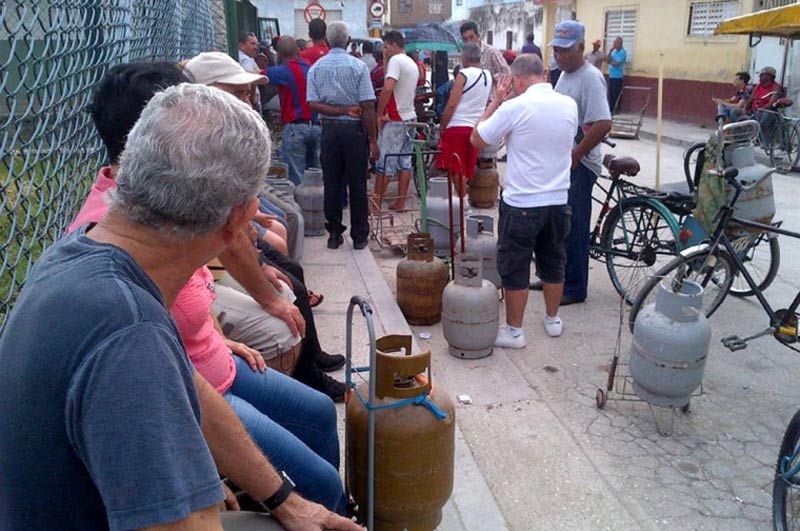
A typical line to purchase a cylinder of cooking gas. Photo: ahora.cu
“The gas is here!”
By Angry GenXer
HAVANA TIMES – That used to be the cry that would spread through Cuban neighborhoods when people heard the sound of gas cylinders and popularly known as “balitas” being unloaded from the truck delivering them to the local gas distribution point.
Those of us with contracts with the Gas Company could receive an allotted amount at certain intervals by presenting our ration book (the family ration card) and the ID card of a family member. Exchanging an empty cylinder for a full one has cost relatively little, but in recent weeks, rumors have been circulating that this familiar part of Cuban life is about to disappear, if it hasn’t already.
In recent years, the supply of liquefied gas in Cuban neighborhoods has gone through several crises. There were periods when each family could purchase gas only once or twice a year. My closest friends haven’t been able to get gas since February, when Trump’s oil blockade measures went into effect.
The lines outside the gas distribution points were legendary. People usually had to spend the entire day there, keeping their family’s cylinder company. Many would get in line before dawn, and there was a time when numbered lists of customers were drawn up, complete with their ID card numbers. Those lists sometimes remained in effect for months because no one knew when the famous truck would arrive.
Bad News?
Since February, the gas truck has come by my neighborhood’s distribution point several times.
But now the news no longer spreads through the neighborhood.
The first time, they said they were only collecting empty cylinders. Most of the time, the distribution points in my neighborhood have been closed.
But the last time the truck showed up around here—a couple of weeks ago—I went over and asked the company workers loading the cylinders whether they had brought gas “for the population” (meaning the subsidized rationed supply). One of the workers looked at me and replied, “Don’t even expect it!” He accompanied his words with a deeply sarcastic gesture.
I started asking around among the neighbors, and what they told me sounded ominous:
The distribution points will no longer sell gas “for the population.” The cylinders arriving are for sales in US dollars through the companies CUBAMAX and KM0, which operate between Cuba and the United States. Payment must be made “from over there” (meaning that even bringing cash dollars to the distribution point won’t get you any gas), and the buyer must provide an empty cylinder.
I continued investigating, and as far as I can tell, there has been no official information, at least not as of the time I’m writing these lines.
Instead, I’ve been told that in some provinces there are places where even paying in dollars from abroad doesn’t guarantee that you can buy gas. Each customer must receive some kind of authorization from their workplace (if they work for a state institution), because there are limited quotas for purchases.
The rumor going around is that this is a definitive situation, something that has already been decided and will be permanent.
It means that yet another basic necessity is becoming inaccessible to the poorest citizens. Just as has already happened with the daily bread roll.
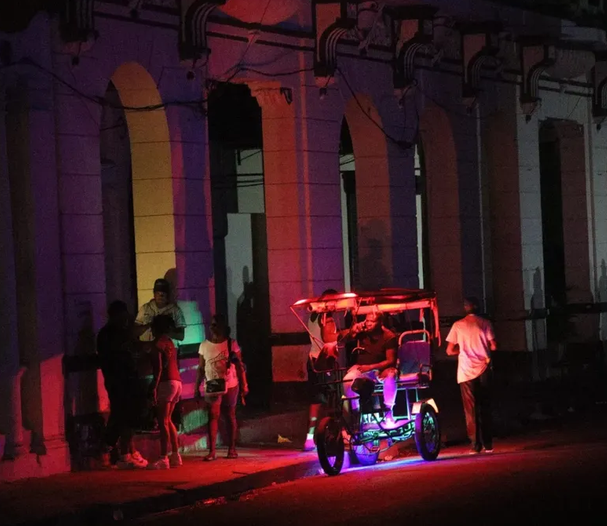
In Cuba, only a few neighborhoods have piped gas, which comes through underground lines. The rest of us depend on bottled gas, and when it’s unavailable and there’s a blackout (which prevents those of us with electric stoves from using them), we must “get creative” with charcoal or other fuels.
Perhaps the reason for not making any official announcements about the new situation is precisely to prolong an endless wait, thereby avoiding a shock that could trigger social unrest in the poorest neighborhoods.
Life in Cuba has become a constant, slow, relentless tightening of the screws, with the continuous stress weighing on a population tired of waiting for news and also reluctant to hear it when it finally comes, because the news that reaches poor people here is always bad.
Read more from Cuba here in Havana Times.