My experience as a student in Leon, Nicaragua
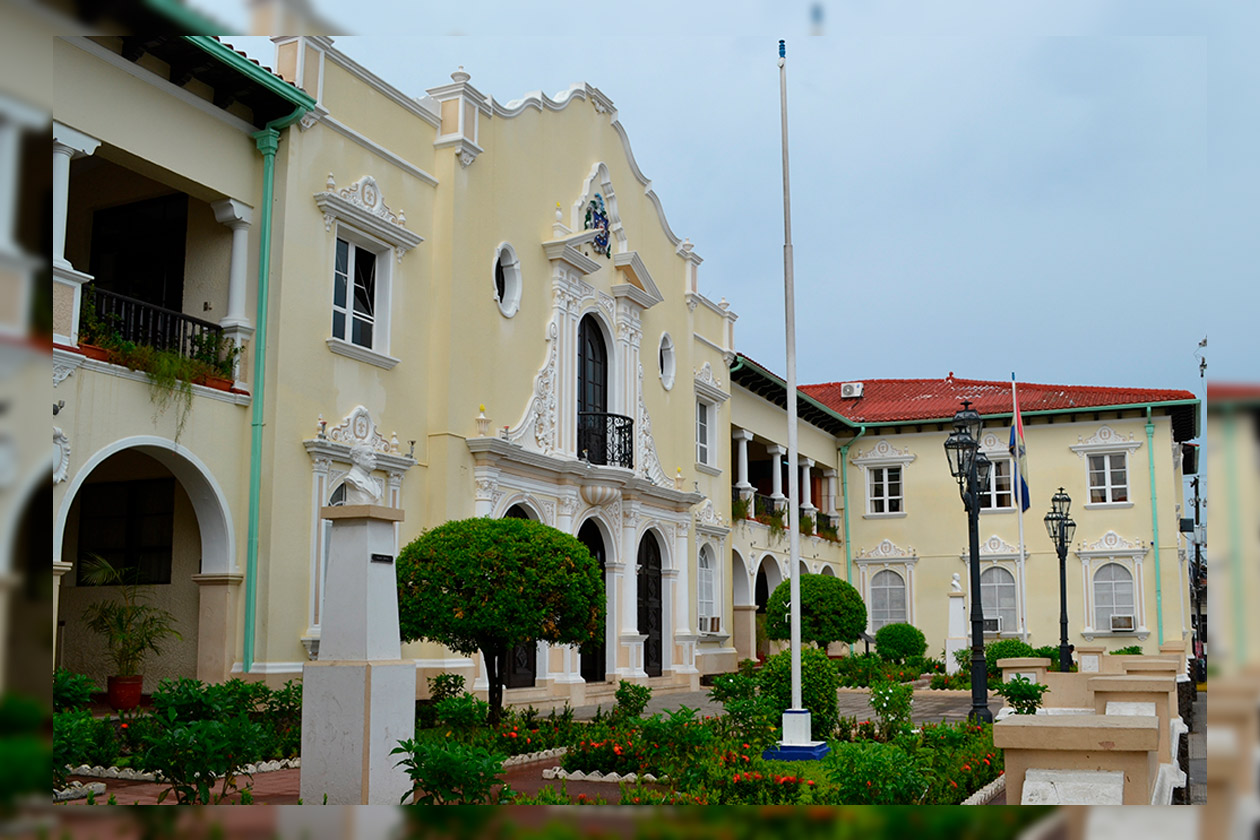
The National Autonomous University of Nicaragua (UNAN-León). Courtesy | Confidencial
My memories of the community of Nicaraguan Caribbean Coast, Indigenous, and Afro-descendant students at UNAN-Leon.
By Brisa Bucardo (Confidencial)
HAVANA TIMES – A few days ago, I was listening to a song by Sir Wally. The mix of Caribbean rhythms and languages—Miskitu, Creole English, and Spanish—which I would personally describe as Afro-Indigenous, brought back memories of parties during my university years in Leon, Nicaragua (2017 to 2022). Back then, we didn’t fully grasp what those spaces meant culturally.
Like many young people from Nicaragua’s Caribbean Coast, I left my region to study at UNAN-Leon, in the western part of the country, and lived in the university dormitory known as La Prepa. For decades, an agreement has allowed students from the Caribbean Coast who meet certain requirements—initially, passing the entrance exam—to receive room and board while pursuing their degrees. That opportunity has meant that different generations of costeños, or people from the Caribbean Coast, have passed through this well-known dormitory.
Different generations of Indigenous and Afro-descendant students had lived at La Prepa, in some cases even members of the same family. So we arrived at a place where others had already lived, confronted racism, created forms of organization, and transformed some of the conditions they encountered.
The area that would become our temporary home had some 17 or 18 rooms that looked more like barracks, some with as many as 15 or 20 bunk beds, bathrooms inside, and virtually no privacy. We also shared the dining hall, wash basins or laundry areas assigned to each room, a basketball court, and other common spaces. Under those conditions, students from different parts of Nicaragua lived together, with a significant presence of young people from the Caribbean Coast.
Before entering La Prepa, it was common to hear stories about costeños who had lived there. Earlier generations told us there had been a time when Indigenous and Afro-descendant students were grouped in rooms separate from mestizo or non-Indigenous students. Miskitu, Mayangna, Creole, Rama, Garifuna, and Ulwa women were placed together in one room, and the same was done with the men. By the time my generation arrived, that segregation no longer existed: rooms were divided between men and women, but we lived alongside students from different backgrounds.
That change did not happen on its own. Before us, there had been generations of students from the Caribbean Coast who confronted those exclusionary conditions, called out the racism, organized, and gradually transformed the space for the generations that followed. We inherited some of those gains without necessarily knowing the full history behind what seemed to welcome us as equals. What might have seemed normal to our generation was something others had to fight for, putting their bodies and mental health on the line.
Racism had not disappeared either. During my years at La Prepa, I witnessed very harsh racist expressions, even from staff members. If something went missing, a Black or Indigenous person might be accused with a “It was you, Blackie.” I also heard the dormitory’s highest-ranking administrator, who has since passed away, use “monkey” as an insult. When we talked about these situations with students from earlier generations, some would tell us that what we were experiencing was nothing compared with what they had gone through, as a way of making us understand the cruelty they had faced in their time.
Those conversations were also a way of learning about our own history as internal migrant students from the Caribbean Coast. By the time we arrived, there was even an elected board representing Caribbean Coast students, chosen in an assembly, just as we legitimately elect our authorities in our communities. This representation helped address situations in which language and cultural particularities needed to be taken into account, including in negotiations with university authorities. I don’t know when it was created or who promoted it, but finding it already there spoke to an underlying history of ethnic resistance.
There was also an intercultural dynamic there that is rarely discussed. We were not a culturally homogeneous group. We represented six ethnic groups, in addition to Caribbean Coast mestizos, and came from different communities, municipalities, and territories. We did not necessarily speak the same languages or share all the same cultural practices. Living together also meant learning from one another, recognizing those differences, and finding ways to support one another without ceasing to be who we were.
From the outside, however, all that diversity could easily be reduced to a single label: “the costeños.” Skin color, accent, where we came from, or not speaking Spanish fluently could shape the way we were treated. Leon proudly claims its status as a colonial city through its architecture and heritage, but colonialism does not remain only in buildings. It can also be recognized in social relationships and in the way certain bodies, languages, and peoples are viewed.
Far from our territories, we ended up giving that same word another meaning. We did not stop being Indigenous, Afro-descendant, or Caribbean Coast mestizos—which, by the way, is not the same as simply being mestizo. But what from the outside could reduce us to a single face also became, among ourselves, a way of recognizing one another as people from the same region. We did not need to be the same to build a collective identity, and besides, we were quite young.
We sought one another out through very ordinary things. If someone was selling Caribbean Coast-style fried food, we let each other know. If someone made patí, word got around. We gathered at friends’ houses, cooked, and kept one another company. The costeño parties were part of that same way of finding each other.
When I arrived in Leon, those parties already existed. In my generation, I mainly remember the ones held at the Oxígeno nightclub, which were organized and financed by the costeño community itself. Information circulated among us, and people even posted signs outside some rooms with logistical details. On the night of the party, we paid a symbolic entrance fee. The agreement with the club was that it kept the proceeds from food and drink sales, while the organizers received the money from admission. Those funds were used to pay costeño DJs, rent and transport equipment, and cover other expenses.
These parties became so well known that young Caribbean Coast people living or studying in the capital would organize trips to Leon. In this way, a party that might begin among students ended up bringing together young people from different Caribbean Coast communities and places who, at that moment, were surviving in another territory in pursuit of our dreams.
The preparations began at La Prepa. We got dressed up; the girls braided one another’s hair and also braided the guys’ hair. There was a particular freedom to seek out whatever made us look and feel more costeño. We were young people who wanted to dance, hang out together, and have a good time. Nobody was thinking of it as resistance.
At Oxígeno, Indigenous, Afro-descendant, and mestizo young people from different parts of the Caribbean Coast came together. The music was often more closely associated with Afro rhythms and dancehall and did not necessarily include cultural expressions specific to all our peoples. That did not prevent us from recognizing ourselves in that space. We were different, but those differences could come together without having to merge into a single identity.
And for a few hours, something happened that now seems especially important to me. At the university, in the city, and in many places on Nicaragua’s Pacific side, we were normally the ones expected to integrate, learn the codes, and adapt. At the costeño parties, that relationship was reversed. The space was created by us, and anyone who came had to integrate into it and respect it, not the other way around.
We could express ourselves without worrying about looking too costeño. Our braids, accents, bodies, and ways of dancing needed no explanation. Looking Black and costeño was tuani—cool. What outside that space could mark you as different was precisely what made you feel that you belonged there.
After the Oxígeno nightclub burned down, we began going to other places, including 23 Bar. It was no longer a coastal party, but I remember that whenever Caribbean music came on, we would start looking for one another across the room. One person would come over, then another, until we ended up forming a whole cluster of costeños dancing together. Even if that music did not specifically belong to everyone’s culture, we felt it was ours. For a few minutes, we once again created a space within another space.
Today I understand those practices as a way of building territory far from home. For Indigenous Peoples, territory has a historical, spiritual, political, and collective dimension that cannot be relocated. But I am talking about building a sense of belonging and community when we are far away, especially in places where we are usually seen as outsiders who don’t quite belong.
We also tend to think about Indigenous and Afro-descendant resistance through its most painful expressions: racism, violence, displacement, or the defense of territory. But there are everyday forms of resistance that we document less often. Organizing ourselves, cooking our food, speaking our languages, braiding one another’s hair, dancing, and seeking one another out are also ways of collectively sustaining our identities.
The costeño parties were parties, and they do not need to stop being that for me to recognize today everything that surrounded them. We were young people enjoying our university lives, but we were also part of a history that had begun long before us. A Sir Wally song brought me back to that memory and made me think about the generations who came before us, about what they had to transform, and about something we continued doing almost naturally: seeking one another out.
We did not need to stop being Miskitu, Mayangna, Creole, Rama, Garifuna, Ulwa, or Caribbean Coast mestizos in order to build something together. Faced with a society that often chose to see us as a single face, we did something different with that label, “the costeños”: we turned it into community, belonging, and a space of our own. That, too, was how we resisted and built territory far from home.
First published in Spanish by Confidencial and translated and posted in English by Havana Times.
Lee más desde Nicaragua aquí en Havana Times