28th annual Dakota Feeder Calf Show and Feedout set for Oct. 17
The Dakota Feeder Calf Show and Feedout will provide producers the opportunity to experience retained ownership of calves beyond the cow-calf part of cattle production.
The 28th annual Dakota Feeder Calf Show and Feedout is set for Oct. 17 in Turtle Lake.
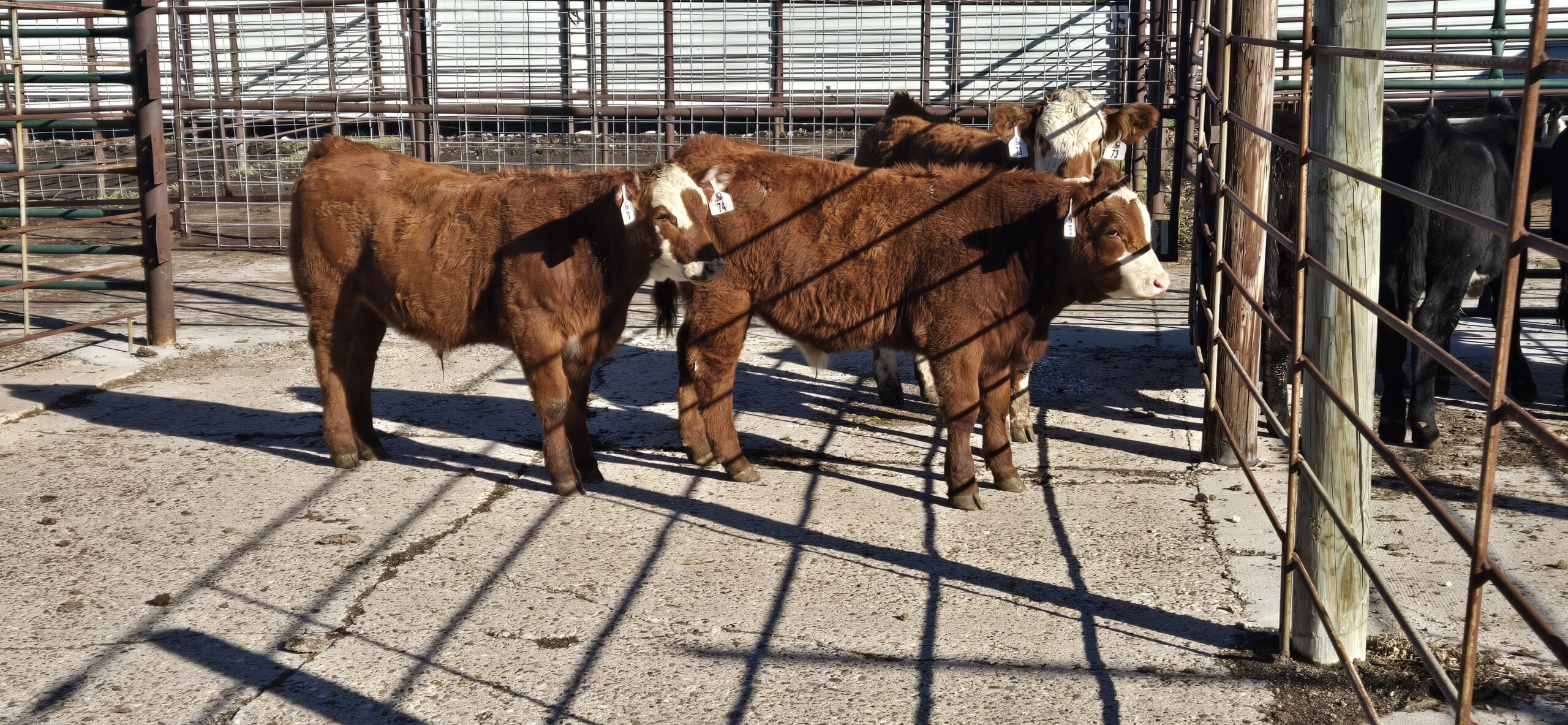
Interested consignors will deliver 500- to 700-pound steer calves before 10 a.m on the day of the show. Each producer can consign one or two pens containing three or four calves. The calves are exhibited and evaluated that afternoon and then shipped to North Dakota State University’s Carrington Research Extension Center feedlot to be fed to finished market weight.
“After 27 years of comparing calf performance, North Dakota cattle ranchers are finding superior growth and carcass characteristics,” said Karl Hoppe, NDSU Extension livestock specialist at NDSU’s Carrington Research Extension Center. “Since cow herd genetics can change over time via bull and heifer selection, sending cattle to the Dakota Feeder Calf Show and Feedout gives the rancher information on how their selections are advancing their herd.”
NDSU Extension and the Carrington Research Extension Center partner with the Dakota Feeder Calf Show to provide producers an opportunity to experience retained ownership of calves beyond the cow-calf segment of cattle production.
“There are several ways to collect growth performance carcass data from your calves,” said Lucas Mota, animal scientist at NDSU’s Carrington Research Extension Center. “The best is to feed out your entire calf crop, but that takes considerable time, effort and funds.
“An alternative,” continues Mota, “is to consign a group of calves to a feedout project. Your risk is less, and a feedout project provides a substantial amount of information about the calves.”
Ron and Sue Wardner, Dakota Feeder Calf Show leaders, have been consigning calves since the feedout began. They still enjoy comparing their weaned calves in October to the finished calves in May.
“The calves really grow, and we do see differences in herd sires,” said the Wardners.
During the 2025-26 feedout, the calves gained an average of 826 pounds in 263 days, with a total feeding cost (excluding interest) of $1.08 per pound of gain. The average sale weight was 1,450 pounds. The calves were fed at a market-weight break-even point of $261.77 per hundredweight.
“It’s the variation among cattle that makes this project educational and a real eye-opener,” said Hoppe.
In the 2025-26 feedout, the spread in net return per head between the average of the top and bottom five herds was $338.84. The spread between the top and bottom herd was more noticeable ($617.27 per head). Average daily weight gain in the feedlot was 3.24 pounds for the top-profiting herd and 2.96 pounds for the bottom herd.
“Small differences in production have a huge impact on profit,” said Hoppe.
Feedout project staff will gather data on the rate of gain, feeding costs and other characteristics during the trial. After the calves are marketed, the staff will collect and provide information to the entrants on carcass weight, meat quality, feeding expenses and value.
Calves should be prevaccinated for BVD, PI3, IBR and BRSV, Mannheimia, Clostridials and Histophilus somni. Booster vaccinations will be administered upon delivery to the show.
Producers will be assessed an entry fee of $20 per calf. Dakota Feeder Calf Show officials will present awards to producers at the end of the trial.
–NDSU Extension
Farmers should take stock of forage supply before winter feeding begins
Completing a forage inventory now will aid in making ranch-level decisions and reducing costs.
Due to the significant impacts of drought on forage production in 2026, forage supplies may be tight this winter.
Now is a good time for cattle producers to evaluate forage supplies and develop a feeding plan for winter, according to North Dakota State University Extension specialists.
“Understanding how much forage is available, what it costs and how much may be lost during feeding can help producers manage one of the largest expenses in cattle operations,” said Vinicius de Souza Izquierdo, NDSU Extension beef cattle specialist.
The first step is to conduct an inventory of hay, silage and other feeds available for winter. For harvested hay, bales should be grouped by lot, defined as similar species harvested from the same field within a 48-hour period.
James Rogers, NDSU Extension forage crops production specialist, recommends using a commercial scale to estimate bale weight by weighing several loads or multiple individual bales. Once the weight is known, determine the dry matter content because moisture affects weight but does not provide nutrients to the animal.
Dry matter can be determined using a Koster moisture tester, the microwave moisture testing method, any other electronic method or by submitting a sample to a commercial laboratory. If dry matter is unknown, an estimate of 85%-90% can be used for an initial hay inventory; however, laboratory analysis is recommended for ration balancing.
The second step is to estimate feed needs, according to Karl Hoppe, NDSU Extension livestock systems specialist. Intake varies depending on forage quality, animal size, production stage, weather and supplementation.
“For initial planning, an estimate of 2.5% of body weight can be used to determine forage dry matter intake per animal per day,” said Hoppe.
Having enough hay on paper does not mean all of it will be consumed. If forage is stored outside, dry matter losses could be as high as 20%, while losses may decrease to about 7% when stored inside.
Feeding losses also vary by feed quality and feeding system.
When hay is fed in bunks, waste may range from 3% to 14%, according to Rogers.
“If bales are rolled out on the ground, waste could reach 45%, particularly when cattle are provided multiple days of hay at one time,” said Rogers.
With free-choice access to large quantities of forage, intake also may increase beyond what is needed to meet requirements.
If conditions allow, daily feeding can help reduce waste. For example, if hay costs $100 per ton, reducing waste by 25% could save approximately $25 per ton. These savings may help offset the cost of investments in equipment such as feed bunks, bale processors or feed wagons.
Producers also should include an allowance for potential storage and feeding losses.
When purchasing hay, the price per ton or bale does not necessarily indicate the best value. Producers should consider bale weight, moisture content, nutrient concentration and transportation costs. A less expensive bale is not necessarily a less expensive source of nutrients.
These calculations can help identify a potential forage shortage, but actual feeding decisions should consider forage quality and cattle nutrient requirements, according to Miranda Meehan, NDSU Extension livestock environmental stewardship specialist.
“Laboratory forage analysis and a balanced ration are recommended when developing the winter feeding program,” said Meehan.
Farmers and ranchers looking to buy or sell hay, corn and other feedstuffs can use NDSU’s FeedList to connect with other producers. The free service also includes pasture available for rent and information about available feeds.
The North Dakota Department of Agriculture’s Hay Hotline and interactive map can help producers locate hay and feed for sale, pasture or hay land for rent and hay transportation services across the state. The map is available at https://www.nd.gov/NDDA.
Forage prices are likely to increase as the winter feeding period approaches.
–NDSU Extension