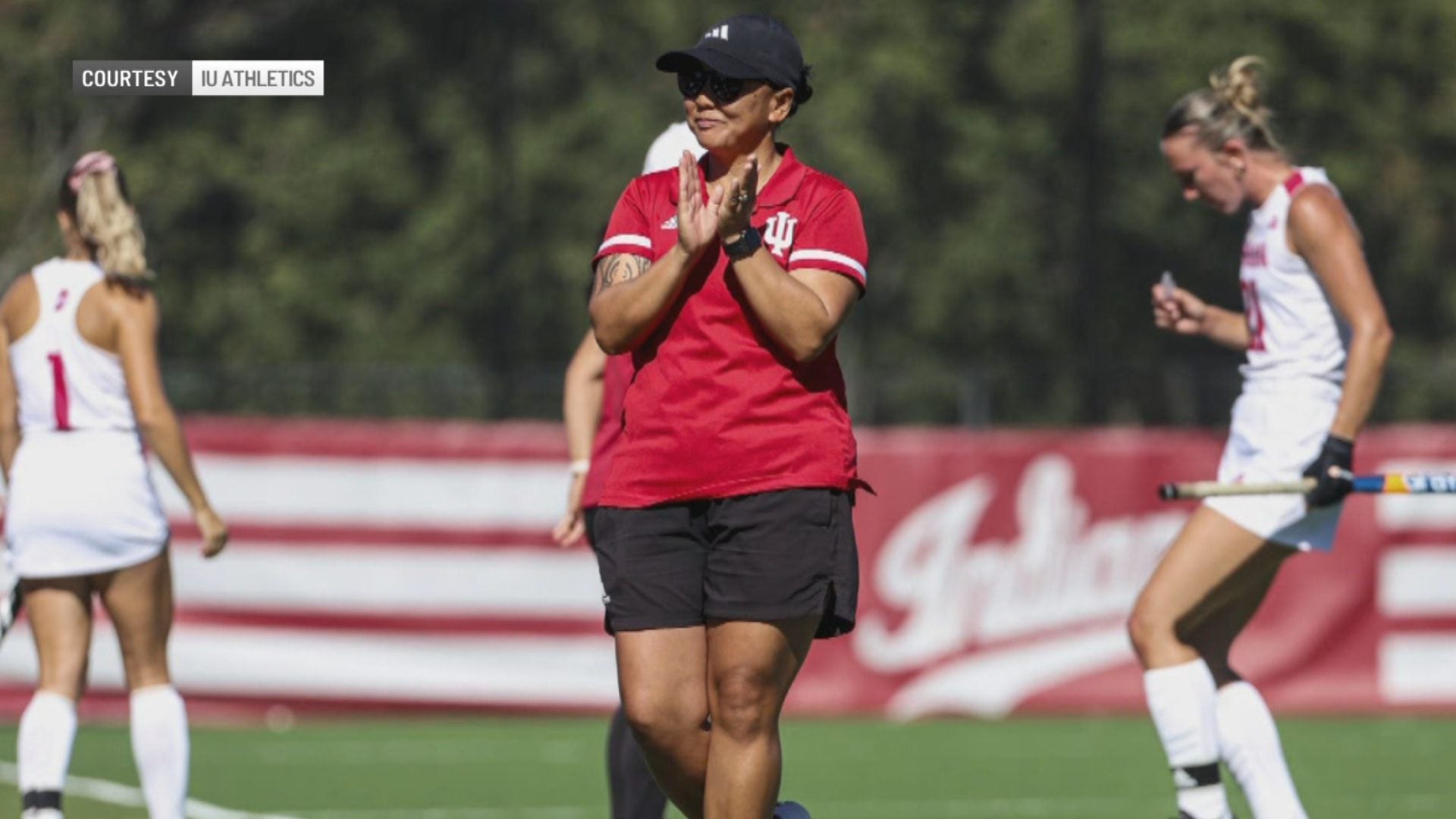
BLOOMINGTON, Ind. (WISH) — An assistant field hockey coach at Indiana University is shaping more than athletes: She’s helping redefine what leadership looks like in sports.
Dani Castro, a Pacific Islander and assistant coach at IU, is breaking barriers in her field, and also paving the way for future leaders.
Castro has spent years building up IU’s field hockey program, first as a player, and now as an assistant coach.
“You can never underestimate the power of one, and I’m living proof of that,” Castro said.
Since returning to her alma mater in 2019, the 2009 graduate helped lead IU to record-setting success. That includes seven shutout victories in one season (a program best) and back-to-back winning seasons for the first time in nearly a decade.
But the journey hasn’t always been smooth. Early in her coaching career, Castro was often mistaken for head coach Kayla Bashore, who is also of Asian American and Pacific Islander Heritage.
“People didn’t know I existed, and so, what happened during that time period is Kayla had to fight for me,” Castro said. “Dani exists. she’s a real person here at IU. While its odd to have two AAPI staff members in an obscure sport like field hockey exist, it happens.”
Despite being overlooked, Castro has become a visible and vocal leader. She recently shared her story on a university panel called Redefining the Game, focusing on representation, microaggressions, and the importance of inclusion in sports leadership.
She hopes her presence sends a clear message to the next generation.
“It says that there is space for you,” Castro said. “That someone in that arena says that you are worthy to be here. That your cultural values, your language, your leadership, your skin tone, and the things that you bring can be accepted.”
Through her role, Castro is paving the way for others, on and off the field
“Your voice is necessary, and if this is your passion, then you honor yourself and you honor the people that raised you to pursue your passion,” Castro said. “I think that in itself is a worthy cause.”
Castro’s message is clear: Representation isn’t just important, it’s necessary, and it starts with being seen and having a sense of belonging.