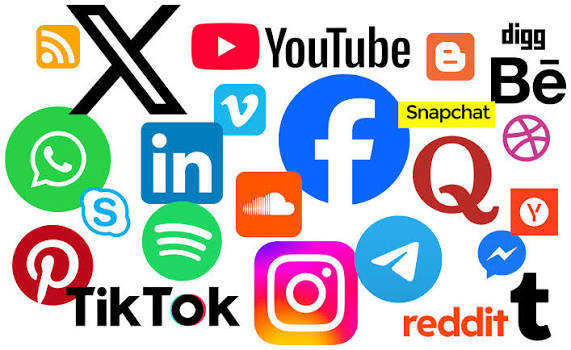
Many of the social media platforms.
By Ernesto González Díaz
HAVANA TIMES – I have found it difficult to begin writing about this subject because it is a thorny one, and I am by no means knowledgeable about it, much less an expert. I simply want to encourage reflection and invite people to approach rationally something that, in one way or another, affects all of us these days.
A few days ago, Cuba’s National Zoo announced through its social media accounts that it was temporarily closing due to transportation and electricity problems. A Facebook user immediately posted on her profile expressing concern for “the well-being of the poor animals, who were surely dying of hunger and disease” (at no point had the zoo mentioned any problems concerning animal welfare).
The user recalled that in 2017 the zoo had received a major donation of wildlife specimens from Namibia and “demanded, on behalf of animal advocates, their immediate return to their natural habitat.” Other users immediately began sharing the post and making comments such as, “If the Cuban state doesn’t care about people, it’s going to care even less about animals,” or “They all need to be returned to where they came from,” along with many others in the same vein. This made me wonder:
How much would it cost to send a group of these animals back to Namibia? Would those animals be able to adapt and survive in the wild after years of living in captivity? Obviously, not all the zoo’s animals come from Namibia. There are animals from Asia, South America, North Africa, and Europe. Were they demanding only that the Namibian animals be repatriated? What about the others? The fact is that the user’s post was shared dozens of times and received a great many comments.
You don’t have to be an expert in economics to have some idea that transporting hundreds of wild animals from Cuba to Namibia could cost hundreds of millions of dollars. Given the multisectoral crisis Cuba is experiencing, how could it possibly come up with that amount of money?
According to The New York Times, there are nearly 7,000 containers carrying medicines, food, medical supplies, and other goods destined for Cuba stranded at different ports around the world because no shipping companies are willing to bring them to the island. This is especially the case after the French company CMA CGM decided to stop shipping to Cuba out of fear of sanctions that could be imposed by the US Treasury Department.
I offer this example to show that sometimes we act based on emotions and feelings, and we post and share things on social media guided more by those impulses than by rational and logical analysis. Incidentally, just two days later, the zoo itself announced that the electrical problem affecting it had been resolved and that it would reopen to the public on September 16.
Umberto Eco, the prominent Italian writer and intellectual and professor of semiotics, said that social media gives a Nobel Prize winner and an idiot the same voice.
About a year ago, when the country was being ravaged by chikungunya, an extremely unpleasant and debilitating viral illness transmitted by the Aedes aegypti mosquito, several hospitals began experimentally treating some patients with the drug Jusvinza, a medication developed in Cuba to control excessive joint inflammation and regulate the autoimmune response.
The drug had already been successfully tested in patients with severe COVID-19. Around that time, another Facebook user shared a post that said something along the lines of: “Jusvinza is not a vaccine. Don’t let the government deceive you and use you as a guinea pig.”
At no point had anyone said that Jusvinza was a vaccine. Rather, it was described as a drug that helped patients recover and avoid lasting effects from the arbovirus infection in question. Someone pointed this out to the user, and she replied, “I’m just sharing the information.” In other words, do you share information without checking whether it is true simply because it fits a narrative you already consider true by default?
Umberto Eco, the prominent Italian writer and intellectual and professor of semiotics, said that social media gives a Nobel Prize winner and an idiot the same voice. Anyone can publish anything simply because they like it, dream it up, or imagine it, driven by emotion rather than rational thought. The worst part is that many idiots have more followers than Nobel Prize winners.
I believe we need to be more rational and think a little before sharing or believing just any piece of information. These days, a great deal of false information, half-truths, and information taken out of context is shared on social media simply to reinforce or establish a particular narrative.
Sometimes people don’t express an opinion about an issue; instead, they insult and attack those they dislike or those who think differently. Tons of hatred are poured out over political and social issues. Homophobia, xenophobia, and aporophobia (fear, rejection, and hostility toward poor and vulnerable people) are exacerbated. People are insulted and bullied for thinking differently, and that is not worthy of respect.
A few years ago, a friend told me, “For the sake of my mental health, I deleted all my social media accounts,” and I think he had a very good point.
Read more from the diary of Ernesto Gonzalez here on Havana Times.