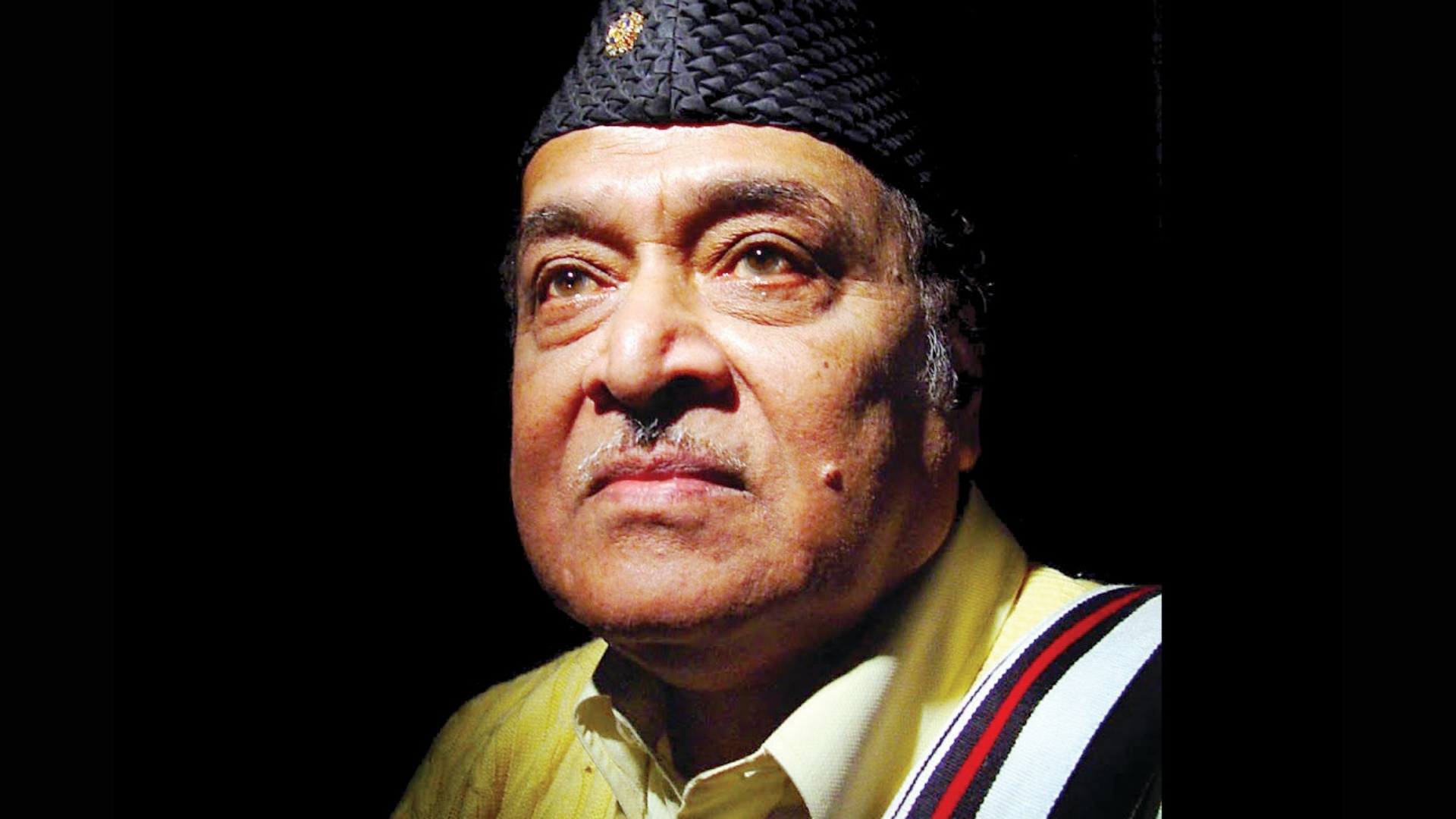
As Assam and the nation mark the 100th birth anniversary of Bharat Ratna Dr Bhupen Hazarika this September, we are not just celebrating a singer.
We are revisiting a worldview. Born in Sadiya in 1926, Dr Hazarika died in 2011, and 2026 has been declared his year-long birth centenary, with tributes pouring in at his memorial, Bhupen Hazarika Samannay Tirtha in Jalukbari, cultural voyages on the Brahmaputra, and a concluding national celebration planned at Bharat Mandapam, New Delhi, on November 29, with the Prime Minister and the President of India as chief guests. The centenary is an apt moment to ask: why does his music still feel urgent?
Lyrical Value: Poetry of Protest and Hope
Dr Hazarika’s greatness lay not in vocal virtuosity alone but in lyrical substance. His songs are progressive manifestos set to melody. Take ‘Agnijugor Firingoti Moi’ — literally, “I am the spark of the age of fire”. It is not a love song; it is a self-declaration of a youth who refuses to be a silent spectator to exploitation. The imagery of fire, chains and awakening makes it Assam’s own Internationale.
‘Bistirna Parore’ remains his philosophical summit. Inspired directly by Paul Robeson’s ‘Ol’ Man River’, which he heard in New York, he transplanted the Mississippi to the Brahmaputra: “Bistirna parore asankhya jonore…” — On the vast banks, countless people continue their struggle. The river becomes a witness to human suffering and resilience. It is universal because it is deeply local.
Similarly, ‘Manuhe Manuhor Babe’ (If a man does not think of a man) is a simple, almost child-like moral question that demolishes all sectarianism. ‘Sagar Sangamot’, ‘Dola He Dola’ — each maps geography onto humanity.
His lyrics reject parochialism; they speak for tea-garden labourers, river-erosion victims, Dalits and migrants with equal empathy. This lyrical progressivism is deliberate. It is poetry of ‘Samannay’, or harmony, that demands justice first.
Folk Roots, Global Routes
Hazarika was a serious ethnomusicologist before the term became fashionable. He waded into the folk traditions of Northeast India — Bihu, Tokari, Borgeet, Goalparia, Naga chants, Mising Oi-nitam, Bodo Bagurumba, Khasi folk traditions — and treated them not as exotic ornaments but as foundational grammar.
He retained the pentatonic ache of a Bihu flute or the percussive call of a dhol, but arranged it with Western choral harmonies and orchestration he learned in the US. That is how a lullaby from Dhubri could sit comfortably on a stage in New York.
When he returned to India after his studies abroad, he spent his career popularising Assamese culture at national and international levels, not by diluting it but by transcreating and translating it.
His other timeless song, ‘Pratidhwani Shuno’, captures the extraordinary curiosity of a young man growing up in a remote corner of Northeast India, whose imagination refuses to be confined by the surrounding hills.
He longs to hear and understand the echo of sounds coming from beyond those hills, from neighbouring China and from a world that, though geographically distant, is intensely close to his imagination.
What makes the song remarkable is this outward-looking consciousness — the desire to know, connect and understand what lies beyond one’s immediate horizon. It is perhaps this youthful curiosity, born in the geographical margins of India, that gives Bhupen Hazarika’s vision its remarkably global and universal character.
Not a Commercial Singer, But a Social Instrument
Hazarika could never be a mere commercial playback professional, and he never wanted to be. Being highly educated — with a BA and MA in Political Science from Banaras Hindu University and a PhD from Columbia University in 1952 on audio-visual techniques in adult education, as well as a Lisle Fellowship at Chicago — he consciously chose a different path.
In New York in 1949, he befriended the great African-American singer, actor and civil rights activist Paul Robeson. Robeson’s famous assertion that “guitar is not only a musical instrument, but it is a social instrument. With one stroke of the guitar, you can change the pattern of the whole society” had an everlasting impact on him.
Following Robeson, Hazarika declared music an “instrument of social change”. Like Robeson, who sang for Black pride and workers’ rights, Hazarika sang against caste, class, communal hatred and ecological destruction.
He taught briefly at Gauhati University, worked at All India Radio, made award-winning films, but used every medium to educate adults, exactly as his thesis proposed. For him, a song was a classroom.
Why the Centenary Matters Today
At 100, Bhupen Hazarika is more relevant than ever, not merely as a nostalgic figure. In an age of algorithmic, commercial music, he reminds us that a song can still have an argument. In an age of divisive identity politics, his vision of Samannay — “the man who gave Assam a cultural identity through his songs and created a vision of the State that extended beyond geography” — offers a progressive Assamese identity that is confident, not chauvinistic; rooted, yet cosmopolitan.
The centenary, therefore, is not just remembrance. It is a syllabus. As journalist Anuradha Sharma Pujari said at the centenary launch, it is “not merely a commemoration of a life that had passed but the beginning of another century of Hazarika’s influence”.
To listen to ‘Bistirna Parore’ or ‘Ganga Behti Ho Kyun’ today is to ask again, on the vast banks of our own times, whose struggle are we ignoring? That is the question Bhupen Da leaves behind for the next hundred years.
Also Read: Moi Bhagora Nai: A year since Zubeen
Basanta Kumar Bezbaruah
Reporter, EastMojo
You just read a story that took days to report. Help us keep our reporters on the ground in the Northeast.
For Rs 83/month – less than a cup of coffee
Ad-free reading, support and keep important stories alive
Become a Member
OR
Support once (any amount)
₹199
Recommended ₹499
₹799
Other Amount
or
Scan to pay via UPI