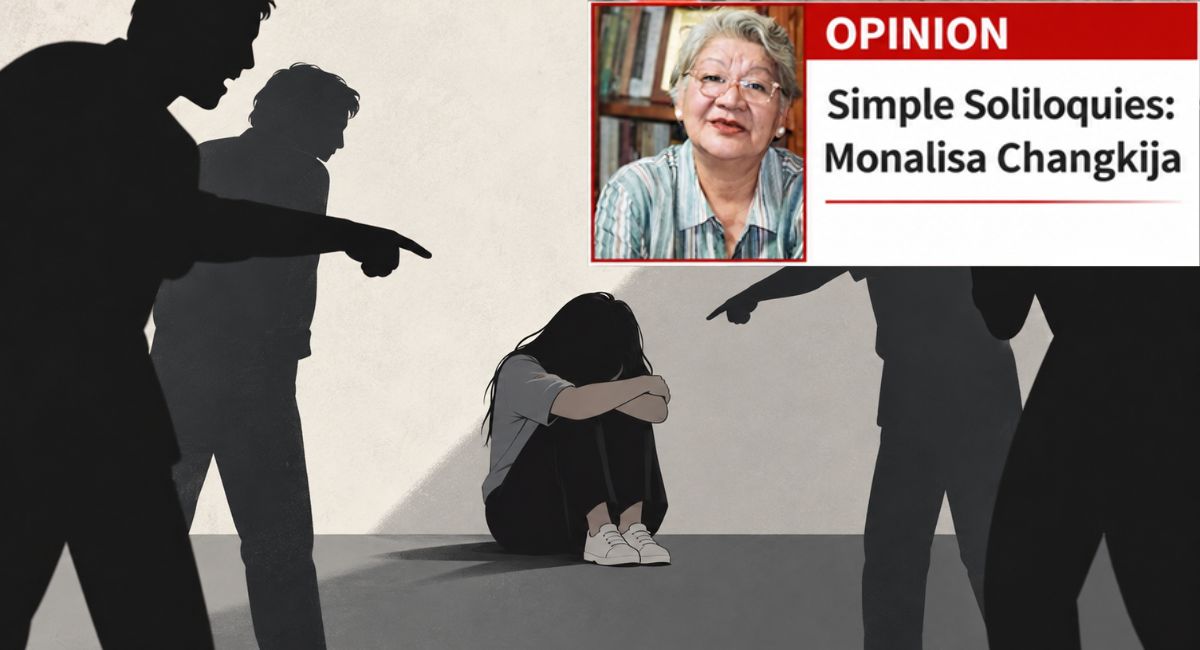
Bullying is a reality that is rarely discussed, much less addressed and checked, even in Nagaland. And, precisely for that reason, bullying continues unabated. That is why it was a pleasant surprise to read about the issue on the front page of a local newspaper here in its September 10, 2026, issue. The issue of bullying is not something that can be explained in a few words or laughed off as childish pranks. The impact of bullying is so severe that, besides causing lifelong physical, mental, emotional and psychological impairment, it costs precious lives. Bullying is also not just confined to the young or schoolyards. Bullying also happens to adults, women, the disabled and vulnerable sections of society everywhere on a regular basis. So, what exactly is bullying?
Bullying is said to be unwanted, aggressive behaviour that is repeated over time and involves a real or perceived imbalance of power. The key elements of bullying are: Intentional: The behaviour is deliberate and meant to cause harm or distress. Repetitive: The hurtful actions happen more than once or have the potential to happen multiple times.
Power imbalance: The person doing the bullying uses their physical, social or emotional power to control or harm someone who has less power or difficulty defending themselves.
The main types of bullying: Physical bullying: Hurting a person’s body or damaging their personal belongings (e.g., hitting, kicking, pushing or stealing things). Verbal bullying: Using spoken or written words to hurt someone (e.g., name-calling, teasing, taunting or making threats). Social/relational bullying: Hurting someone’s reputation or relationships (e.g., leaving someone out on purpose, spreading rumours or embarrassing them publicly). Cyberbullying: Using digital tools like mobile phones, text messages, email or social media to threaten, harass or humiliate someone.
The key elements and main types of bullying clearly indicate that all of them happen every day at home, in schools and other educational institutions (think of the terrible life- and limb-costing ragging in schools and colleges), in the street and at a national level. The reasons why people bully are varied and encompass issues of integrity, value systems, failure of religion to instil a sense of respect for human dignity in its followers (in fact, religion is used as a bullying tool), abuse and misuse of power, wealth and status, a perverse sense of entitlement, bad upbringing, bad examples at home and bad examples at a societal level by parents, elders and those in positions of constitutional, traditional and other forms of societal power. The list is not exhaustive, but suffice it to say that when wrongdoing and criminal acts are not nipped in the bud and are not called out by those who are responsible for protecting and defending the vulnerable, bullies are created and run amok.
It is normally believed that only males bully, but there are female bullies too. The methods of bullying may be different, but the impact is no less severe and tragic. Several months ago, a video of teenage schoolgirls in uniform bullying and physically assaulting another student went viral in Nagaland. Then a similar one went viral too — all-girl bullies in action. These videos were later removed, apparently because both the bullies and the victims were underage. We don’t know if any disciplinary or legal action was taken against the bullies and whether the victims received justice and were recompensed. But we do know that bullying is a reality in Nagaland, which is conveniently ignored and collectively pushed under the carpet.
State education authorities and those of individual schools are no doubt working on measures to stem/stop bullying, but despite teachers reporting such incidents, under-reporting apparently remains a challenge in assessing the actual extent of the problem. It also appears that access to professional counselling remains limited in some schools, with existing support often provided through teachers or internal counselling arrangements. According to a child rights activist quoted in the aforesaid report, reported cases might not reflect the actual extent of bullying and harassment among children, as many remain silent due to fear, embarrassment, confusion or uncertainty about whom to approach for help, and that “Bullying does not stop happening simply because it is not reported,” adding that some incidents occur away from the observation of teachers and school authorities. According to the report, parental cooperation was also identified as important, with one teacher saying that securing full cooperation from parents could sometimes be difficult.
The National Education Policy (NEP) 2020 underlines the need for safe, inclusive and supportive learning environments, but who will supervise and monitor whether this aspect of the Policy is actually implemented in schools? Home is supposed to be the safest place, but it is well known that home is sometimes the worst place, especially for women and children. The problem with policies is that they do not actually detail implementation and monitoring mechanisms. If they do, there is no supervision of those entrusted with these responsibilities. There are too many cracks that allow perversities and aberrations to destroy human lives. So, wherein lies the solution? Human beings tend to look for and find guilt everywhere and in everyone else but ourselves, thus creating the perfect opportunity for more perversities and aberrations, more abuse and misuse of power, wealth and status, and more reasons to impede justice. And the best way to do that is to remain silent, whitewash wrongdoings and push the ugly and the shameful under the carpet. This then underscores that human beings can differentiate between right and wrong — unfortunately, knowing is not doing.
Bullying continues unabated because society enables it. Look at our governments, political parties and personalities, look at the goondaism, look at the mafia-like gangs, under the guise of nice-sounding respectable names, controlling our businesses and every other aspect of our societal life, and look at how strength and power create fear. Look at the majoritarian grammar and language of our national life. Children, particularly, learn from example. Considering the examples we have set in every aspect of our societal life, bullies will continue to run amok, and all mechanisms to stop or stem bullying will be just band-aid measures. That is the reality of bullying.
Monalisa Changkija is a Dimapur-based veteran journalist, poet, and former Proprietor, Publisher, and Editor of Nagaland Page.