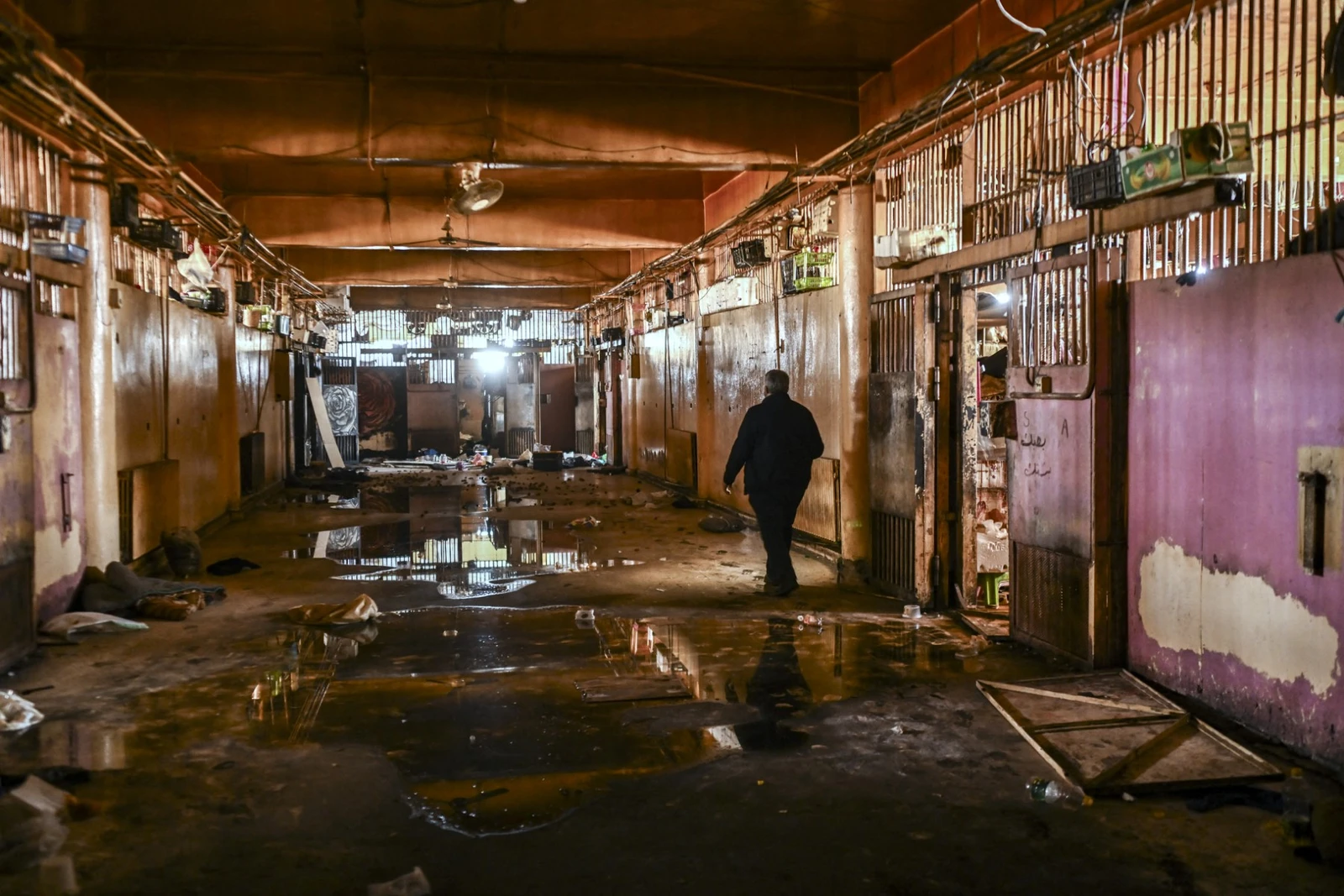
Testimonies from detainees recently released from prisons run by the Syrian Transitional Government describe months, and in some cases years, of arbitrary detention, repeated transfers between detention facilities across several governorates, and widespread physical abuse, mistreatment and complete isolation from their families. Among the most striking accounts is that of a woman arrested with her three-year-old child on accusations of recruiting young people into the ranks of the Syrian Democratic Forces (SDF).
A Mother Detained with Her Child
Hala Hami Aibo, a resident of the village of al-Jaadah in the Manbij countryside, said that she and her family worked transporting agricultural labourers between rural villages before Transitional Government forces arrested her at a checkpoint in Manbij. She was held in a prison in the city for two and a half months.
According to Hala, she was accused of recruiting young men into the SDF and spent most of her detention in Manbij with her three-year-old child. She said she did not know the name or exact location of the prison because she had been taken there blindfolded. In the days before her release, she was transferred first to a prison in Deir Ezzor and then to al-Hasakah.
Catherine Qassem Issa, originally from Damascus, gave a similar account. She said she had been visiting a friend in al-Tabqa when she was accused of joining the SDF. On her return journey from al-Tabqa to Damascus, the vehicle in which she was travelling was stopped. Although no prohibited items were found, she was detained.
Her brother arrived shortly afterwards in an attempt to secure her release, she said, only to be detained himself. He was held alongside her for seven days before being released, while her interrogation continued.
Catherine said she spent a year and two months in detention on accusations of recruiting women into the SDF. She was interrogated at the Political Security Branch in al-Mazzah, a facility long associated with the former regime’s detention and interrogation of dissidents, before being transferred to a prison in al-Nabk, then to Deir Ezzor and finally to al-Hasakah.
Transfers Between Prisons and Physical Abuse
Four men who were released described broadly similar experiences, marked by repeated transfers between prisons and detention centres.
Shaheen Othman said he had been held in both al-Rai and al-Hassiya prisons after Turkish intelligence arrested him in Jarabulus in November 2024 while he was travelling towards Manbij. He added that al-Hassiya prison held more than 250 detainees from al-Hasakah, Afrin, Raqqa, Amuda and Tel Abyad, also known as Kri Spi.
Mustafa Younis, from Kobani, said he was arrested on January 12, 2026, and subsequently moved through a succession of detention centres, from Homs to Damascus, then to al-Hassiya prison, followed by Deir Ezzor and al-Hasakah, before his eventual release.
Ahmed Ali al-Jassem, from Raqqa, said he was arrested in Latakia on August 10, 2025, after being reported by an informant. He was transferred from al-Hassiya prison to al-Rai military prison, then to Deir Ezzor prison and finally to Manbij Central Prison.
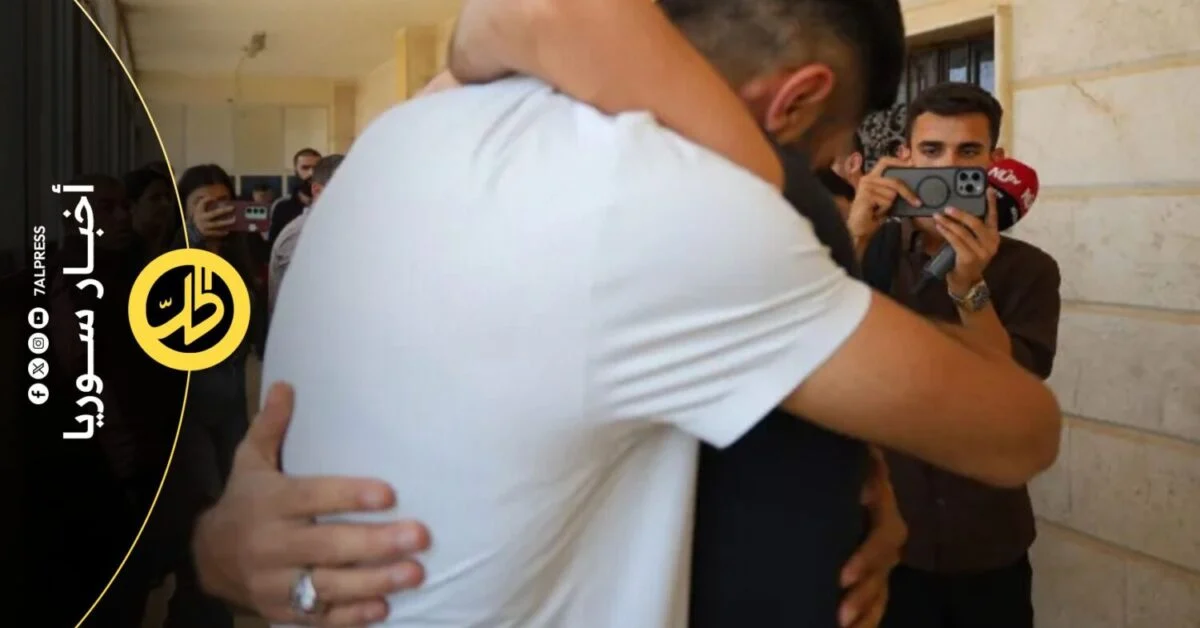
Al-Jassem described conditions as poor and said detainees were beaten by factions controlling the security branches. He added that his joy upon release “could not be described” as he looked forward to being reunited with his family.
Shaaban Muhammad, from Afrin, said he was arrested by local factions in 2024 before being handed over to General Security and detained in al-Hassiya prison. He said inmates there were routinely beaten. Throughout his detention, his family in Afrin’s Mobata district had no information about his whereabouts.
The releases formed part of a wider operation in which 49 people held by the Transitional Government were freed. It was the latest round of releases since June under the framework of the January 29 agreement between the Syrian Democratic Forces and the Syrian Transitional Government.