A former senior Syrian official who oversaw one of the Assad government’s largest detention facilities has been sentenced to 60 years in a U.S. federal prison after being found guilty of personally torturing detainees and ordering subordinates to do the same.
Samir Ousman Alsheikh, 74, who directed Damascus Central Prison—widely known as Adra Prison—from roughly 2005 to 2008, received the sentence on 17 September from U.S. District Judge Hernán D. Vera in Los Angeles. Alsheikh had also served as a provincial governor and held the rank of brigadier general.
The punishment ensures he will spend the remainder of his life behind bars. His attorneys had asked for a five-year term, citing his age and deteriorating health, but the court imposed a far harsher sentence after hearing detailed evidence of torture carried out under his command.
The case represents one of the most consequential prosecutions abroad of a former official from Assad’s security apparatus. The U.S. Department of Justice described Alsheikh as the highest-ranking former member of the regime ever tried and convicted in person outside Syria.
A federal jury found him guilty in March 2026 of conspiracy to commit torture, three counts of torture, one count of immigration fraud, and one count of attempted naturalisation fraud. Prosecutors said he concealed his record from U.S. authorities to obtain permanent residency and later pursue American citizenship.
Alsheikh entered the United States in 2020 and had been living in South Carolina before his arrest in July 2024. He has remained in federal custody since.
Inside Wing 13
At the heart of the prosecution was Alsheikh’s tenure at Adra Prison, where political detainees and others were subjected to systematic abuse.
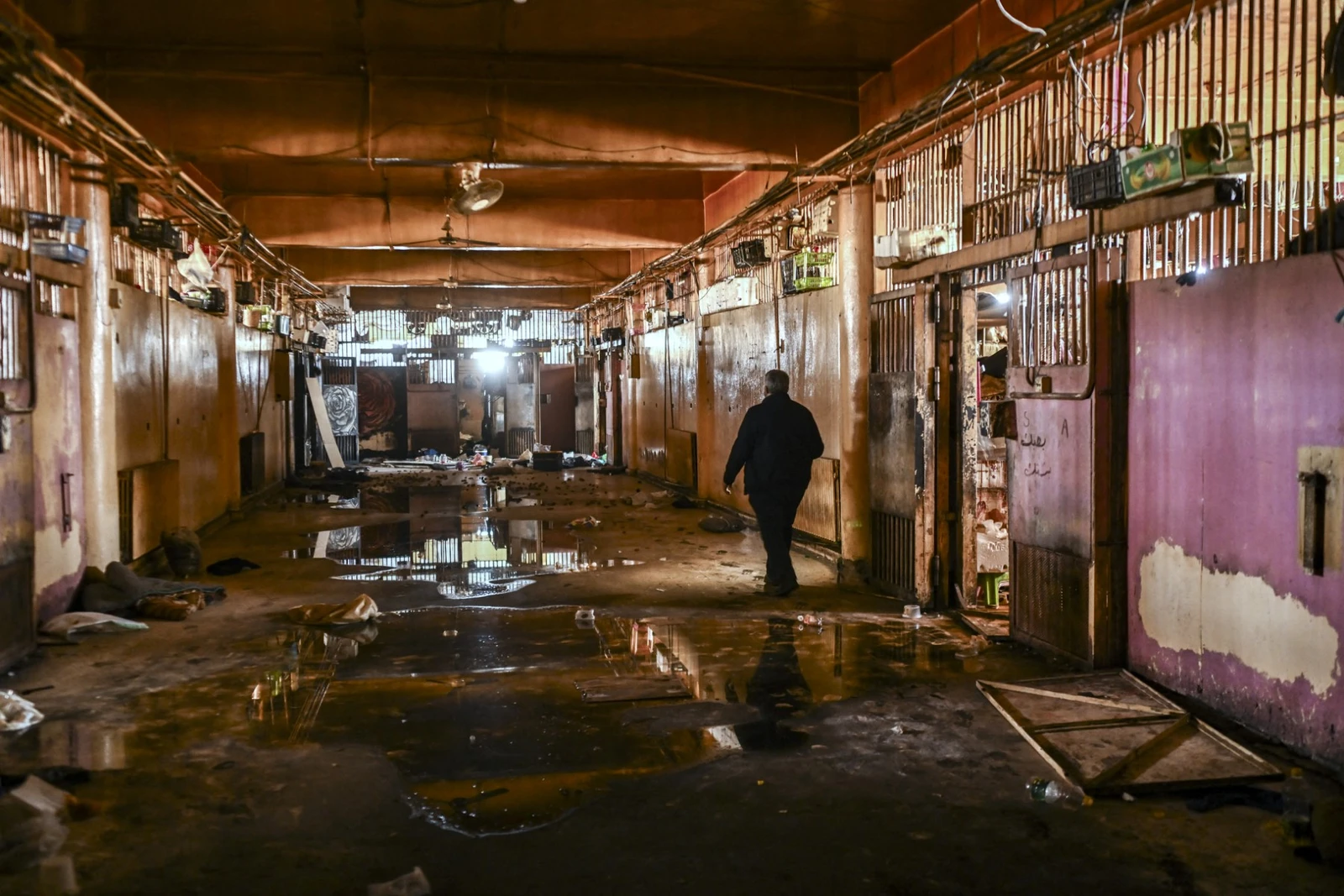
Three former prisoners testified about torture they endured or witnessed. Their accounts described detainees strapped to a hinged wooden device known as the “Flying Carpet,” which bent the body sharply at the waist; prisoners suspended from the ceiling by their arms; men forced into tyres and beaten; and detainees held in cramped, filthy, freezing cells infested with insects and vermin.
Particular focus fell on Wing 13, an underground punishment block.
Prosecutors said two prisoners were sent there after refusing Alsheikh’s orders to assault political detainees. A third was punished after guards intercepted a letter in which he expressed support for another prisoner. All three were confined in tiny cells and tortured.
The prosecution argued that the violence was neither incidental nor the work of rogue guards. Witness testimony and other evidence presented during the two-week trial placed Alsheikh squarely within the chain of command—and, at times, at the scene of the abuse.
According to the Justice Department, he both ordered subordinates to inflict severe physical and psychological suffering and personally took part in torture.
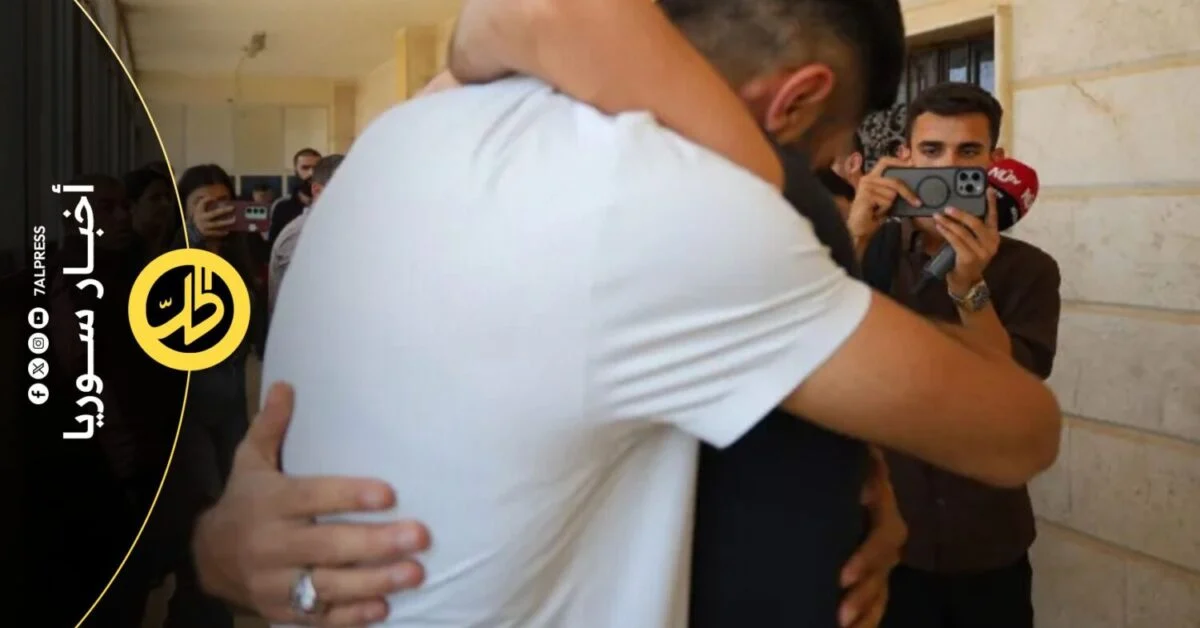
For the survivors who testified, the trial inverted a relationship that had once seemed immutable: they entered a U.S. courtroom as witnesses, while the man who oversaw their imprisonment sat in the dock.
One survivor, Khaled Abdul Malek, called the conviction and sentencing an important step toward accountability.
From Prison Chief to U.S. Resident
The American prosecution was possible in part because Alsheikh later moved to the United States.
Prosecutors said he hid his role in Syria when dealing with immigration authorities, obtaining a green card after entering the country in 2020 and later applying for citizenship. Those misrepresentations gave federal investigators a second path to prosecution alongside the torture charges.
The case also illustrates how immigration investigations have become a key tool for pursuing alleged war criminals and human-rights violators who cannot easily be prosecuted for all of their conduct in the countries where it occurred.
U.S. authorities maintain specialised units to identify suspected perpetrators who have settled in the country. Alsheikh’s case involved Homeland Security Investigations’ Human Rights Violators and War Crimes Center, the FBI’s International Human Rights Unit, and cooperation with German investigators who helped interview witnesses living in Germany.
Assistant Attorney General A. Tysen Duva said the case sent a message that perpetrators of human-rights abuses would find “no safe harbor” in the United States. Prosecutors said they hoped the sentence would offer survivors a measure of closure.
The investigation relied heavily on former detainees willing to revisit events that occurred nearly two decades earlier.
Accountability Beyond Syria
The Alsheikh prosecution is notable because efforts to hold former Assad officials accountable have often taken place outside Syria.
European courts—particularly in Germany—have used universal-jurisdiction laws to pursue former Syrian intelligence officers accused of torture and crimes against humanity. The Alsheikh case differs in that it brought a former prison chief before an American jury on substantive torture charges as well as immigration offences.
His conviction also came after the collapse of Assad’s rule in December 2024, which reshaped the political and judicial landscape surrounding accountability for crimes committed by the former state apparatus.
Yet bringing former officials to trial remains difficult. Many suspects are dispersed across multiple countries, evidence is scattered, victims live in exile, and much of the documentary record accumulated during decades of authoritarian rule remains incomplete or contested.
The Alsheikh case depended on survivor testimony, historical research and international law-enforcement cooperation, demonstrating how prosecutions can still be built years after the alleged crimes occurred.
The sentence may carry particular resonance in Syria, where Adra Prison occupies a prominent place in memories of political detention under the Assad government.
Although Adra was formally a civilian facility rather than one of the intelligence services’ notorious detention centres, political prisoners were held there alongside criminal detainees, and testimony presented in Los Angeles depicted parts of the complex as another component of the machinery used to crush dissent.
The American proceedings therefore reached far beyond immigration fraud. At their core was the question of whether a senior official could leave Syria, rebuild his life abroad and escape accountability for acts committed behind prison walls years earlier.
For Alsheikh, that effort has ended with a 60-year sentence.
As one FBI official said after the verdict, the former warden who once controlled the fate of prisoners at Adra is now the one who will remain behind bars.
This article was translated and edited by The Syrian Observer. The Syrian Observer has not verified the content of this story. Responsibility for the information and views set out in this article lies entirely with the author.