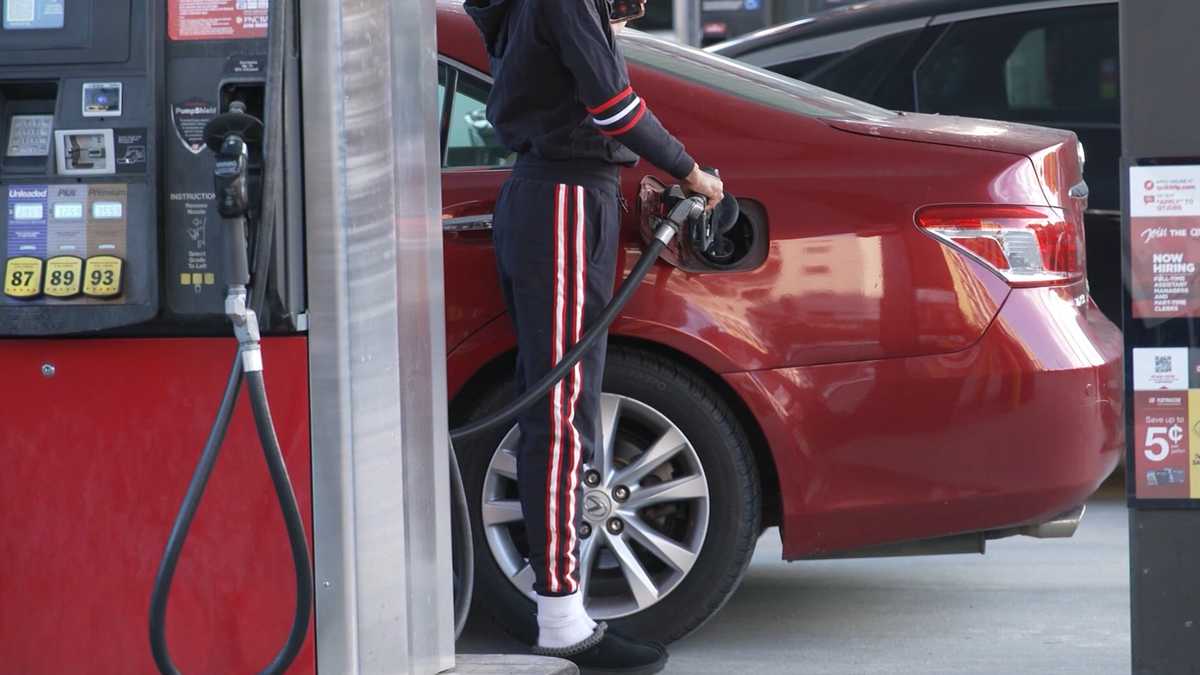
Gas prices climb toward record territory as experts warn of more increases
The national average for regular gasoline has jumped more than 40 cents in a month to about $4.47 a gallon. University of Houston energy expert Ed Hirs warns that $5 gas nationwide is possible, while refinery disruptions and tight fuel supplies could push prices even higher in some parts of the country.
WASHINGTON —
Gas prices are climbing rapidly across the United States, pushing the national average close to its highest level of the year and raising new questions about how much worse the increase could get.
The national average for regular gasoline reached about $4.47 a gallon Friday, according to AAA. That is up more than 40 cents in the past month, roughly 17 cents in the past week and more than $1.25 from a year ago.
The current average is also less than 10 cents below the 2026 high of $4.56 set May 21. The all-time national record remains just above $5 a gallon, set in June 2022.
Energy economist Ed Hirs told Hearst Television that $5 gas nationwide is now a possibility, with the risk of substantially higher prices in individual markets if fuel shortages develop.
“We’ll have spot shortages across the United States,” Hirs said. “We could see some pricing well in excess of $6 a gallon, $7 a gallon for gasoline (in some areas).”
Hirs tied the possibility of $6 to $7 gasoline to localized spot shortages. He pointed to a combination of reduced crude-oil flows and pressure on refineries, some of which are entering seasonal maintenance periods. Those strains come as the broader global fuel market remains disrupted by the war with Iran and other conflicts affecting oil production and refining.
Oil prices actually fell Friday, but remained above $100 a barrel. Brent crude settled around $104.87 and U.S. West Texas Intermediate around $100.30. Ongoing disruptions in the Middle East, including problems moving crude through major shipping routes and damage to Saudi oil infrastructure, continue to hang over the market.
President Donald Trump has repeatedly said he expects fuel prices to fall once the war with Iran ends.
“And you watch what happens to your oil, to your gasoline,” Trump said Wednesday. “It’s gonna come down very quickly.”
Hirs said the effects of the conflict could last much longer.
“Even if it were over today, the interruption in oil production and refinery operations in the Middle East truly means that we won’t see a return to a pre-war market situation for at least a year,” Hirs said.
The Trump administration has already taken several steps aimed at limiting the increase in fuel prices.
In March, Trump authorized the release of 172 million barrels of oil from the Strategic Petroleum Reserve as part of a coordinated 400-million-barrel release by International Energy Agency member countries. The Energy Department said the U.S. release would take about 120 days to deliver.
The administration also accelerated the annual transition from summer-grade gasoline to cheaper winter-grade fuel.
Normally, stricter summer gasoline requirements remain in effect until mid-September. This year, the Environmental Protection Agency issued an emergency waiver allowing the transition to begin Sept. 1, effectively ending the summer-blend requirement about two weeks early.
EPA said the move would add hundreds of thousands of barrels of gasoline per day to the domestic market and was intended to help lower prices.
Hirs said the early switch has made only a “marginal difference.”
“The administration is at the end of what it can do,” he said.
The effects are increasingly being felt beyond drivers filling their cars.
Diesel reached a record national average of about $6.45 a gallon Friday, according to AAA. That is nearly a dollar higher than just one month ago and more than $2.70 above the price a year ago.
Diesel is particularly important because it powers trucks, farm machinery, construction equipment and other parts of the economy responsible for producing and moving goods.
The U.S. Energy Information Administration said Friday that tight global supplies of distillate fuels, which include diesel, combined with elevated crude prices have driven diesel costs higher in recent months.
That means consumers can feel rising fuel prices even if they do not drive a diesel vehicle. Higher transportation and production costs can eventually filter into the prices of groceries and other goods.
Brown University researchers have also attempted to quantify the broader household impact of the war-driven increase in fuel prices.
Brown’s Climate Solutions Lab estimates the average U.S. household has now spent more than $837 extra on gasoline and diesel since the Iran war began Feb. 28 compared with what researchers estimate households would have paid without the conflict.
The figure is based on a model comparing actual gasoline and diesel prices with a “no-war” estimate based on prewar prices and historical price movements, combined with fuel consumption and Census household data. Brown said its cumulative estimate had already surpassed $100 billion nationwide by Sept. 7.
For drivers hoping Friday’s decline in crude oil prices will quickly translate into cheaper gasoline, the immediate outlook remains uncertain.
Oil prices can change from day to day, while gasoline prices also depend on refinery output, inventories, transportation costs and regional supply conditions.
For now, the national average continues to move in the opposite direction.