Photos: Nester Nuñez
Photo Feature by Nester Nuñez
HAVANA TIMES – In Cuba, power outages have disrupted routines at workplaces. Some activities come to a halt, others are reorganized, and workers end up leaving at different times when the electricity goes out. The traditional lunch break no longer makes much sense. Everyone goes out to eat on the street when they can, or whenever they feel like it.
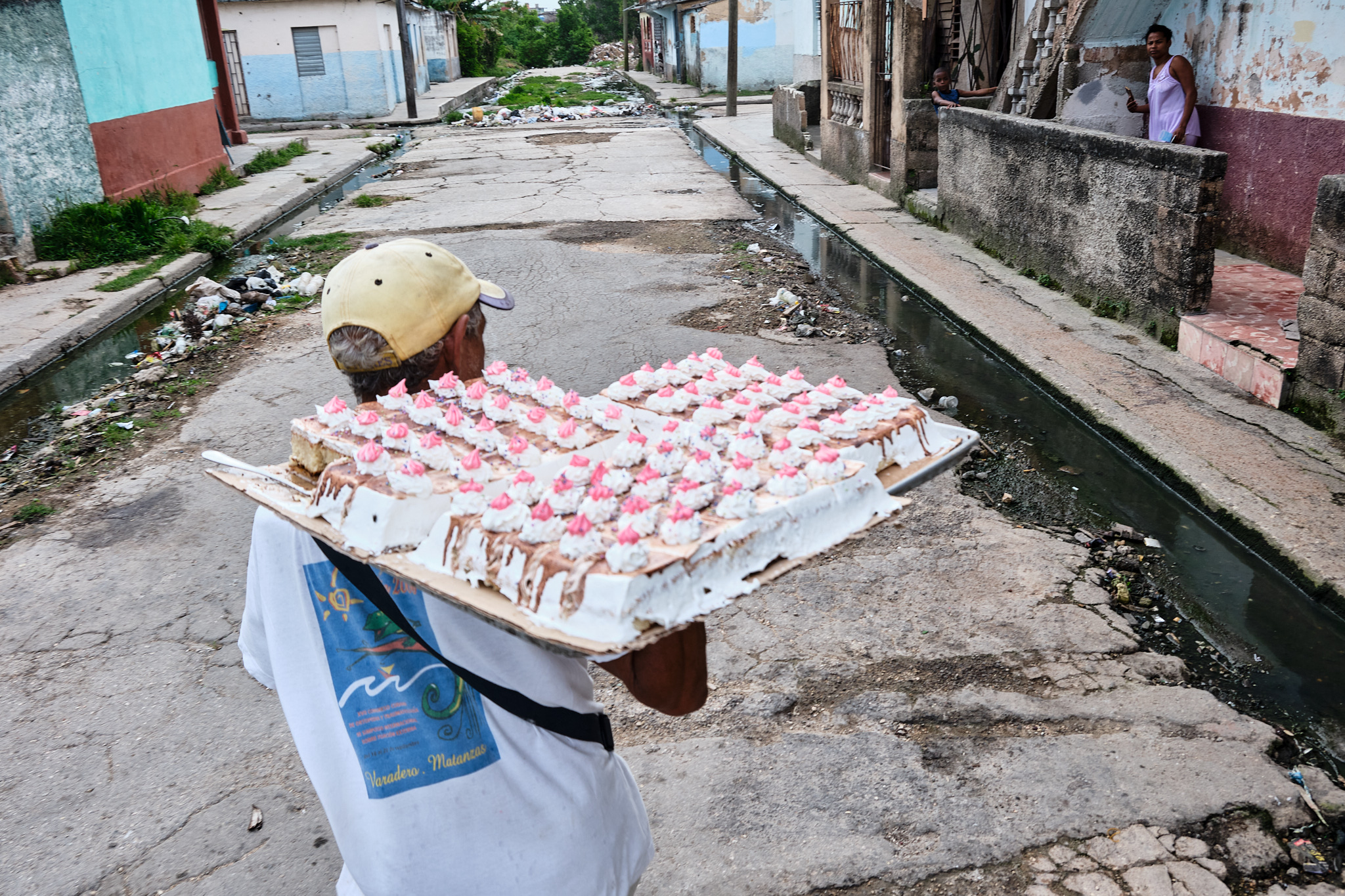
Out on the street, you eat on the street, because that’s where you find the best deals… The cheapest ones. A small pizza, a fritter, a sandwich with spread, an ice cream, or a cone of peanuts will do to get by, to keep you going.
Pizza is the most common option. The cheapest ones currently cost between 200 and 250 Cuban pesos. Pizza folded in half, the kind you hold with a piece of recycled white paper or an ugly scrap of cardboard that barely keeps you from burning your fingers.
Sometimes the pizzas taste good. Sometimes they have cheese. Sometimes the oil drips over the edges and stains your clothes. Other times, what you put in your mouth is little more than a chunk of warm bread. Not tasty, not nutritious, but it fills your stomach more than anything else at that price and lets you fool your hunger for a few more hours.
The granizado (snow cone), that little plastic cup filled with ice and instant soft-drink mix—pure destructive chemistry—helps make sure the bread or pizza doesn’t get stuck halfway down and makes it all the way to your stomach.
Saying that pizza is the cheapest option (or a 100-peso pastry, or an 80-peso bread roll with mayonnaise) can be misleading. Spending that much over 20 working days would consume almost the entire salary of most workers. And if anything were left over, add the cost of private transportation, because public—and subsidized—transportation is practically nonexistent now.
But there was a time when lunch was part of the working life of millions of Cubans, until October 2009, when Raul Castro’s government began “experimentally” eliminating workplace cafeterias in four ministries as part of a policy to reduce subsidies and eliminate what were called “undue gratuities.” In exchange, workers received 15 pesos a day to find food on their own. At the time, some 24,700 workplace cafeterias operated across the country, and around 3.5 million workers used them daily, according to official figures cited by the media at the time.
The measure was intended to reduce government spending, but it also shifted onto workers a responsibility that until then had been handled, at least partially, at the workplace.
Seventeen years later, the extremely low value of money has workers backed into a corner.
Under current conditions, for most people simply going to work is unsustainable. A phrase repeated for years sums up the conflict, the inflation, the debacle very well: “The State pretends to pay me, and I pretend to work.”
In the future, the impact of poor nutrition on workers’ health will have to be studied. And that’s without even mentioning the snacks and lunches children are taking to school.
See more photo features here on Havana Times.