Your support helps us to tell the story
From reproductive rights to climate change to Big Tech, The Independent is on the ground when the story is developing. Whether it’s investigating the financials of Elon Musk’s pro-Trump PAC or producing our latest documentary, ‘The A Word’, which shines a light on the American women fighting for reproductive rights, we know how important it is to parse out the facts from the messaging.
At such a critical moment in US history, we need reporters on the ground. Your donation allows us to keep sending journalists to speak to both sides of the story.
The Independent is trusted by Americans across the entire political spectrum. And unlike many other quality news outlets, we choose not to lock Americans out of our reporting and analysis with paywalls. We believe quality journalism should be available to everyone, paid for by those who can afford it.
Your support makes all the difference.Read more
A U.S. government watchdog released its first report on the impact of the Iran war on Monday, acknowledging the military’s advanced weapons shortfalls and offering the first public look at the damage to American aircraft, bases and diplomatic outposts in the Middle East.
Much of the information has been previously reported over the past six months, but the Pentagon inspector general’s report offered the fullest official accounting so far of the conflict’s costs in American lives, taxpayer dollars and physical damage. It included information from the watchdogs for the Defense and State departments as well as the U.S. Agency for International Development.
The report, whose publication was first reported by NBC News, noted that the U.S. war with Iran “has resulted in strategic inventory shortfalls and revealed industrial base bottlenecks for munitions resupply” in regard to advanced weapons. Experts have previously said it will take about three years for military contractors to replenish advanced missiles and defensive missile interceptors to prewar levels.
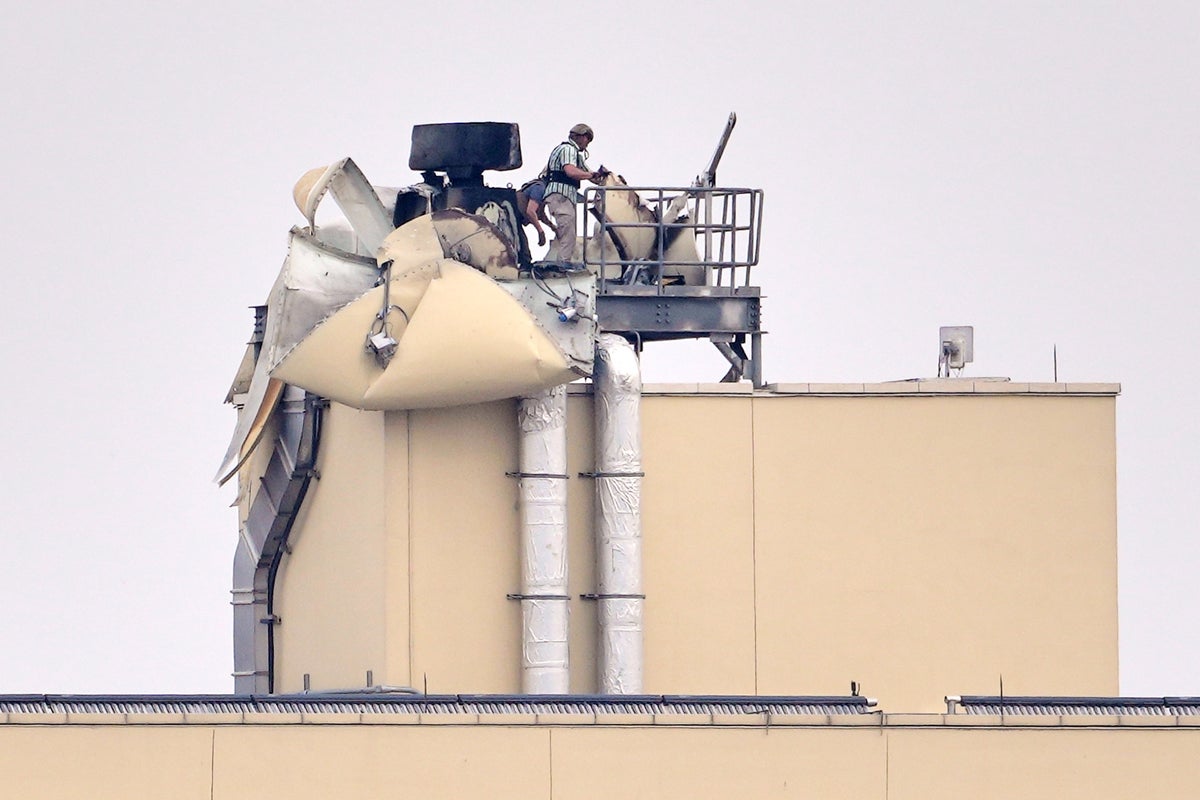
The report, which covers April 1 to June 30, also acknowledged that Iranian strikes damaged and destroyed hundreds of buildings and other structures at U.S. bases in Kuwait, Bahrain, Qatar, the United Arab Emirates, Saudi Arabia, Iraq, Oman and Jordan. Dozens of American aircraft and drones also were destroyed or damaged.
Defense Secretary Pete Hegseth told Congress in late July that the war had cost $37.5 billion so far.
The costs to U.S. diplomatic facilities, however, had not been previously publicly released. Such outposts in Iraq, Kuwait, Saudi Arabia and the UAE took the brunt of the physical damage, with an estimated cost of $184 million, according to the report.
The State Department reported in early June that its overall costs from the conflict came to $113 million, with nearly $80 million used to respond to contingency plans, including evacuation expenses for U.S. personnel and their families as well as other American citizens and eligible third-country nationals.
The State Department reported that in the weeks and months after the U.S. and Israel first struck Iran on Feb. 28, the Trump administration evacuated about 9,000 U.S. citizens from countries in the Middle East and Europe. Through private and commercial flights as well as land and water travel, the cost of the department’s evacuation operation was more than $11 million as of late June.
“State determined that consular officers would not be able to fully document travel itineraries required to seek reimbursement from evacuees and therefore it would be impracticable to seek reimbursement from them,” the report states.
The majority of the evacuations were made from Israel, with Iraq and Jordan following shortly behind. While the U.S. only evacuated 1,200 Americans from the United Arab Emirates, those trips to Istanbul, Athens and Washington cost the most, at more than $4 million.
The State Department reported that more than $44 billion in emergency and non-emergency military sales also were made in that span of time, with the majority of sales going to Saudi Arabia. Sales included military helicopters, munitions and munitions support as well as advanced precision weapons system.
Other regional countries, including Qatar, Kuwait, UAE and Israel, also received billions in sales, as Iran retaliated against nearly every country in the region that hosted a U.S. military base.
___
Amiri reported from New York.