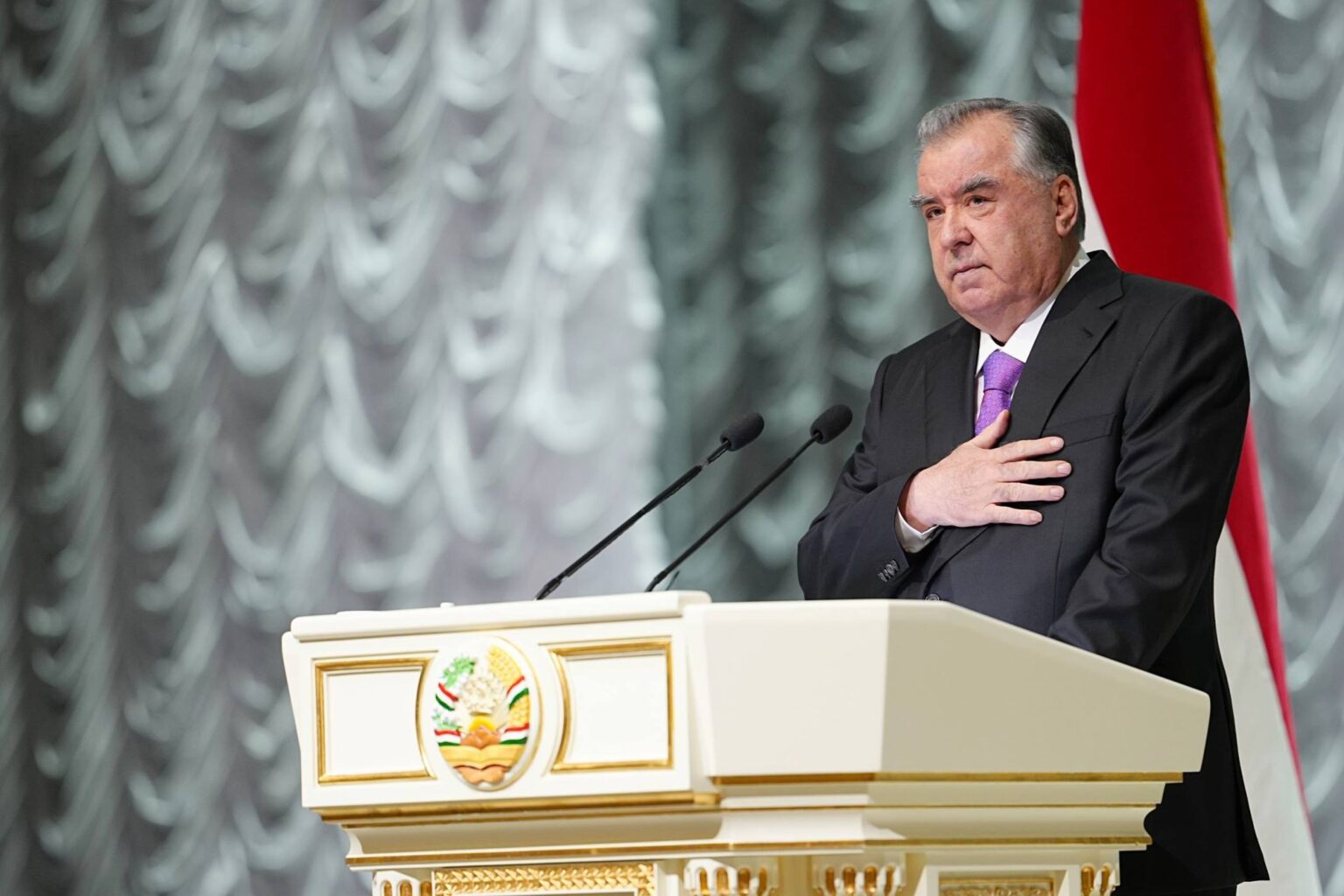
A solemn event dedicated to the 35th anniversary of Tajikistan’s state independence was held in Dushanbe, where President Emomali Rahmon delivered a speech. In his address, the president highlighted the main stages of the country’s development during the years of independence, discussing political, economic, and social changes, according to a statement from the head of state’s press service.
From Civil War to State Restoration
Emomali Rahmon recalled that the first years of independence were a difficult period for the country due to civil war and a deep political and economic crisis.
According to him, an important stage in restoring statehood was the XVI session of the Supreme Council, held in November 1992 in Khujand. He noted that the decisions adopted at this session laid the legal and political foundation for the country’s further development.
The president also stated that one of the main achievements was the end of the civil war, the return of more than one million citizens who had left the country, and the ensuring of national unity.
GDP Grew to 177 Billion Somoni
Speaking about the economy, Rahmon stated that over the past 25 years, the country’s average annual economic growth has been more than 7.7%.
According to him, Tajikistan’s GDP grew from 1.8 billion somoni in 2000 to 177 billion somoni in 2025, and state budget revenues increased from 252 million somoni to 65 billion somoni.
The president also reported that the poverty rate declined from 83% to 19%, and life expectancy reached 77 years.
According to the head of state, industry has become one of the key directions for economic development. If there were 358 industrial enterprises in the country in 1991, their number has now exceeded 4,000.
The volume of industrial production grew from 4.1 billion somoni in 2000 to 66.4 billion somoni in 2025.
The head of state noted that the country is developing metallurgy, mechanical engineering, chemical industry, food production, light industry, and construction materials manufacturing.
New Energy Projects
Emomali Rahmon stated that energy development remains one of the country’s strategic priorities. According to him, dozens of investment projects in the energy sector have been implemented during the years of independence, and the total capacity of the country’s energy system has reached 6,700 MW.
The president also reported that two solar power plants with a combined capacity of 500 MW are planned to be commissioned in the Asht and Jayhun districts by November 2026.
He noted that after the third unit of the Rogun Hydroelectric Power Station is commissioned in 2027, Tajikistan expects to achieve complete energy independence.
Development of Education and Healthcare
The president reported that during the years of independence, modern educational institutions for 1.8 million students were built at a cost of 8.4 billion somoni.
The number of higher educational institutions grew from 13 in 1992 to 51 in 2026, and the number of students reached 226,000 people.
In the healthcare sector, according to the president, more than 40,000 doctors have been trained over 35 years and 3,111 new medical institutions have been built.
Speaking about further development, Emomali Rahmon stated that the country’s goal is to create an economy with an industrial and technological foundation by 2040, with the development of green energy and modern infrastructure.
The president also emphasized the need to develop digital technologies, artificial intelligence, and a knowledge-based economy.