by Yadirys Echenique Paz, Ambassador of Cuba to Grenada
On 7 September 2026, Cuban Foreign Minister Bruno Rodríguez Parrilla presented to national and international media the latest report on the damages caused by the US blockade between March 2025 and February 2026. His words carried a stark warning: the blockade is not an abstract policy, but a daily assault on human lives.
Healthcare under blackouts
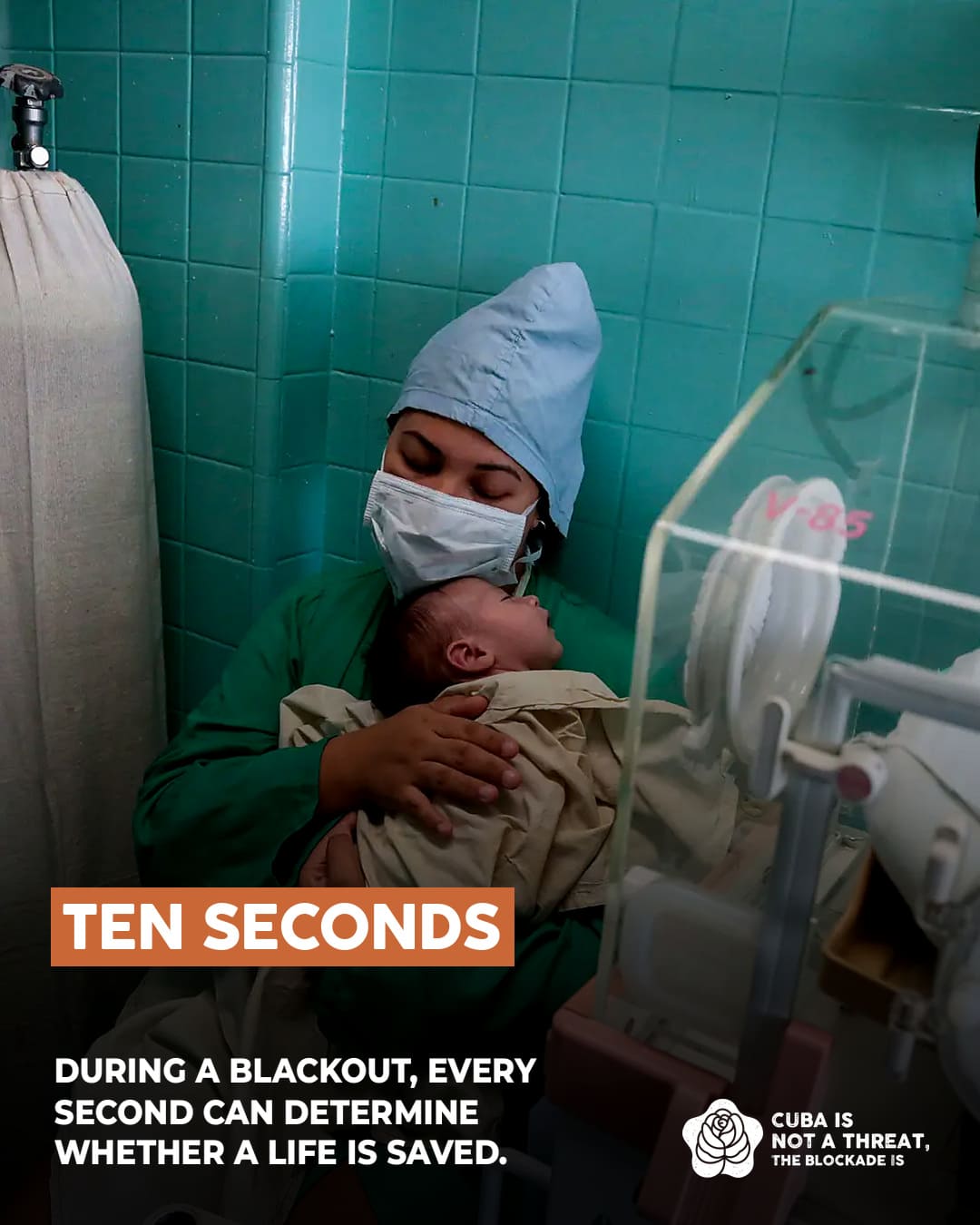
The blockade’s cruelty is most visible in hospitals. Newborns dependent on incubators and ventilators are left vulnerable when electricity fails. Doctors recount moments when, during blackouts, they are forced to manually ventilate infants to keep them alive. Surgeries have been completed under the glow of rechargeable lamps or even cell phone flashlights.
Despite efforts to protect hospital solar systems, energy restrictions continue to suffocate healthcare. Ambulances lack fuel, dialysis patients face interruptions, and families endure the anguish of searching for medicines trapped in over 7,000 containers blocked from reaching the island.
Doctors in Havana describe the blackout reality vividly. Dr Niurka Moreno Obregón, Head of Neonatology, explains that ventilators often lack batteries, forcing staff to act manually when generators fail. Dr Yudmila Rodríguez Verdecia, Chief Anaesthesiologist, recalls surgeries carried out under cell phone flashlights: “The surgery cannot be stopped. We are plunged into complete darkness.”
Cancer can’t wait. Image: Cuban Embassy, Grenada
Cancer patients and families
Every year, 300–400 Cuban children are diagnosed with cancer. Their survival depends on medicines and machines that require stable electricity. Families live in constant anguish. Licet Rodríguez Alonso, mother of 15-year-old Diego, shares: “Diego is in radiation, but there’s no fuel. How will those machines run? If the hospital shuts down, how can I keep Diego’s treatment going?”
The blockade’s energy restrictions and resource shortages gravely undermine hospital operations. Cuba’s surgical waiting list now stands at 100,000 patients — including 12,000 children. Fuel shortages have disrupted refrigerated transport, preventing over 30,000 children from receiving vaccines on schedule. Equally affected are 2,888 patients who rely on haemodialysis, a treatment that demands a steady energy supply now nearly impossible to secure.
Global voices of concern
On 7 May 2026, WHO Director General Tedros Adhanom Ghebreyesus stressed that “health must be protected at all costs and must never be left at the mercy of geopolitics, energy blockades, or blackouts.” The UN Resident Coordinator in Cuba has warned of 32,000 pregnant women at risk, while the UN Secretary General’s spokesperson expressed concern for thousands of cancer patients unable to access radiotherapy or chemotherapy.
Statistics that speak of lives
- Cuba’s surgical waiting list: 100,000 patients, including 12,000 children
- Vaccinations delayed for 30,000 children due to fuel shortages
- 2,888 patients dependent on haemodialysis face unstable treatment
- Infant mortality rose from 4 per 1,000 live births in 2018 to 9 in 2025 — a 148% increase
- Of 395 essential pharmaceuticals, 300 are unavailable
- Cancer survival among children and youth has dropped from 85% to 65%
These numbers are not mere statistics. They represent children whose incubators fail, mothers giving birth under blackout conditions, and families watching loved ones suffer without medicine.
Blocked access to life-saving treatments
The blockade prevents Cuba from acquiring advanced cancer drugs such as Pemetrexed (Lilly), Palbociclib (Pfizer), Brentuximab vedotin (Seattle Genetics), Pembrolizumab (MSD), and Nivolumab (Bristol Myers Squibb). Vital equipment for cardiology and genetics, including HeartMate 3 and PediMag cardiac pumps, remain out of reach for Cuban children with severe heart conditions.
Even basic diagnostic reagents like Phytohemagglutinin, essential for neonatal genetic testing, are blocked, compromising the study of 140 patients in 2025.
A call for humanity
The blockade’s impact is genocidal in character, striking at the most vulnerable: newborns, cancer patients, and the elderly. Behind every figure is a human story — a child waiting for surgery, a mother searching for medicine, a doctor fighting darkness to save a life. The blockade is not just policy; it is a collective punishment. It is pain, measured in lives.
NOW Grenada is not responsible for the opinions, statements or media content presented by contributors. In case of abuse, click here to report.