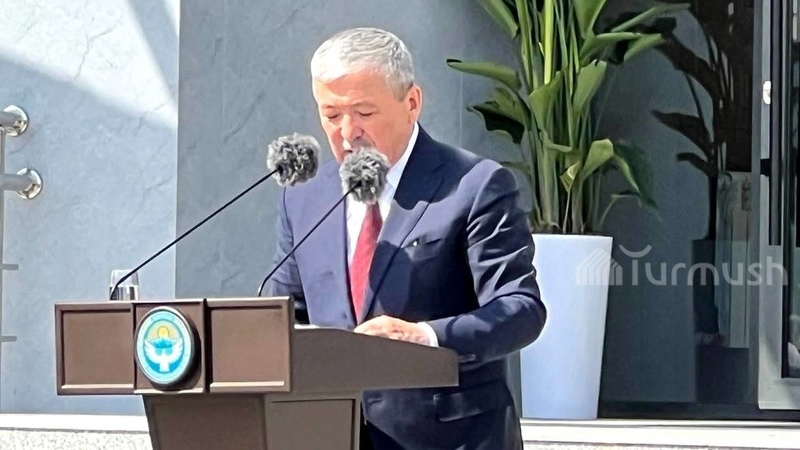
The foreign ministers of five Central Asian countries issued a joint statement on the occasion of the 20th anniversary of the signing of the Treaty on a Nuclear-Weapon-Free Zone in Central Asia (CANWFZ).
The document was adopted in commemoration of the signing of the Semipalatinsk Treaty, which Kazakhstan, Kyrgyzstan, Tajikistan, Turkmenistan, and Uzbekistan concluded on September 8, 2006, in the city of Semipalatinsk.
The ministers declared their commitment to creating a world free of nuclear weapons and emphasized that any use or testing of nuclear weapons could lead to catastrophic humanitarian consequences.
The statement emphasizes that the Semipalatinsk Treaty remains an important instrument for strengthening confidence, regional stability, and international efforts to prevent the proliferation of nuclear weapons.
Central Asia remains the only nuclear-free region in the Northern Hemisphere
In the statement published by the Ministry of Foreign Affairs of Kazakhstan, it is noted that the creation of a nuclear-weapon-free zone became one of the most important steps taken by the countries of the region in the field of international security.
The foreign ministers emphasized that the Semipalatinsk Treaty is a unique example of cooperation among five states that were able to unite their efforts for the sake of strengthening peace and stability.
The Central Asian zone became the first and only nuclear-free zone completely located in the Northern Hemisphere and bordering two nuclear powers. The region, which in the past was associated with nuclear testing and weapons deployment, has today become a participant in global nuclear disarmament initiatives.
Special attention in the statement is devoted to the closure of the Semipalatinsk nuclear test site, as well as the need to preserve the memory of victims of nuclear testing worldwide.
The Semipalatinsk nuclear test site was established in 1948 on the territory of Kazakhstan for testing the first Soviet nuclear weapon. The test site, covering an area of approximately 18,500 square kilometers, was located in the East Kazakhstan, Karaganda, and Pavlodar regions. From 1949 to 1989, 456 nuclear tests were conducted there, including 116 atmospheric and 340 underground explosions.
According to various estimates, the consequences of the tests affected the health of more than 1.5 million people. The last explosion at the test site occurred on October 19, 1989, and on August 29, 1991, by decree of Kazakhstan’s first president Nursultan Nazarbayev, the facility was permanently closed.
Countries called for accelerating nuclear disarmament
The foreign ministers confirmed the importance of the Treaty on the Non-Proliferation of Nuclear Weapons (NPT), calling it the foundation of the international system for preventing the proliferation of nuclear weapons.
At the same time, they expressed concern about the lack of significant progress in fulfilling nuclear disarmament obligations and the growing tension in the field of international security.
The statement discusses the need to resume negotiations on reducing nuclear weapons and creating new control mechanisms over them.
The Central Asian countries also called on states possessing nuclear weapons to fulfill their special responsibility in disarmament matters.
The ministers advocated for the earliest entry into force of the Comprehensive Nuclear-Test-Ban Treaty. They emphasized the need to preserve the international norm prohibiting nuclear testing and called on states to avoid actions that could weaken this principle.
The statement notes the importance of education in the field of disarmament and non-proliferation of weapons. Special attention is given to the role of youth in fostering a culture of peace, trust, and responsibility in matters of international security.
For peaceful atoms
The foreign ministers confirmed support for the activities of the International Atomic Energy Agency (IAEA) and its role in ensuring control over the nuclear programs of states. They emphasized that the development of nuclear energy should be carried out exclusively for peaceful purposes and in compliance with international safety guarantees.
The statement notes the interest of Central Asian countries in further developing cooperation with other regions where nuclear-weapon-free zones have been established.
The ministers welcomed cooperation with the African Commission on Nuclear Energy and the Organization for the Prohibition of Nuclear Weapons in Latin America and the Caribbean. The importance of holding international meetings of representatives of all existing nuclear-free zones was also noted.
The foreign ministers confirmed their intention to continue joint work to counter common threats and supported the establishment of new nuclear-weapon-free zones in other regions of the world, including the Middle East.