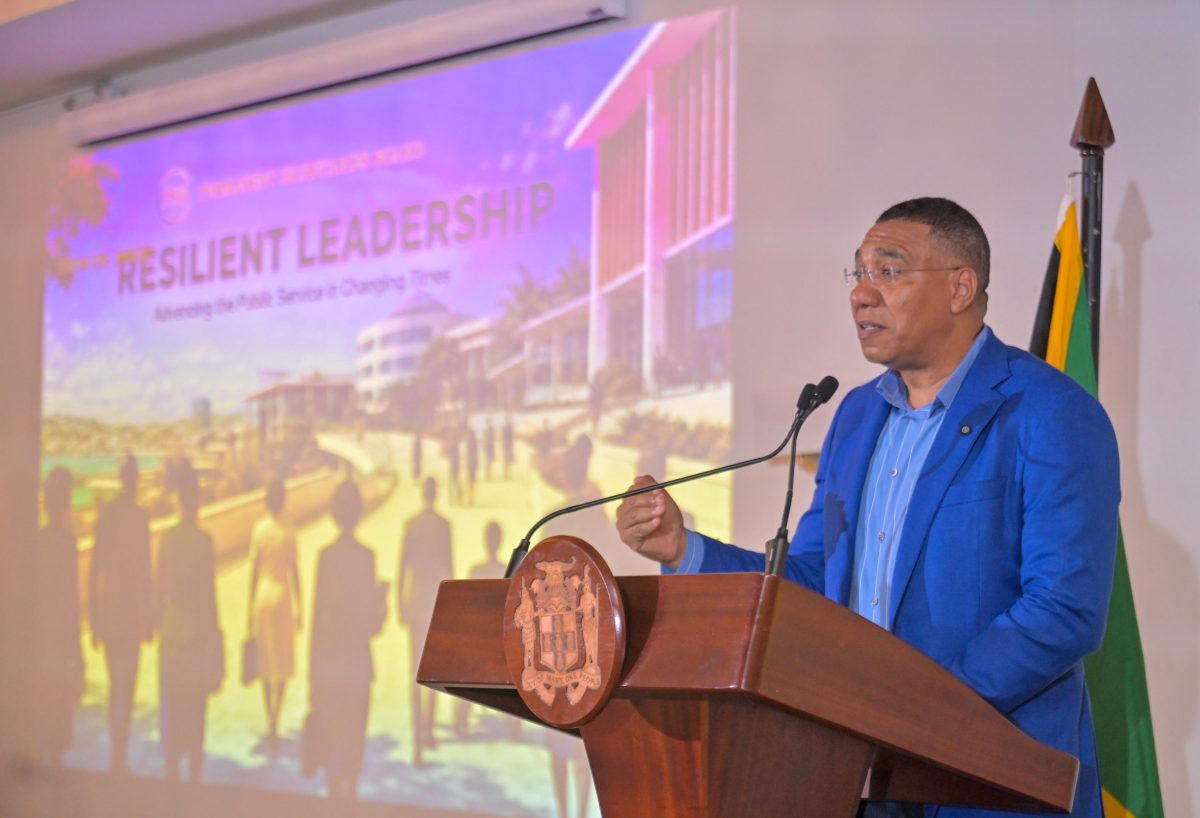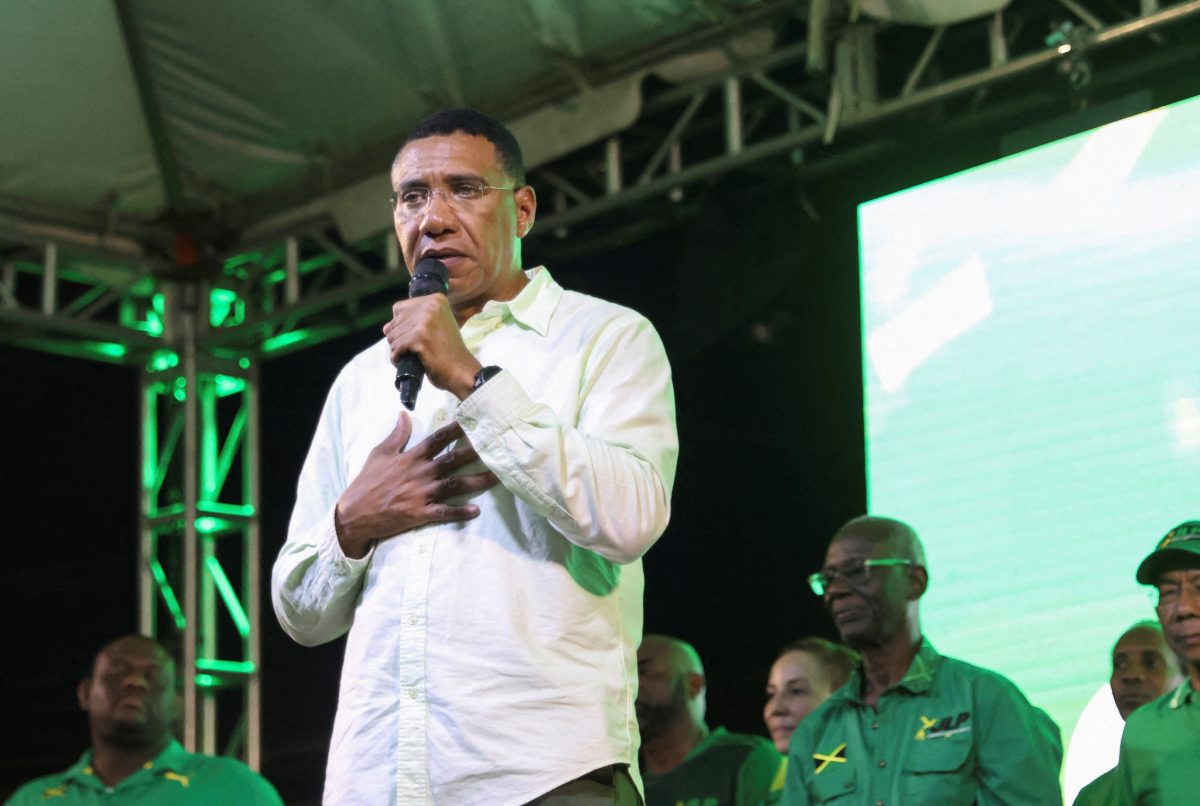
Jamaica’s Prime Minister Dr Andrew Holness addresses supporters after the governing Jamaica Labour Party declared victory in the general election, ushering in a third consecutive term for Holness, in Kingston, Jamaica September 4, 2025. REUTERS/Gilbert Bellamy/File Photo
One year ago today, the Jamaica Labour Party, JLP, led by Dr. Andrew Holness, won a historic third consecutive term in office.
It was a record for the party and the first time any JLP leader has served three straight terms as prime minister.
The economy Dr. Andrew Holness took charge of that morning is not the economy he has on Thursday, September 3, 2026.
It was growing at five per cent, with inflation at 2.1 and unemployment at a record low.
But eight weeks later, Hurricane Melissa came ashore.
Chevon Campbell has been through the numbers of year one of the current Holness administration.
In the quarter that contained the September 3, 2025 election, the Jamaican economy grew by 5.1 per cent, led by agriculture up almost 24 per cent, manufacturing up 4.4 per cent and construction up 4.8 per cent.
Tourism was expanding, and stopover arrivals were running seven percent ahead of the year before. Unemployment was 3.3 per cent, a record low.
But barely a few months into the new administration’s tenure, Mother Nature turned its wrathful gaze on the island.
Category 5 Hurricane Melissa made landfall at New Hope, Westmoreland, on October 28, the strongest system ever recorded striking Jamaica.
It was the costliest disaster in the country’s history. The World Bank and the Inter-American Development Bank put the physical damage at US$8.8 billion, or 41 per cent of Jamaica’s entire 2024 output.
The economic contraction was immediate. Seven per cent in that October-to-December quarter, 4.1 per cent in the March quarter and 2.9 per cent in the June quarter. Three straight quarters of contraction, but each one shallower than the last.
Bitter sweet news that senior director of economic planning and research at the Planning Institute of Jamaica, PIOJ, used to justify dismissing recession claims.
Today, agriculture is down 17 per cent, hit twice first by Melissa, then by an ongoing drought.
Tourism, the country’s biggest foreign exchange earner, has contracted by more than 12 per cent. Stopover arrivals are down almost 20 per cent and visitor spending is down 17 per cent.
Still, two sectors have held – manufacturing up one perc ent and construction, by 0.3 per cent.
The construction number is the one to watch as the sector is expected to lead a rebuild from Melissa and cement production up almost 57 per cent.
The clearest reversal of the year is in prices.
Point-to-point inflation has gone from 2.1 per cent in September 2025 to 7.5 per cent in July 2026. That’s well above the Bank of Jamaica’s target range of four to six per cent.
What has absorbed the inflation without creating a foreign exchange crisis is the country’s healthy Net International Reserves, NIR, at just under US$6.5 billion at the end of June, plus US$415 million drawn from the International Monetary Fund’s emergency disaster window in January.
But a consequence of this has been the increase in public debt. The ratio has gone from 62.5 per cent of gross domestic product, to 65.6 per cent.
There is no agreement on how to handle the fallout.
The opposition leader has accused the administration of ineptitude and a lacklustre response to the post-Hurricane Melissa crisis.
But the government has pointed to the recovery running ahead of schedule, to the NIR holding, and to the National Reconstruction and Resilience Authority as the vehicle to rebuild.
The PIOJ expects one more quarter of contraction before a return to growth in the October-to-December period. Its forecast is for pre-Melissa output by the second quarter of 2027.
But a full replacement of housing and infrastructure is still expected to take three to five years.