Huawei FusionSolar Day Tajikistan took place in Dushanbe – an event dedicated to the development of solar energy in Tajikistan. The main topics were solar energy, energy storage, and the transition to a more flexible energy system.
Huawei FusionSolar Day brought together those in Dushanbe who are currently working with solar energy and are interested in its development in Tajikistan. The event was organized by Huawei in partnership with Baihai Solar.
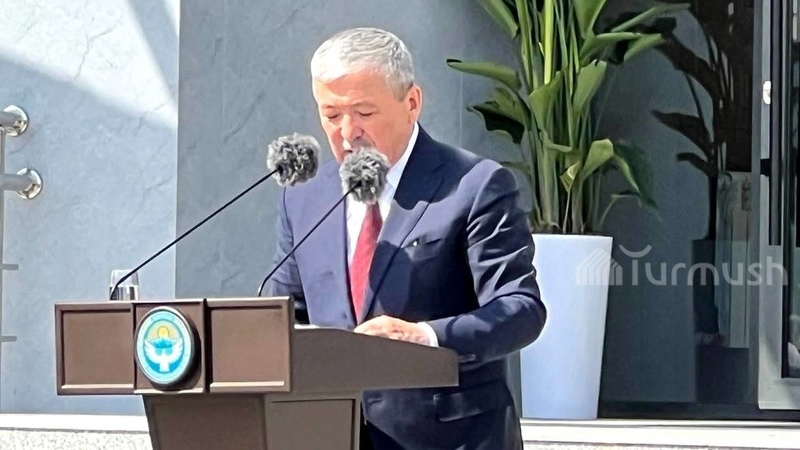
The event was opened by Manuchehr Safarzoda, Deputy Minister of Energy and Water Resources of the republic. He emphasized the importance of developing solar energy for the country and stressed its role in strengthening energy resilience and expanding the use of renewable energy sources.
Cao Feilong, General Director of Huawei Technologies Tajikistan LLC, noted in his speech that Huawei views the development of renewable energy sources as a new important phase of long-term partnership in Tajikistan on the path of energy transformation.
“For more than 20 years, Huawei has remained a reliable partner of Tajikistan. Today we are beginning a new stage – the development of the Digital Power direction. This is not only about solar energy, but also about the future of the entire energy system of the country,” said Cao Feilong.
According to him, Tajikistan has enormous potential for developing renewable energy sources. Huawei intends to work together with government bodies, energy companies, and investors to create a modern energy system and a more environmentally friendly future for the country.
Huawei FusionSolar Day served as a platform where they discussed not only solar systems, but also what makes a solar power plant truly effective: energy storage systems, intelligent management, monitoring, security, and stable integration into the overall energy system.
During the event, participants were presented with Huawei solutions for the energy sector, learned about digitalization of the industry, solar energy and energy storage systems, and were shown examples of already implemented projects.
One of the main outcomes of the meeting was the signing of a Memorandum of Cooperation between Huawei partners – VAP-partner Baihai Solar and authorized partner in Tajikistan Tajikelectrocomplex LLC. The parties agreed to jointly develop solar energy projects in the country.
Why is solar energy needed in Tajikistan?
Bakhrom Azimzoda, Advisor to the General Director of TGEM, emphasized that solar generation is no longer a technology of the distant future.
“Solar energy is not the future, but already the present throughout the world. Any developed country has a sufficient share of generation from the sun,” he noted.
Tajikistan already relies on renewable energy sources thanks to hydropower. However, a combination of hydro and solar power plants can make the system more flexible.
During the day, when the sun provides maximum generation, solar power plants take on part of the load. This allows hydroelectric power plants to accumulate more water. In the evening and at night, when solar generation stops, this reserve can be used to meet consumption.
“A hybrid system that includes both hydroelectric power plants and solar power plants is very important because it allows you to optimize resources,” explained Azimzoda.
Chinese technologies hold an important place in the market
Akmal Karimov, Director of Tajikelectrocomplex, noted that such events are especially important for Tajikistan’s energy market. They help specialists learn about new technologies, understand global experience, and choose solutions for specific projects.
Moreover, according to Karimov, Huawei equipment plays an important role in the global market and directly in Tajikistan’s market.
“Chinese manufacturers today hold strong positions in virtually all key areas of solar energy: the production of modules, inverters, batteries, and energy storage systems,” said Akmal Karimov.
He attributes this to several factors: scale of production, affordable pricing, speed of delivery, and availability of international certification. For large projects, not only equipment specifications are important, but also the ability to quickly obtain a comprehensive solution – from generation to storage and energy management. And Huawei Digital Power is developing exactly this kind of approach.
Projects are already being built
In Tajikistan, Ayon Energy is already implementing two major solar energy projects, said Bakhrom Azimzoda.
In particular, a solar power plant with a capacity of 250 MW is being built in Asht. Its first phase with a capacity of 30 MW was commissioned in August 2026, and the project is planned to be fully completed by the end of the year.
Another solar power plant with a capacity of 250 MW is being built in the Jayhun district. Its connection to the country’s overall energy system is planned for the coming months.