A Tongan worker’s experience after suffering a serious workplace injury in Australia has raised fresh questions about protections for workers recruited under the Pacific Australia Labour Mobility (PALM) scheme.
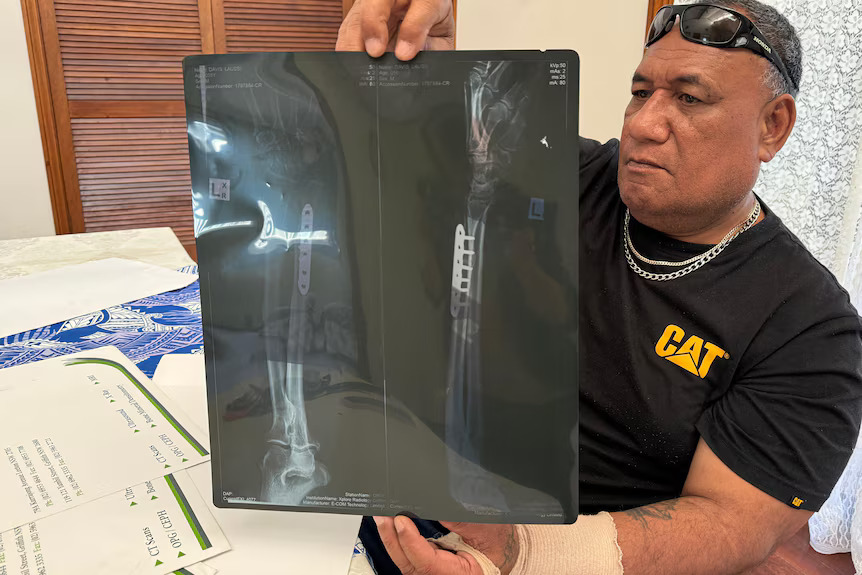
Davis Lausi’i, a mechanic from Tonga, was injured in March 2024 while repairing machinery at an orchard in New South Wales. His left wrist was crushed when part of the machine shifted, leaving him unable to work for months.
Lausii told ABC News that after surgery he received little support from his employer, including with accommodation, workers’ compensation and his visa situation. He said he spent Christmas Day sleeping in a park after his employer stopped paying for his accommodation.
The labour hire company that employed him, Plant Grow Pick (PGP), had entered administration in 2023. Australia’s Department of Employment and Workplace Relations later identified breaches of its PALM obligations and eventually terminated the company’s participation in the scheme in April 2025.
Other affected workers were redeployed, but Lausii was not.
His case has highlighted a particular vulnerability for injured PALM workers because employment, accommodation, welfare support and immigration status can be closely connected.
Labour migration experts say there is no clear pathway prioritising workers who are injured and unable to immediately return to full duties.
The Approved Employers Association has called for clearer arrangements covering workers’ compensation, visas, medical support and future employment.
The Australian Government maintains that PALM workers have the same workplace rights and protections as Australian workers and that employers must support workers’ welfare during illness or injury.
Lausii has since obtained a forklift licence and was offered another job, but says unresolved visa issues continue to prevent him from working.
His case highlights the risks faced when overseas employment becomes a major source of income for families but a worker then becomes unable to work.