Your support helps us to tell the story
From reproductive rights to climate change to Big Tech, The Independent is on the ground when the story is developing. Whether it’s investigating the financials of Elon Musk’s pro-Trump PAC or producing our latest documentary, ‘The A Word’, which shines a light on the American women fighting for reproductive rights, we know how important it is to parse out the facts from the messaging.
At such a critical moment in US history, we need reporters on the ground. Your donation allows us to keep sending journalists to speak to both sides of the story.
The Independent is trusted by Americans across the entire political spectrum. And unlike many other quality news outlets, we choose not to lock Americans out of our reporting and analysis with paywalls. We believe quality journalism should be available to everyone, paid for by those who can afford it.
Your support makes all the difference.Read more
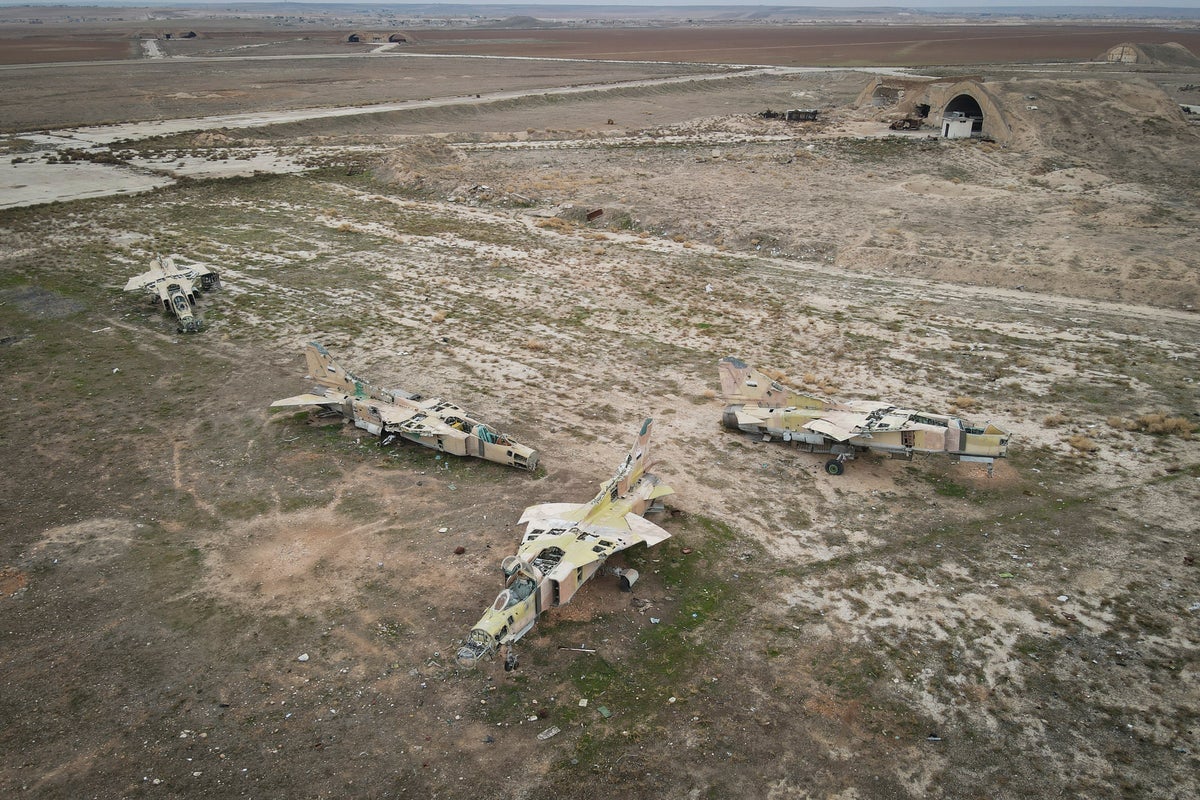
Israel did not warn the United States before it struck an air base in northern Syria this week, despite fears of an escalation with Turkey, the U.S. special envoy to Syria said.
Tom Barrack, who also serves as ambassador to Turkey, said the attack on Tuesday on the Abu Duhur base could have been Israel “baiting the Turks … that was the serious and worrying part.”
In the wake of the strikes, which caused damage but no casualties, the office of Israeli Prime Minister Benjamin Netanyahu said the base was attacked because Syria was “on the verge of breaching” an agreement by allowing Turkish troops to deploy there.
Barrack said it was likely that Israel had intelligence suggesting Turkey may be bolstering its presence in the area and “a commander somewhere in the field made a decision ‘We’re not going to let that happen’… What they didn’t do is tell us or Turkey.”
He added that another possible reason for the attack was miscommunication between the Israel’s military and intelligence agency.
Abu Duhur lies around 80 kilometers (50 miles) east of the Turkish border.
“When they (the Turkish military) see these jets coming towards the border and they don’t know what the purpose, direction or intention is, they start to say ‘We’re going to have to scramble our own,’” Barrack said as he outlined how close Israel and NATO member Turkey came to direct confrontation.
He pointed out that Turkey had shot down a Russian jet over its Syrian frontier in 2015.
The ambassador’s comments were published on X late Friday by Mario Nawfal, a Lebanese-Australian entrepreneur.
Two Syrian officials, who spoke on condition of anonymity because they were not authorized to comment publicly, said on Wednesday that a Turkish delegation had visited the air base in the northwestern province of Idlib a day before the air strike to review reconstruction work underway there.
Israel had raised concerns about Turkish military activity at the air base but the U.S. concluded that was “not happening,” Barrack said.
“The unintended consequence of a mistake could be really consequential,” he added.
Turkey has been supporting Syria’s effort to rebuild its armed forces by training Syrian personnel and supplying equipment and logistical support. The two countries signed an agreement last year that formalized their military cooperation.
Turkish officials have repeatedly stated that Ankara does not consider Syria’s security separate from its own.
Israel, meanwhile, has remained suspicious of the new authorities in Damascus, led by former Islamist insurgents. Syria’s interim President Ahmad al-Sharaa has said repeatedly that he does not want a conflict with Israel.
Israel carried out hundreds of airstrikes around Syria after the fall of Bashar Assad’s government in late 2024. The Israeli military also seized control of a U.N.-patrolled buffer zone in southern Syria, which it continues to occupy.
Turkey, which recently signed a defense pact with Saudi Arabia and Pakistan, gave no indication that it would respond militarily to the Israeli strikes in Syria, but the incident added further strain to already tense Turkish-Israeli relations.
___
Associated Press writer Ghaith Alsayed in Damascus, Syria, contributed to this report.