(Source: Korean Central News Agency)
Kim Yo Jong’s August 19 “stand on major international affairs” has been examined largely for Pyongyang’s response to Trump’s recent overtures and clues about the future of North Korea-US relations. The document, however, also showed a striking asymmetry toward two other consequential actors: Russia and China.
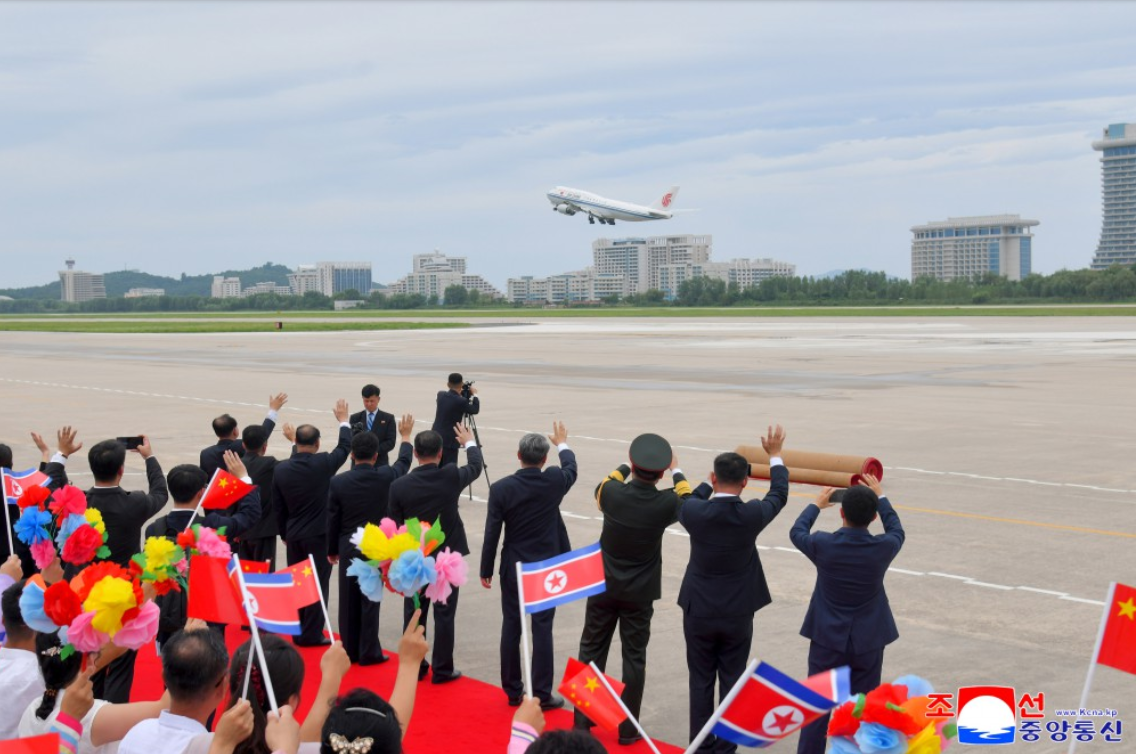
North Korea has moved closer to China on important security issues, notably in its approach to Japan. Yet its public portrayal of the bilateral relationship has remained surprisingly restrained despite an unusual spate of high-level diplomatic engagements in recent months. North Korea’s effusive treatment of Russia makes this restraint all the more conspicuous.
Explicit Support vs. Broad Alignment
Kim Yo Jong addressed global and regional security concerns shared by both Russia and China, but her handling of the two countries in connection with those issues was starkly different. She voiced explicit and unequivocal support for Russia on the war in Ukraine and underscored North Korea’s solidarity with Russia by noting that it remained “boundlessly faithful” to the bilateral comprehensive treaty.
By contrast, while Kim Yo Jong’s positions broadly aligned with Beijing’s views, there was no explicit expression of solidarity with or support for China. The omission was particularly notable in her condemnation of Japan’s “military expansion” as “dangerous,” given the ongoing China-Japan diplomatic impasse. Pyongyang also had precedent for mentioning Taiwan had it wished to signal support for one of Beijing’s core interests: Kim Jong Un himself publicly endorsed China’s position on Taiwan as recently as his June 2026 summit with Chinese President Xi Jinping.
This is not to say that North Korea should have accorded China the same level or type of solidarity as Russia. The nature of its relationships with the two countries is different: for one, North Korea is directly involved in Russia’s war against Ukraine. Still, it is worth noting that Kim Yo Jong did not invoke China once in an unusually broad statement on global and regional security that otherwise overlapped substantially with Beijing’s views. The timing also bears mention, though its significance is unclear: Kim issued her pronouncement while Chinese Foreign Minister Wang Yi was in Seoul for talks that included the Korean Peninsula and regional security.
Alignment Without Commensurate Warmth
This builds on North Korea’s subdued signaling toward Beijing despite its growing alignment with China on key security issues in the months since Wang Yi’s April visit to Pyongyang. North Korea gave restrained coverage of high-level diplomatic exchanges commemorating the 65th anniversary of the Treaty of Friendship, Cooperation and Mutual Assistance in July. It omitted “blood-forged friendship,” a formulation historically used to signal the strength of bilateral ties. And unlike in his April talks with Wang and June summit with Xi Jinping, Kim Jong Un offered no support for Chinese interests and policies in his meeting with a high-level Chinese delegation.
In late July, Kim visited the Cemetery of the Fallen Soldiers of the Chinese People’s Volunteers (CPV) to commemorate the 73rd anniversary of “the victory in the Fatherland Liberation War” (Armistice Day).[1] While Kim Jong Un performed all the ceremonial acts, the report did not contain any attributions to Kim and said little about the bilateral relationship beyond its historical foundation. In July 2018 and 2023, by contrast, reports on Kim’s visits to this cemetery contained substantial remarks attributed to Kim on the CPV’s sacrifices and linked that history explicitly to contemporary bilateral ties and their future.
North Korean media coverage of Kim’s August visit to the Liberation Tower on the 81st anniversary of national liberation struck a markedly different note regarding the Soviet Red Army and present-day North Korea-Russia relations. The visit readout quoted Kim as mentioning “the excellent history, traditions and ties of blood between the DPRK and Russia” and stating that their “great friendship and unity” will be “steadily carried forward and developed generation after generation.”
In sum, these signals point to a continuing gap between Pyongyang’s growing policy alignment with Beijing and its restrained public signaling about the bilateral relationship—made more conspicuous by the effusive language it continues to use toward Russia.
Conclusion
This mismatch is a reminder that increasingly overlapping interests and positions do not necessarily translate into growing political intimacy. North Korea may find greater common ground with China on security issues and coordinate with or support Beijing accordingly without necessarily displaying greater political warmth. Such alignment need not resolve longstanding differences or put Pyongyang’s relationships with Beijing and Moscow on an equal footing. This distinction may help explain why the flurry of high-level North Korea-China engagements over the past few months, coupled with greater overlap on security issues, has yet to produce the kind of public warmth that characterized stronger periods in the relationship.
That, in turn, has implications for the trajectory and durability of the current improvement in ties. Understanding what growing policy alignment does—and does not—tell us about the broader North Korea-China relationship will therefore be important for assessing how far that improvement may go.