Turkey has ranked as the Taliban’s third-most frequent diplomatic partner in the five years since the group returned to power in Afghanistan, trailing only Iran and China, according to a new analysis of thousands of diplomatic engagements.
The analysis, published Tuesday by Aaron Y. Zelin, a senior fellow at the Washington Institute for Near East Policy, a Washington-based nonpartisan think tank focused on US policy in the Middle East, tracks the Taliban’s diplomatic activity between August 15, 2021, when the group seized Kabul, and August 15, 2026.
According to Zelin’s data, the Taliban publicly announced 3,651 diplomatic engagements with 103 countries and entities during the five-year period. Iran ranked first with 494 country-level engagements, followed by China with 432 and Turkey with 394. Qatar ranked fourth with 347 and Uzbekistan fifth with 316.
The figures are based on country-level participation rather than a simple count of bilateral meetings. Zelin’s methodology counts each meeting once in the overall engagement data but counts each participating country separately for country-level metrics.
A separate breakdown of meetings by country shows 152 involving Turkey over the five-year period, placing it fifth overall, with the annual number rising markedly in the last two years. Turkey-related meetings increased from 13 in year three to 39 in year four and 54 in year five.
Turkey’s prominent position comes despite Ankara not formally recognizing the Taliban government. Zelin says Turkey, Qatar and Uzbekistan have become key interlocutors for Kabul, while Iran has overtaken China as the Taliban’s principal diplomatic partner.
Russia remains the only country to have formally recognized the Taliban government, doing so in July 2025. Turkey is among a broader group of countries, including Persian Gulf and Central Asian states, that have accepted Taliban-appointed diplomats without formally recognizing the government.
The Washington Institute analysis argues that the Taliban has managed to expand and institutionalize its international relationships without making significant concessions on issues that have impeded broader recognition, including restrictions on women and girls and ties to al-Qaeda and Tehrik-e Taliban Pakistan (TTP).
Zelin says the Taliban’s diplomatic strategy has now shifted from establishing relationships with new countries to deepening existing ones through mechanisms such as consulates, joint commissions and trade councils. References to consulates in Taliban readouts rose from 2 percent in the first year to 14 percent in the fifth.
At the same time, Western engagement has fallen sharply. Western countries accounted for roughly 16 percent of Taliban diplomatic activity in the first year after the takeover but only 5 percent in the fifth, a decline Zelin links to restrictions on girls’ education and women’s employment.
Zelin argues that the resulting diplomatic landscape has taught Kabul that it can secure recognition, accreditation and economic cooperation without making concessions on human rights or broader counterterrorism concerns.
He recommends that Washington use its remaining leverage, including UN credentialing, Treasury Department licensing and financing for regional infrastructure, to make future benefits conditional on measurable changes such as reopening schools and universities to girls, allowing women to work for the UN and nongovernmental organizations and addressing ties to foreign militant groups.
Minister of Foreign Affairs Hakan Fidan met with Amir Khan Muttaqi, acting minister of foreign affairs of the interim government of Afghanistan, in Ankara on October 30, 2023. (source: Turkish Ministry of Foreign Affairs)
Turkey has maintained longstanding ties with Afghanistan dating back to the establishment of diplomatic relations in 1921. Afghanistan was among the first countries to recognize the government of the Turkish Grand National Assembly, while Turkey’s embassy was the first diplomatic mission opened in Kabul. Ankara later played a significant role in Afghanistan’s modernization, sending teachers, doctors, military officers and other experts to the country during the 20th century.
Turkey maintained its diplomatic presence after the Taliban returned to power in August 2021 and has pursued what the Turkish Foreign Ministry describes as a “balanced and practical engagement” policy with the interim administration while withholding formal recognition.
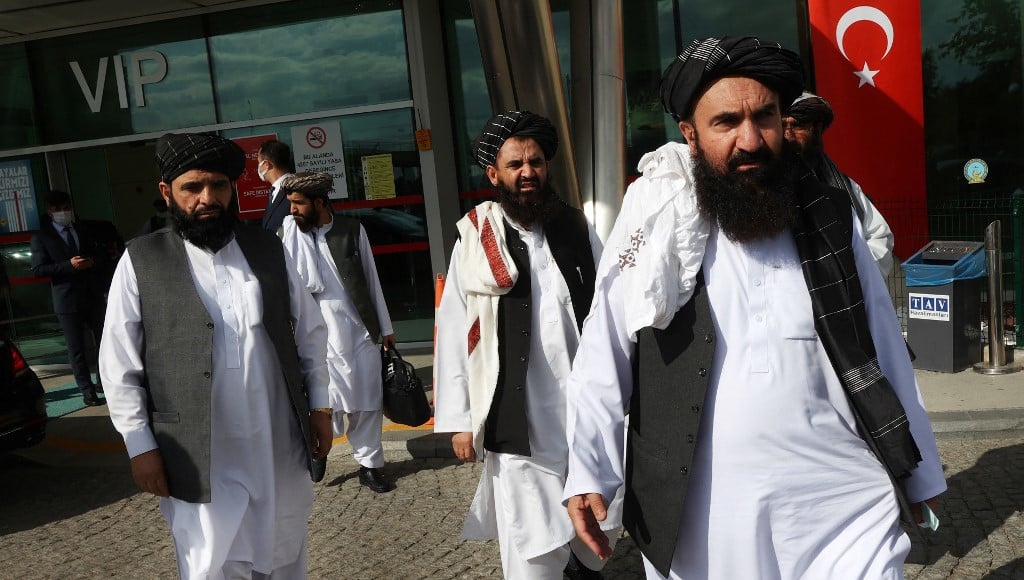
In October 2021, just two months after the takeover of Kabul, Turkey hosted a Taliban delegation led by acting Foreign Minister Amir Khan Muttaqi for what was described as the first high-level contact between Ankara and the new administration. Its embassy in Kabul and consulates general in Herat and Mazar-e Sharif have remained active, while Ankara has continued humanitarian assistance and direct contacts with senior Taliban officials. Muttaqi returned to Ankara in October 2023 for talks with Foreign Minister Hakan Fidan.