by Curlan Campbell
- Museum occupies restored 19th-century cotton ginnery
- New state-of-the-art museum designed by Erik Johnson
- Fundraising support being sought through grants, private donors, corporate sponsorships and Grenadian diaspora
The Board of Directors of the Carriacou Museum is embarking on an ambitious rebuilding project expected to cost more than EC$1 million, with plans to transform the historic institution into a climate-resilient, state-of-the-art museum capable of withstanding future hurricanes while preserving the island’s rich cultural heritage.
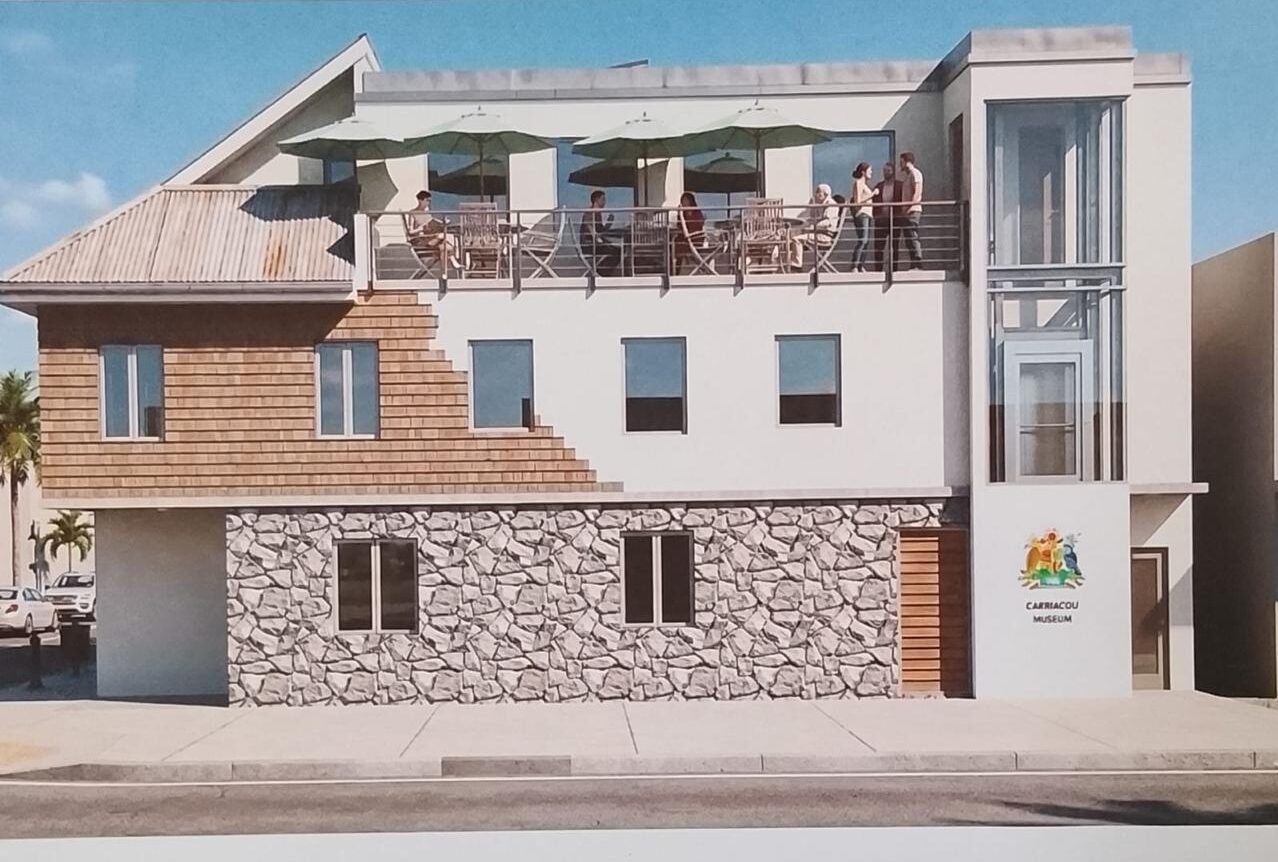
An architectural rendering of the proposed new state-of-the-art Carriacou Museum, designed by Erik Johnson, offers a glimpse of the envisioned facility, blending Carriacou’s traditional architectural character with modern, resilient design.
Majella Mark, Director of International Affairs and Special Projects and Project Development Unit Lead at the Carriacou Museum, said the vision extends beyond replacing what was lost during Hurricane Beryl. “We want this museum to be an example of what museums of the future can look like: sustainable, seen through the eyes of the people and the land, and tech-savvy in how we preserve and share our history.”
The museum occupies a restored 19th-century cotton ginnery, believed to be the second oldest surviving cotton gin building in the world. The structure first became the museum’s home in 1989, and the rebuilding project seeks to preserve that historic legacy while preparing it for the future.
Carriacou Museum, 2023. Photo: Ministry of Carriacou and Petite Martinique Affairs
“The building we’re rebuilding is not a blank slate,” Mark noted, describing plans to create “part archive, part gathering place, part cultural hub.”
The redesigned facility will feature a rooftop terrace for community events and draw on limestone and shingle vernacular alongside contemporary glass and steel. Original ginnery-era stonework and structural elements will also be retained where possible, preserving the building’s historic character while introducing modern museum standards.
Climate resilience has been placed at the centre of the project. According to Mark, the building is being designed with “hurricane resilience as a foundational design principle, not an afterthought.”
Planned features include a reinforced foundation, a stone-based ground floor engineered to withstand storm surge and high winds, hurricane glazing, reinforced roofing systems built to current Caribbean high-wind standards, and integrated solar panels to provide power independence during and after storms. Materials resistant to mould, moisture and salt-air corrosion will also be prioritised throughout the building.
Protecting the museum’s collections is another major priority. The institution is updating its acquisition and collections management policies while exploring a second location to store artefacts that are not on display, reducing the risk of catastrophic losses from a single disaster. The new museum will also include humidity- and moisture-controlled archival storage.
Carriacou Museum damaged by Hurricane Beryl. Photo: Kendel Mark
“It was never built to hold archives,” Mark explained, referring to the former ginnery. “Bringing it up to archival standards while preserving its historic character is one of the more delicate parts of this project.”
The museum also plans to strengthen its disaster preparedness by developing and publishing a formal Disaster Risk Management and Emergency Response Plan in collaboration with regional organisations, including Culture Emergency Response (CER) and Alianza Cultural para Emergencias de Puerto Rico (ACEPR).
Mark added that the museum hopes to work more closely with other heritage institutions across Grenada. “We see real value in building a more connected, mutually supportive network of Grenadian museums and heritage organisations,” she said.
The rebuilding effort carries an estimated price tag of more than EC$1 million. Fundraising is still in its early stages, with support being sought through grants, private donors, corporate sponsorships and the Grenadian diaspora.
“We’re pursuing funding through multiple channels simultaneously,” Mark said. “We welcome contributions from the diaspora as well, both financial and in the form of stories, artefacts, and ideas.”
Building plans have already been shared locally, and community participation will also play an important role in shaping the finished museum. Construction and reopening are projected to take between 2 and 3 years.
Reflecting on the project’s significance, Mark said, “It’s about building something stronger, more resilient, and more honest about everything the building and this community have carried.” She also expressed appreciation for those supporting the museum’s recovery, saying, “We’re grateful for every hand, every dollar, and every story that helps us get there.”
Continue Reading
NOW Grenada is not responsible for the opinions, statements or media content presented by contributors. In case of abuse, click here to report.