On August 11, 2026, Atef Najib was sentenced to death by the Fourth Criminal Court in Damascus. As head of Political Security in Daraa in 2011, Najib was responsible for the torture of a group of schoolboys who had sprayed anti-government graffiti—an event that helped catalyze the Syrian revolution. Some of those schoolboys testified against him in court. Najib also ordered the repression of protests with live ammunition. For the people of Daraa, his presence in court, forced to hear the testimony of his victims, was a long-awaited symbol of justice being done.
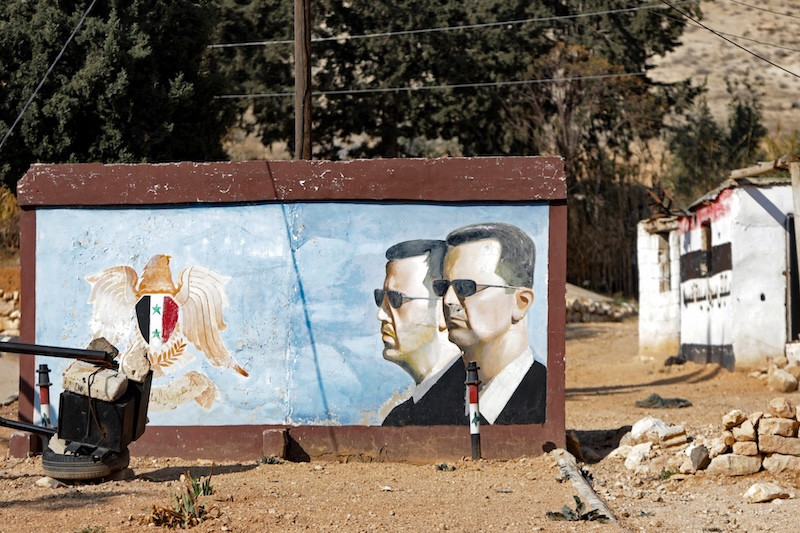
Others, however, were sentenced in absentia, without a full accounting of their crimes and without facing any of their victims in court. They included the very top officials of the former regime, foremost among them Bashar al-Assad himself. Syria’s former dictator—and Atef Najib’s cousin—is directly or indirectly responsible for the killings of hundreds of thousands of people. Bashar’s brother Maher, former head of the Fourth Division, which launched sarin and chlorine attacks, enforced starvation sieges and barrel-bombed neighborhoods to oblivion, was also sentenced to death. So too were several others, including former defense minister Fahd al-Freij.
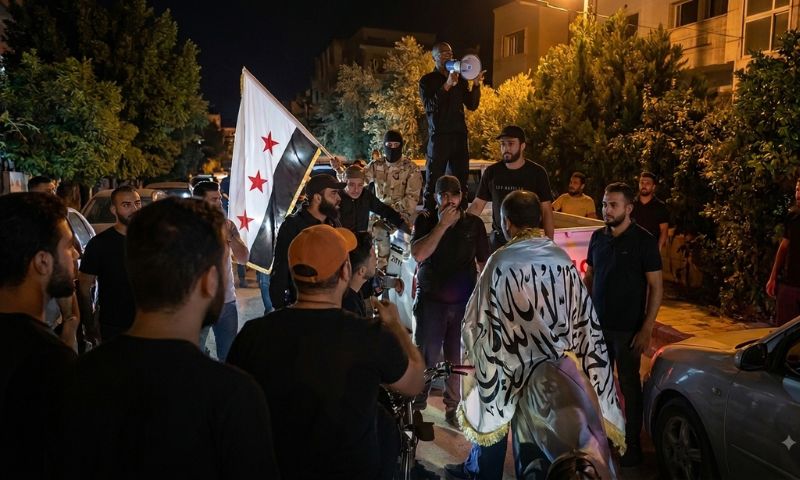
For many people, these verdicts—particularly the one against Bashar—look like justice, and in a very obvious sense they are. The man who ordered the burning of Syria’s cities and the torture to death of its youth is finally being held to account. The man it was forbidden to criticize, on pain of death, now has his own appointment with the noose. Wrongs are being righted and the past is being buried. That is why crowds celebrated the verdicts outside the Palace of Justice in the capital, as well as in Daraa. Some of Syria’s hundreds of thousands of bereaved and tormented mothers will sleep more soundly now.
“The man it was forbidden to criticize, on pain of death, now has his own appointment with the noose.”
Other voices, however, are drawing attention to flaws and drawbacks in the process. Amnesty International, for example, called on Syria’s transitional government both to abolish the death penalty on principle and to end trials in absentia. Many Syrian victims of the Assad government will be angered by this, but we should all consider Amnesty’s principle, which may align with the Quranic warning: “He who kills a soul neither in revenge for another, nor to prevent corruption on earth, it is as if he killed the whole of mankind” (Quran 5:32, in Tarif Khalidi’s translation).
The warning has two parts. It does sanction—though it certainly does not prescribe—the death penalty for murder and for “corrupting the earth,” a term referring to crimes that undermine society, which could cover massacres, mass detention and so on. On the other hand, it stresses the gravity of getting it wrong. Nobody sane would dispute Bashar al-Assad’s guilt, but what of all those who may be sentenced to death in the Syria of today and tomorrow? Can it be guaranteed that their trials will always be fair and fully informed?
There’s another question which, in this case, is even more relevant. Could a performative death penalty verdict potentially be used to silence the voices of victims, avoid a full accounting and make an inconvenient problem go away?
I am reminded here of the 2005 trial of Saddam Hussein during the American occupation of Iraq. In that case, the mass-murdering former dictator was at least present in the courtroom, but he was tried and sentenced to death for only one crime—the torture and execution of 148 Shia residents of Dujail. He was not held to account for his chemical weapons attacks against Iranian civilians, nor for his repression of southern Iraq in 1991, nor for his genocidal Anfal Campaign against Iraqi Kurds, nor for any of his crimes against Sunni Arab communities. A longer, more comprehensive trial would have been inconvenient for the occupiers, especially if it had covered crimes committed when Saddam was still an American ally. On the other hand, the exposure of crimes committed against Sunni as well as Shia communities would undoubtedly have helped create common national ground. It may have helped the nation heal and provided a counterweight to the developing Iraqi civil war.
Saddam’s execution was expedited as a security measure, a message to Baathist insurgents, more than through a legal process. Though it is happening in very different circumstances, Bashar’s hypothetical execution following a non-trial feels like a similarly rushed effort to serve temporary political interests. Surely an event as important to the Syrian people as an accounting with their chief tormentor should not be so rushed. Syria deserves more.
There’s another aspect to it. Because the EU and the UK oppose the death penalty, they will not extradite suspects to countries where it may be applied. In other words, these verdicts may well make it more difficult to hold fugitive criminals to account in Syria.
Some will argue that losing European legal support is a small price to pay for the satisfaction of seeing Bashar swing. But still, the death penalty is of no practical use if Russia refuses to give up Bashar, Maher and the other fugitive former officials. Perhaps, then, this verdict is part of a diplomatic process. Perhaps now that the Russians have been obliged to give up their military bases in Hmeimim and Tartous, they will also find it necessary to hand over Bashar. But then Putin’s appeal to his client dictators—that he will protect them from their people in all eventualities—will be revealed as hollow.
“If Bashar and the others continue their lives in Moscow undisturbed, the verdicts of the Fourth Criminal Court will represent a triumph of mere spectacle over reality.”
If Bashar and the others continue their lives in Moscow undisturbed, the verdicts of the Fourth Criminal Court will represent a triumph of mere spectacle over reality. If, on the other hand, they are actually brought to justice, their punishment will constitute a building block in the wall of accountability that activists, lawyers and some officials are trying to construct—even if the process was flawed. It will provide hope to the victims of Netanyahu, Putin and Trump, among others, that their tormentors may one day answer for their war crimes. Ideally, visible accountability will deter future war crimes and crimes against humanity. Punishing Bashar, in other words, could potentially save lives.
Inside Syria, the symbolic significance of the verdicts may ease some people’s thirst for vengeance by drawing a further line under the Assad era, and so may assist attempts underway to achieve social peace. But to truly move forward, the country requires a much more comprehensive transitional justice process. This would involve not only punishment—though punishment is important—but truth-telling, so that a national narrative can be established to counter denialism and the country’s different communities can hear each other’s experiences. It should involve a measure of restorative justice too—though implementing the principle demands creative thinking. How, for instance, can the people of a community that helped destroy a neighboring community during the war now help rebuild it? Perhaps restorative justice could be combined with a rebuilding program that would also help rebuild social bonds.
Wrongs must be righted systemically if the evils of the past are to be truly buried. None of this can be rushed. The problems stored up over years and decades will not be made to go away simply by ordering impossible executions.
The views expressed in this article belong to the author and do not necessarily reflect the editorial policy of Syria Direct