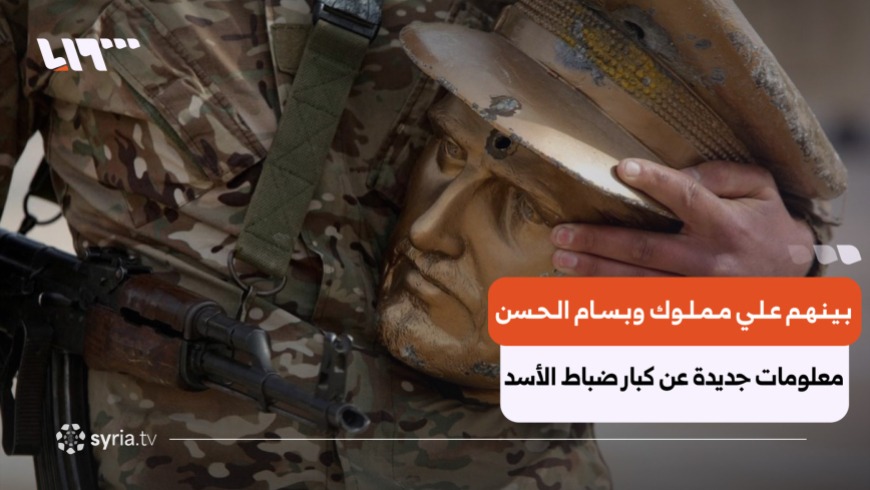
Former Progressive Socialist Party leader Walid Jumblatt has reignited debate over the presence of senior military and security officials from Bashar al-Assad’s former regime now living in Lebanon. Jumblatt said several high-ranking figures are residing on Lebanese territory under what he described as “semi-official protection,” explicitly naming Ali Mamlouk and Bassam al-Hassan, and warning of the security implications for both Lebanon and Syria.
Information obtained by Syria TV indicates that remnants of the former regime’s networks in Lebanon fall into three categories: senior officers living under political or security protection; dozens of former military and intelligence personnel who have regularized their residency status; and influential financial actors active in Beirut’s real estate and commercial sectors.
Lebanese security sources report that Major General Ali Mamlouk — former head of the National Security Bureau — moved between Beirut and northern Bekaa before settling in Bourj Hammoud during the recent military escalation. His movements are described as tightly restricted and conducted under direct Hezbollah protection. Sources say Mamlouk is far from alone: numerous former officers have obtained residency permits through Lebanese General Security, citing political asylum or claims that returning to Syria would endanger their lives. Among those reportedly present is Major General Qahtan Ali Khalil, former head of Air Force Intelligence.
After Israeli bombardment of Beirut and its southern suburbs subsided, a group of former officers affiliated with Air Force Intelligence and the Fourth Division — units that maintained extensive operational coordination with Hezbollah during the Syrian conflict — returned to establish residence near the southern suburbs. Their presence is viewed not merely as individual asylum but as a continuation of joint security networks built over years of cooperation.
Parallel to these security networks, financial figures close to the former regime’s economic circle have expanded their activities in Beirut. Chief among them is Khodr Ali Taher, known as “Abu Ali Khodr,” who managed business interests linked to Asma al-Assad. Observers have documented commercial ventures and property acquisitions associated with Taher and partners Fadel and Ma’rouf Balwi, raising questions about whether these represent private investments or systematic transfers of capital out of Syria.
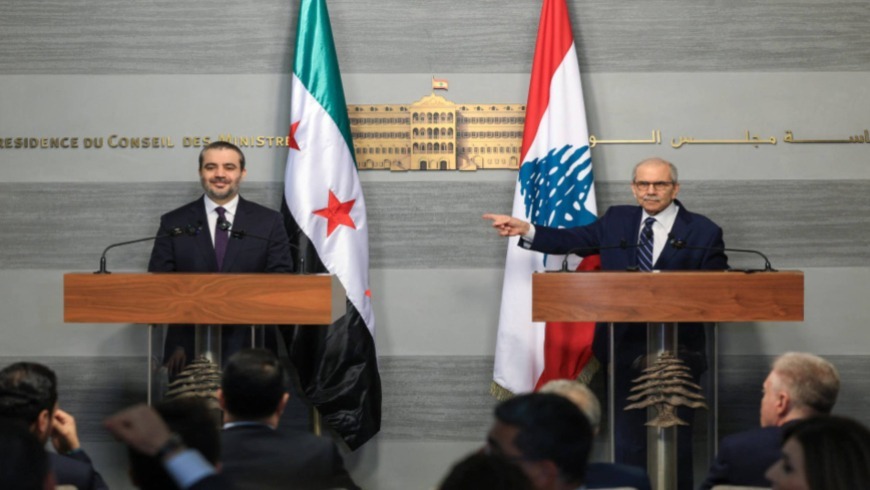
Hezbollah’s role is central to the sensitivity of this file. Lebanese and Syrian analysts warn that the party’s influence over the protection and movement of these former officials gives it leverage in future negotiations with the new administration in Damascus — particularly after Hezbollah Secretary-General Naim Qassem signaled readiness for dialogue with the Syrian state. As coordination between Beirut and Damascus advances toward formal security cooperation, the fate of these political, military, and financial networks remains a critical point of contention.
This article was translated and edited by The Syrian Observer. The Syrian Observer has not verified the content of this story. Responsibility for the information and views set out in this article lies entirely with the author.