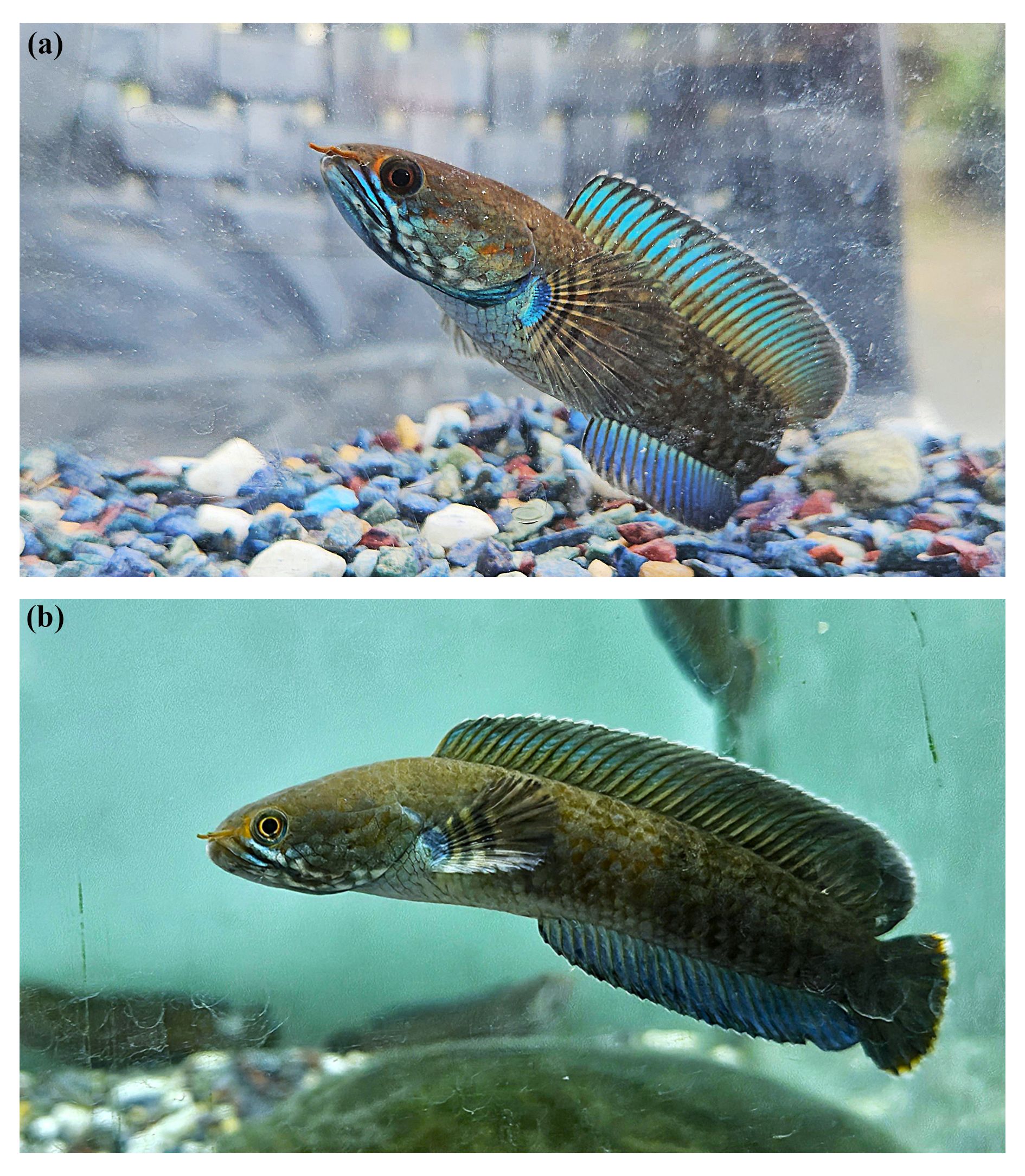
Guwahati: A striking ornamental fish found only in the Eastern Himalayan biodiversity hotspot may no longer have to be collected from the wild.
Researchers from the Aquaculture and Biodiversity Centre at Gauhati University, in collaboration with scientists from the ICAR–National Bureau of Fish Genetic Resources (NBFGR), have successfully developed the world’s first captive-induced breeding protocol for Channa andrao, a breakthrough that could transform both conservation efforts and the ornamental fish trade.
Popular among aquarium enthusiasts worldwide as the Red Spotted Snakehead, Channa andrao commands prices of US$15-40 (around ₹1,300-3,500) per individual in the international ornamental fish market.
Until now, however, the species was sourced almost entirely from the wild because there was no reliable method to breed it in captivity.
PREMIUM STORIES FROM EASTMOJO
2000+ readers have backed us to keep journalism free. You can too.
SUPPORT US
Published in the journal Fish Physiology and Biochemistry, the study describes a hormone-induced breeding technique that achieved a spawning success rate of 83.3 per cent, paving the way for commercial seed production while reducing pressure on wild populations.
The fish is endemic to swampy habitats in the Eastern Himalayas and is among the most sought-after Indian snakeheads in the global aquarium trade.
Researchers say the new breeding protocol offers a sustainable alternative to indiscriminate collection from natural habitats and could create new livelihood opportunities for ornamental fish farmers in Northeast India.
The study also documented the species’ remarkable breeding behaviour. Male Channa andrao are devoted parents, collecting fertilised eggs inside their mouths and incubating them until the larvae hatch. The researchers observed rhythmic mouth movements that oxygenate the developing embryos before the young fish are released, after which the males continue to guard and care for the larvae.
Scientists found that embryos failed to develop when removed from the male’s mouth, highlighting the critical role of paternal mouthbrooding in the species’ reproductive success.
According to the researchers, the protocol provides a practical foundation for hatcheries to produce the species without relying on wild stocks, supporting both biodiversity conservation and the growing ornamental fisheries sector.
The research was carried out by Diksheeta Chutia, Manoj Talukdar, Jayanta Kumar Nath, Juri Konwar, Adity Deka and Dandadhar Sarma of the Aquaculture and Biodiversity Centre, Gauhati University, in collaboration with Rejani Chandran, Rajeev K. Singh and Kajal Chakraborty of the ICAR–National Bureau of Fish Genetic Resources (NBFGR), Lucknow.
Also Read: Why Mirabai Chanu’s gold medal is a lesson in resilience