In a capital that constantly measures its internal stability against its external diplomatic posture, President Ahmad al-Sharaa’s July 19 decree reshuffling the leadership of Syria’s security apparatus was anything but a routine administrative update. It marks a defining moment in the construction of post-Assad governance, signaling a recalibration of the command hierarchy within a security system navigating the tension between consolidating authority and building durable state institutions.
The significance of the decree lies not simply in the rotation of officials. Rather, it raises a deeper strategic question: Does this restructuring represent a move away from fragmented decision-making toward a unified operational model? And can it successfully integrate intelligence work, field operations and political strategy into a coherent apparatus—or does it merely redistribute roles within an inherited framework without altering its foundations?
A Revised Security Structure
Since the fall of the Assad regime on December 8, 2024, Syria’s security architecture has undergone a profound transformation. The former system relied on a sprawling network of competing security branches—tools of coercion and instruments of domestic and foreign policy—spread across the country. The new model consolidates authority into four principal institutions designed to merge executive and strategic functions:
The National Security Council, created by presidential decree in March 2025, is now the central body for shaping national security strategy. Chaired by the president, it oversees political, security and economic threat assessments. Its membership includes the ministers of foreign affairs, defense and interior, the director of general intelligence, two presidential advisers and a designated technical specialist.
The National Security Office coordinates policy among specialized institutions, including the Ministry of Interior and intelligence agencies. It monitors and executes directives issued by the political leadership. Unlike the former office led by Ali Mamlouk—dissolved along with Military Intelligence, Air Force Intelligence, General Intelligence and Political Security—the new office operates within a unified institutional framework rather than supervising autonomous, rivalrous branches.
The General Intelligence Directorate serves as the executive intelligence agency responsible for threat detection, intelligence collection and early-warning analysis. It delivers assessments to both the National Security Council and the National Security Office depending on the sensitivity of each file.
The Ministry of Interior oversees domestic security, combining policing with public-security responsibilities after the dissolution of legacy institutions. It intersects with General Intelligence on internal stability matters and now holds broader operational authority than its predecessor.
Together, these bodies reflect an effort to align institutional mandates and reduce jurisdictional overlap, replacing the ideological and factional rivalries that once defined Syria’s security landscape.
Shifting Centers of Gravity
The latest appointments are part of a broader push to streamline authority, eliminate redundancies and reduce friction within state institutions. These vulnerabilities had been exploited by domestic and foreign actors, particularly given the diverse backgrounds of personnel integrated from groups such as the former Hay’at Tahrir al-Sham, the Syrian Democratic Forces and various regional factions.
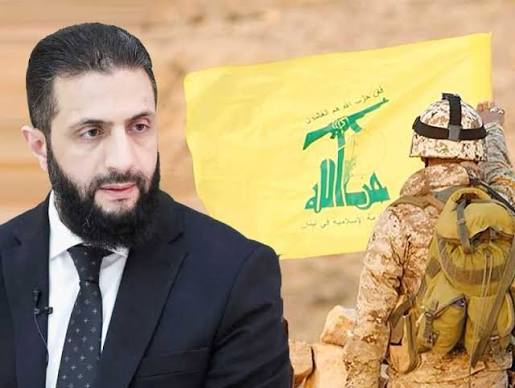
The reorganization also responds to urgent security challenges, including a series of bombings targeting security personnel across multiple regions—culminating in explosions during French President Emmanuel Macron’s visit to Syria. Border monitoring remains a priority, underscored by recent interceptions along the Syrian-Iraqi and Syrian-Lebanese borders involving weapons shipments the Interior Ministry said were destined for Lebanese Hezbollah.
Under the new directives, Interior Minister Anas Khattab has been appointed head of the National Security Office while retaining his ministerial role. Abdel Qader Tahan becomes director of General Intelligence, and Hussein al-Salama is named deputy director of the National Security Office. The structure suggests tighter coordination between domestic security and intelligence operations, particularly by aligning the Interior Ministry’s counter-terrorism and border-guard divisions with General Intelligence under a unified command.
Yet the changes do not represent a conventional institutional rotation. Instead, they consolidate influence within the core circle that has managed the security sector since Assad’s fall. The approach resembles an institutionalization of personal authority—transforming long-standing military and personal networks into formal state structures while preserving underlying loyalties. Concentrated security mandates reinforce direct presidential oversight and reduce the risk of independent maneuvering by internal factions, especially given the operational backgrounds of the newly appointed figures in northern Syria.
Strategic and Economic Implications
The structural updates aim to centralize decision-making and strengthen oversight across security agencies, with an emphasis on counter-terrorism and organized crime. Beyond administrative efficiency, the changes offer insight into the trajectory of Syria’s security policy as the government balances internal stability with political legitimacy and international expectations.
Regional and international partners have increasingly tied political, security and military support to the establishment of security institutions operating under legal and civilian oversight. In this context, appointing Minister Khattab—a civilian—to lead the National Security Office may be interpreted by foreign stakeholders as a step toward greater transparency, potentially opening doors to broader political and economic engagement.
Economically, a centralized security hierarchy aims to reassure investors wary of Syria’s internal volatility. Predictable security structures—free from inter-agency rivalry—are essential for attracting capital, facilitating reconstruction and supporting large-scale infrastructure projects.
The Real Test
Despite its structural logic, the durability of Syria’s security transition will depend on field execution and political realities that appointments alone cannot resolve. The central challenge lies in integrating personnel from diverse combat backgrounds and ideological orientations. Transforming loyalty networks built over years of conflict into professional state institutions will require sustained effort, rigorous anti-infiltration measures, strict arms control and the suppression of remnant insurgent cells.
At the command level, leadership must balance the centralization necessary for effective security with the risk of institutional insularity. Domestic and international credibility will depend on cultivating a transparent relationship with the public, particularly in the absence of formal legislative or judicial oversight mechanisms that could reinforce civilian governance.
Economic confidence, too, hinges on long-term stability rather than administrative decrees. Investors will require consistent institutional performance and a proven ability to manage security breaches, border smuggling and urban threats.
Finally, the international dimension remains decisive. The political and security backing Damascus seeks is implicitly contingent on maintaining a unified, reliable security apparatus. Any resurgence of internal rivalry or institutional fragmentation could undermine international confidence at a moment when Syria continues to rely on external support to rebuild its economy and state institutions.
This article was translated and edited by The Syrian Observer. The Syrian Observer has not verified the content of this story. Responsibility for the information and views set out in this article lies entirely with the author.