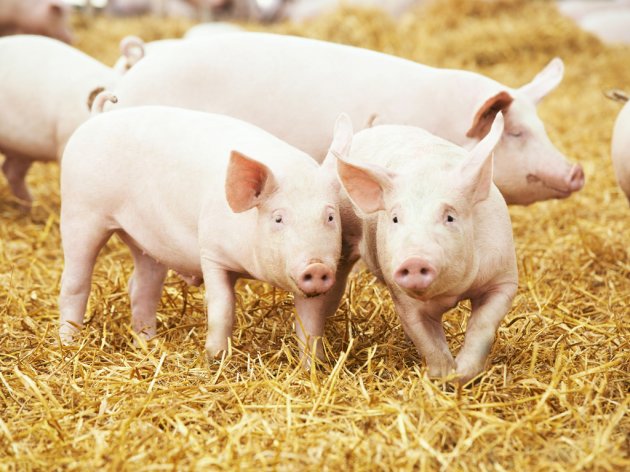
African Swine Fever (ASF) has struck Serbia for the second time in three years. The infection has been confirmed across seven districts, 12 municipalities, and 58 settlements, affecting a total of 734 holdings, according to the Ministry of Agriculture. A state of emergency has been declared in nine municipalities, with approximately 30,000 pigs either dying from the disease or being culled.
“The situation is stabilising. On Monday, 27 July, for the first time we had no new outbreaks reported, so the focus now is on extinguishing existing hotspots,” says Sanja Čelebićanin, member of the Serbian Government’s Operational Task Force for Infectious Animal Diseases and representative of the Association of Pig Breeders of Serbia, speaking to Bloomberg Adria.
Swine numbers in Serbia
The current outbreak of African Swine Fever comes at a time when Serbia has its lowest pig population in ten years, according to data from the Statistical Office of the Republic of Serbia (SORS). As of 1 December 2025, there were around 2.4 million pigs in Serbia – 13.9% lower than the ten-year average spanning 2014 to 2024. Prior to the onset of this latest epidemic, swine numbers in May 2026 were down 14.7% compared to the same period the previous year.
The decline in overall pig numbers was a “direct result of the previous African Swine Fever epidemic,” Čelebićanin explains. During that wave in 2023, nearly 47,000 pigs died or were culled.
“In 2024, following that outbreak, Serbia imported around half a million piglets,” Čelebićanin points out, describing it as an “exceptionally high number”. Recovery was sluggish: between 2024 and 2025, pig numbers edged up by 2.3% to reach 2.4 million. “The situation this year is not as severe as it was in 2023,” she assesses.
A virus without borders: Severe economic blow to smallholdings
The hardest-hit areas are the Mačva, Kolubara, Srem, and South Bačka districts, Dr Boban Đurić from the Ministry of Agriculture’s Veterinary Directorate told Tanjug. Declaring a state of emergency in nine municipalities has enabled local authorities to implement all prescribed containment measures more smoothly, Đurić highlighted.
The virus is extremely resilient and spreads rapidly. “The disease affects both domestic and wild pigs, but it is not transmissible to humans or other livestock species,” Čelebićanin explains. “The key factor in stopping the spread is biosecurity – keeping farms closed off – because people returning from rural areas can carry the virus in on their clothes and footwear.”
She adds that while the disease poses no direct health risk to humans, “Unfortunately, some farmers slaughter infected pigs even though it is strictly prohibited, and the virus can survive for months in a freezer.”
African Swine Fever has not spared neighbouring countries either, affecting Croatia again this year. “This disease respects no borders. It is to be expected in frontier regions, particularly along river basins such as the Sava and Danube when water levels are low, as they are this year,” Čelebićanin notes. The Danube’s water levels were reported as “historically low” by the National Emergency Headquarters.
Extent of the ASF outbreak in Serbia
Weak sanitary conditions on certain private smallholdings further facilitate the spread. While industrial pig farms feature vehicle disinfection baths (disinfection barriers), smallholdings rarely do. “In Serbia, particularly in the central region, there are many small farms keeping around 1,000 fattening pigs,” the expert explains. Micro-farms raising pigs solely for household consumption are particularly vulnerable.
“An additional factor is that smallholders lowered their guard once seasonal field work began,” Čelebićanin adds. The virus can easily be brought onto a holding on the tyres of tractors and farm machinery. “Regrettably, not all local councils were quick to set up vehicle disinfection points at the entrances to affected villages.”
While the outbreak is easing and the number of culled pigs remains lower than in 2023, for smallholders, this is a matter of survival. “Farmers suffer immense stress during these crises, and that takes a toll on human health as well,” Čelebićanin emphasises.
Holdings are also taking a heavy financial hit. “Compensation for culled animals cushions the immediate financial impact, but it does not replace long-term investment in farm biosecurity,” she adds. The financial loss per farm will be substantial. “Live weight sells for 210 dinars per kilogram, and fatteners reach 120 to 130 kg before slaughter,” says Čelebićanin. For farmers, that represents a loss of 27,300 dinars per pig.
Farmers who have lost stock can claim compensation as well as subsidies to restock. Serbia’s Fiscal Strategy for 2027 projects that agricultural subsidies will make up the largest share of subsidies from the national budget. However, “these funds are allocated without adequate analysis of the breakdown, targets, and actual impact,” noted the Fiscal Council in its assessment of the draft Fiscal Strategy for 2027 (with projections through 2028 and 2029).
Economic impact and pork prices
With no new hotspots reported on Monday, 27 July, Čelebićanin expects the situation to calm down. “Barring any new epicentres, I expect the crisis to be overcome by mid-August,” she told Bloomberg Adria. However, once the wave subsides, affected farms face a mandatory six-month ban on restocking their pens. “That means imports of new fattening stock can only begin next year.”
Consequently, Serbia may need to step up imports of pork for processing over the coming months. “Under normal circumstances, Serbia produces about 60% of its pork locally and imports the remainder, mostly from Russia and Spain,” Čelebićanin notes. “I expect an increase in imported meat for processing – namely for cured and deli meats – while Serbia should have enough fresh meat on the market to meet domestic demand.”
A slight rise in pork product prices is to be expected. “However, I do not anticipate significant increases,” states Čelebićanin.
SORS data for June 2026 indicates that annual pork consumption has dropped from 18 kg down to around 15 kg per capita, while poultry consumption rose from 15 kg to 18 kg. (The official SORS Household Consumption Survey does not break down pork quantities separately in kilograms).
Import trends
Meat imports into Serbia have seen sharp growth over the past two decades – rising from just €5 million in 2006 to €41 million in 2012, before reaching a record €256 million in 2024, according to an analysis by Makroekonomija. Pork imports in 2025 stood at €213.5 million.
(Bloomberg Adria, 30.07.2026)
https://rs.bloombergadria.com/ekonomija/srbija/109830/africka-kuga-svinja-u-srbiji-sta-treba-da-znate/news