By Melino Maka
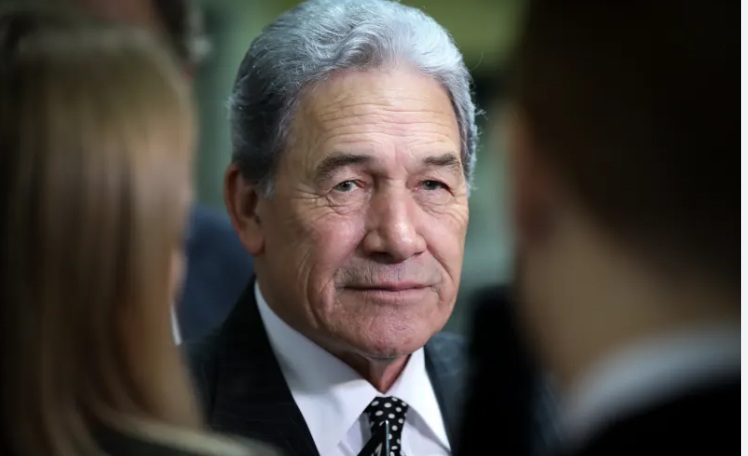
With the 2026 General Election now just 100 days away, the political circus has arrived in New Zealand with a vengeance. And as is tradition, the ringmaster is none other than Rt Hon Winston Peters.
But this time, his latest act is not a clever political masterstroke. It is a dangerous lurch into the politics of division that could ultimately hurt the party he has spent decades keeping alive.
Yesterday in Parliament, the Foreign Minister told Green MP Lawrence Xu-Nan, a New Zealander of Chinese descent who has called this country home since the mid-1990s, to “go back to your own country”.
The tirade didn’t stop there. Peters doubled down outside the House, calling the Chinese-born MP an arrogant “twit” and attacking his command of English.
Let that sink in: New Zealand’s Foreign Minister telling a fellow parliamentarian, elected to represent New Zealanders, that he should go back to another country.
This was not simply a remark that disappeared once Parliament adjourned. Peters has stood by his comments, turning what might otherwise have been dismissed as another parliamentary outburst into a wider political and diplomatic controversy.
Xu-Nan described the attack as a “desperate attempt” to distract the public from the “real harm this government is doing” by scapegoating migrant communities.
Whether that was Peters’ intention is something only he can answer. But politically, the effect is unmistakable. The debate has shifted away from policy and onto identity, immigration and who gets to call themselves a New Zealander.
And with a general election approaching, that raises an obvious question: is this simply Winston being Winston, or is Peters deliberately leaning into cultural grievance to shore up his political base?
The strategy, if that is what it is, is hardly new.
When voters are worried about the cost of living, healthcare, infrastructure and the economy, identity politics provides politicians with a powerful alternative battlefield. Instead of arguing over performance, the argument becomes about “us” and “them”.
Peters may be betting that cultural grievance remains politically potent enough to energise his traditional supporters.
But there is one enormous problem.
He is not just another MP.
He is New Zealand’s Foreign Minister.
He is the man charged with representing New Zealand abroad and building relationships with countries critical to the nation’s economic future, including China, New Zealand’s largest trading partner.
The controversy has now crossed from domestic politics into foreign relations. China’s representatives have publicly objected to the remarks and the matter has been raised diplomatically with New Zealand.
For a Foreign Minister, that is an extraordinary diplomatic own goal.
How does New Zealand credibly present itself internationally as an open, multicultural democracy while its Foreign Minister tells an elected New Zealand MP of Chinese heritage to “go back to your own country”?
That is no longer merely a question for Peters.
It is a question for the Government.
And Peters is not standing alone.
His New Zealand First deputy Shane Jones has defended him and reportedly said Xu-Nan “should know his place”, further ensuring the controversy cannot easily be dismissed as one politician losing his temper.
The political message being projected is therefore bigger than one sentence uttered in Parliament.
It raises a more fundamental question about what New Zealand First believes being a New Zealander actually means.
Is citizenship enough?
Is being elected to Parliament enough?
Is growing up here enough?
Or does somebody born overseas remain an outsider forever, vulnerable to being told to “go back” whenever their politics offend someone who happened to be born here?
Those are uncomfortable questions, but Peters himself has put them on the table.
Peters may also believe his own Māori heritage provides some political protection against accusations that his rhetoric is racist or xenophobic.
But heritage does not determine whether political language is acceptable.
Words do.
And the words used here would be condemned if they came from almost any other senior political leader.
To be fair to Peters, his political survival is legendary.
He has spent decades in Parliament and has played a role in governments led by both National and Labour. He has been written off politically more times than most politicians survive elections, only to claw his way back.
His supporters have remained remarkably loyal.
That matters because anyone predicting the death of Winston Peters’ political career should do so with considerable caution. History is littered with such predictions.
But this time the gamble is different.
New Zealand itself has changed.
It is younger, more diverse and more connected to Asia and the Pacific than the country Peters first entered Parliament to represent.
New Zealand First may retain a loyal constituency among older and provincial voters, but elections are not won merely by protecting an existing base. Parties also need room to grow.