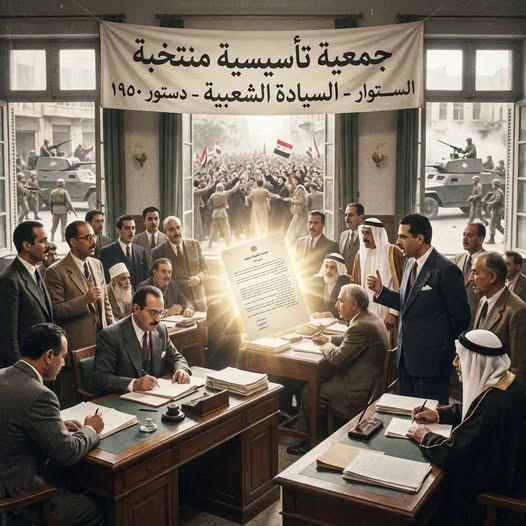
Experiences from several post-conflict states that have successfully navigated political transitions offer important lessons for Syria’s emerging governance model. Some of the most stable transitions—such as those in South Africa and Rwanda—relied on consensus-driven constituent assemblies that brought together diverse political and social groups to shape the foundations of the new state.
Syria’s transitional authority chose a different path. Instead of adopting an inclusive constitutional assembly, key decisions about the country’s future were made largely by military faction leaders during the “Victory Conference” in early 2025.
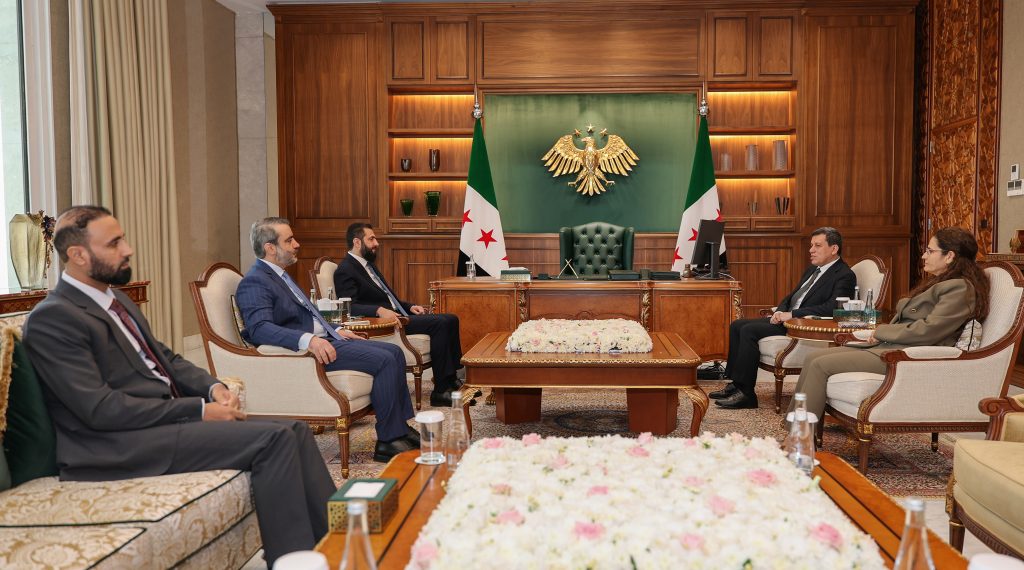
Foremost among these decisions was the appointment of Ahmed al-Sharaa as transitional president for a five-year term. Al-Sharaa then named the National Conference Committee, which convened briefly without conducting meaningful national dialogue, before issuing a constitutional declaration and a series of sovereign decisions.
A Parliament Without Political Parties
Given the extraordinary circumstances—fourteen years of civil conflict, damaged civil registries and a vast diaspora—indirect mechanisms for forming a People’s Assembly could be justified. Yet the committees overseeing the selection of electoral bodies in each province operated under the supervision of the transitional authority’s political leadership. This approach extended to the appointment of 70 members chosen directly by the interim president, who prioritized regional, sectarian and gender balances while leaving political movements unrepresented.
The absence of structured political parties poses a significant challenge. Without formal party systems, it becomes difficult to develop coherent economic, social, cultural and political programs. Parties remain essential for managing peaceful political disagreement and preventing exclusion or violence.
The newly inaugurated People’s Assembly therefore resembles an executive-aligned body more than an independent legislature. Its ability to perform core parliamentary functions—oversight of the executive branch, accountability, and autonomous lawmaking—remains limited.
Uncertain Legislative Authority
In recent months, the transitional president has issued numerous decrees that now shape political, social and cultural life. Whether the People’s Assembly will review or amend these decrees, draft modern legislation governing political parties and civil society organizations, or pass laws recognizing international human rights standards is still unclear.
Syria has not followed the established model of a consensus-based constituent assembly to guide its political transition. Building a transparent state governed by the rule of law remains essential for reopening international engagement, attracting investment and securing reconstruction support after years of isolation and sanctions.
Awaiting Parliamentary Functionality
For now, Syrians are watching closely to see whether the People’s Assembly can exercise genuine legislative and oversight authority, hold the executive accountable for security failures, and provide citizens with assurances regarding their safety, property and rights.
The effectiveness of Syria’s transition will depend on whether its institutions evolve beyond executive dependency and begin to reflect the inclusive, consensus-driven frameworks that have underpinned successful transitions elsewhere.
This article was translated and edited by The Syrian Observer. The Syrian Observer has not verified the content of this story. Responsibility for the information and views set out in this article lies entirely with the author.