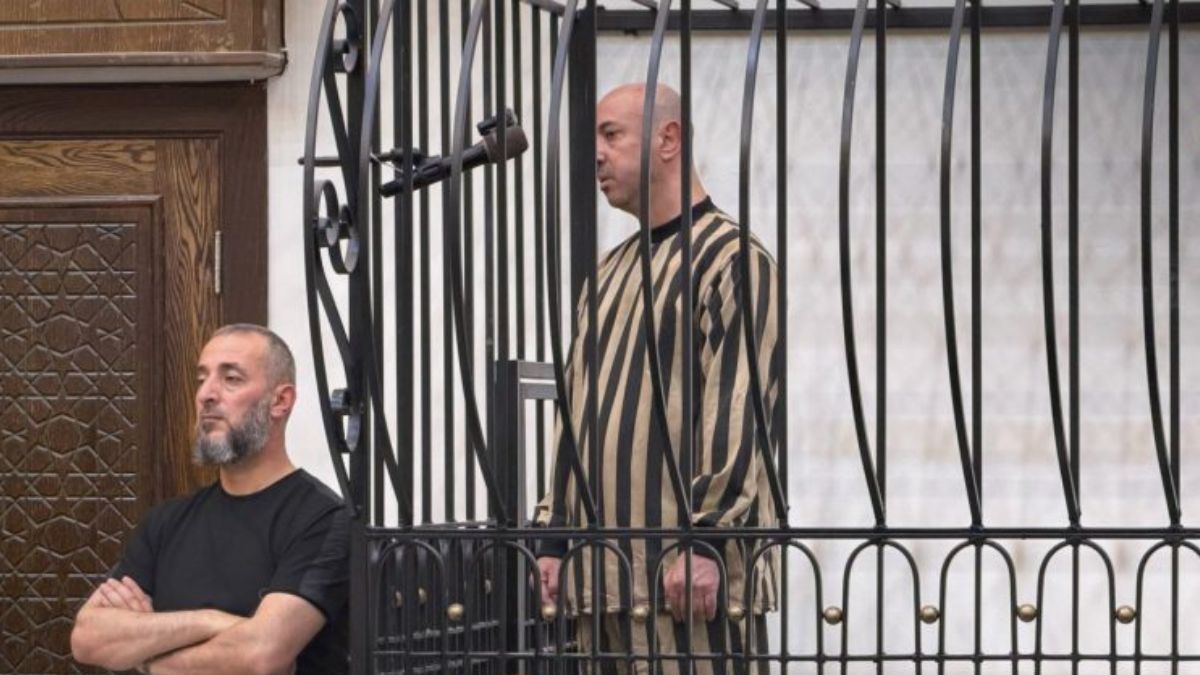
The Public Prosecution has requested the maximum penalty—the death sentence—for Wasim al-Assad, cousin of deposed president Bashar al-Assad, during his third court appearance before the Fourth Criminal Court in Damascus on Wednesday, 22 July.
In a statement issued by the General Authority for Transitional Justice, prosecutors said the demand for capital punishment was based on evidence presented to the court, witness testimonies, and confirmed charges that include premeditated murder, large-scale drug trafficking and promotion, and acts undermining national security and civil peace.
During the session, the defense team reiterated its previous arguments, while Wasim al-Assad denied all charges and appealed to the bench for clemency and a fair judicial process.
The court adjourned proceedings until 29 July for final review and sentencing.
The hearing took place behind closed doors at the Palace of Justice in Damascus. The judicial panel focused on testimony from state witnesses, who delivered their statements in the presence of the defendant as part of formal evidentiary procedures. The bench was chaired by Judge Fakhr al-Din al-Arian, with Counselors Abdul Hamid Mohammad al-Hamoud and Hussam Hussein Abdul Rahman. Judge Omar Mahmoud al-Radi represented the Public Prosecution.
Wasim al-Assad’s trial opened on 24 June with the formal reading of the indictment, followed by a second session on 15 July dedicated to witness testimony and the review of documentary evidence, photographs, and video recordings.
The defendant faces multiple charges, including forming armed militias affiliated with the former regime’s 4th Armored Division and involvement in extensive narcotics trafficking.
Part of a Broader Transitional Justice Process
The proceedings against Wasim al-Assad are part of a wider transitional justice framework aimed at holding senior figures of the former Syrian regime accountable. Other prominent individuals facing judicial action include Atef Najib, former head of the Political Security branch in Daraa, and Ahmad Badreddin Hassoun, the former Grand Mufti.
The Ministry of Justice stressed that all trials are being conducted in accordance with established legal guarantees to ensure due process and uphold the rule of law.
This article was translated and edited by The Syrian Observer. The Syrian Observer has not verified the content of this story. Responsibility for the information and views set out in this article lies entirely with the author.