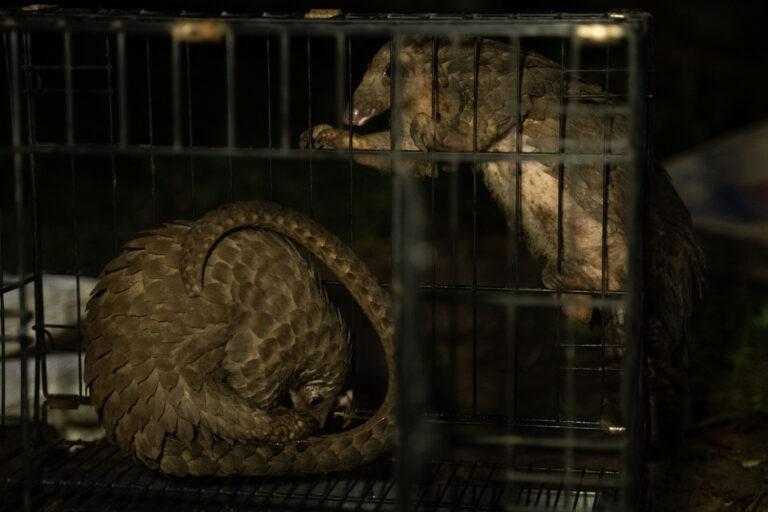
Pangolin scales and other body parts trafficked internationally appear to come from the same areas that supply the animals for local wild meat markets, a new study has found. It created a DNA database and location-prediction model for three threatened species: the white-bellied (Phataginus tricuspis), Sunda (Manis javanica) and Chinese (Manis pentadactyla) pangolins. Pangolins are the world’s most trafficked wild mammals; estimates suggest more than 1 million animals have been captured from the wild over the past decade. The new database contains DNA information from 711 samples collected from museum specimens and seized pangolin parts. “Our dense sampling of the white-bellied pangolin … revealed that both forms of trade (domestic and international) draw from the same source regions,” the study’s authors wrote. “This overlap is also found, albeit less pronounced, in the two Asian species and suggests a shared supply chain and common actors at the point of pangolin harvest, and possibly beyond.” In Cameroon, DNA samples from the endangered white-bellied pangolin showed that international seizures in China and Europe overlapped with the same sourcing locations for the two largest domestic wild meat markets in Cameroon: the capital Yaoundé, and the port city of Douala. The study identified the Ebo Wildlife Reserve in western Cameroon as a main sourcing site for both domestic markets, as well as international traffickers. Other key sourcing areas include the forests near the southern city of Ebolowa, near the border with Equatorial Guinea, and near the town of Eseka, about 100 kilometers (60 miles) southwest…This article was originally published on Mongabay