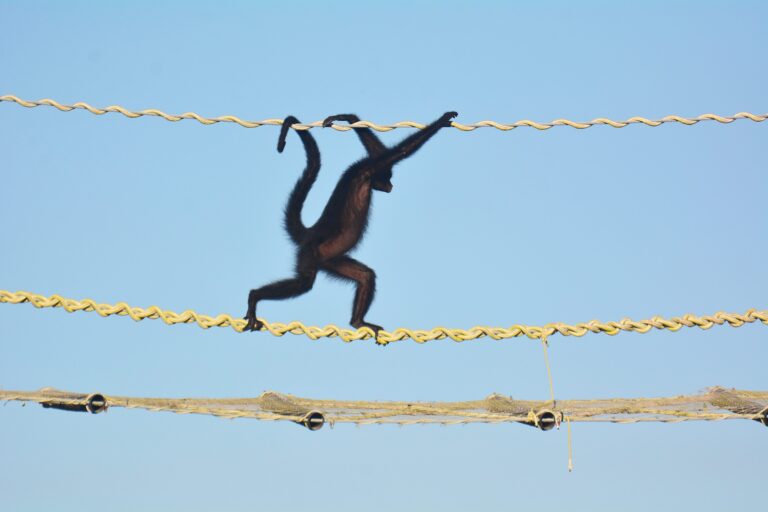
Around 7 a.m., with dense fog blanketing the landscape, biologist Gabriel Falquetto had already come across several road-killed animals along ES-164 highway in Brazil’s Espírito Santo state. He was on his way to Kaetés Private Natural Heritage Reserve (RPPN), in the Atlantic Forest, where he monitors wildlife and roadkill in the region. Suddenly, he spotted the lifeless body of a primate on the pavement. It was a buffy-headed marmoset (Callithrix flaviceps), a species listed as critically endangered on the International Union for Conservation of Nature (IUCN) Red List. An estimated 2,500 individuals remain in the wild, making it one of the world’s most threatened primates. “It was extremely painful and discouraging,” Falquetto told Mongabay. “We travel through this region every day monitoring wildlife, and we celebrate every encounter with groups of buffy-headed marmosets in the forest.” “Finding an individual in those conditions brings a feeling of sadness and helplessness. Beyond the loss of that animal, the incident reminds us of the impacts our activities have on biodiversity.” About 2,900 kilometers (1,800 miles) away, on the road that leads to Alta Floresta, a small Amazon town in the far north of Mato Grosso state, cases like the buffy-headed marmoset’s roadkill have not been recorded since 2024. That year, eight canopy bridges were installed, connecting fragmented forest patches. Camera trap footage revealed that, over 15 months, the aerial wildlife crossings enabled 15,000 safe crossings by arboreal animals — and not a single roadkill. Installation of the first canopy bridges in Alta Floresta,…This article was originally published on Mongabay