Syria’s turn toward sovereign Sukuk (bonds) marks a deliberate break from the fiscal habits that have hollowed out its economy for more than a decade. For years, public budgets were patched through inflationary financing: printing money or borrowing directly from the Central Bank. The consequences were predictable and devastating — a collapsing currency, soaring consumer prices, and a monetary environment defined by distrust. Sukuk signal an attempt to move toward real financing, drawing on existing liquidity rather than creating new money. By absorbing idle capital held by banks, corporations, and individuals and redirecting it into productive projects, the state hopes to fund spending without expanding the money supply or fuelling further inflation.
The emphasis on Sukuk also reflects a strategic shift in how the government accesses capital. Traditional treasury bonds, with their fixed interest payments, remain off-limits to many Islamic banks and conservative investors who avoid interest-bearing instruments. Sukuk, by contrast, offer shared ownership or usufruct rights in tangible assets — a power plant, a highway, a public facility — with returns generated by the project itself. They allow the state to tap into pools of liquidity previously inaccessible under Islamic jurisprudence, broadening the financial base at a moment when conventional borrowing has become increasingly constrained.
Finance Minister Mohammad Yasser Barneh has framed the move as part of a broader effort to build a yield curve — a benchmark for pricing risk and time across the financial system. By issuing securities with varying maturities and defined profit rates, the government provides the reference points that banks and companies need to price loans and investments rationally. In a country where financial markets have long operated without such anchors, the creation of a yield curve is not a technical detail but a foundational step toward restoring monetary coherence.
Sukuk also give the Central Bank tools it has lacked for years. With these instruments in circulation, the Bank can finally conduct open market operations: selling Sukuk to absorb excess liquidity when inflationary pressures rise, or buying them back to inject cash when the economy stagnates. This flexibility — routine in functioning economies — has been absent from Syria’s monetary policy toolkit, leaving the authorities with blunt, often counterproductive measures to manage liquidity and speculation.
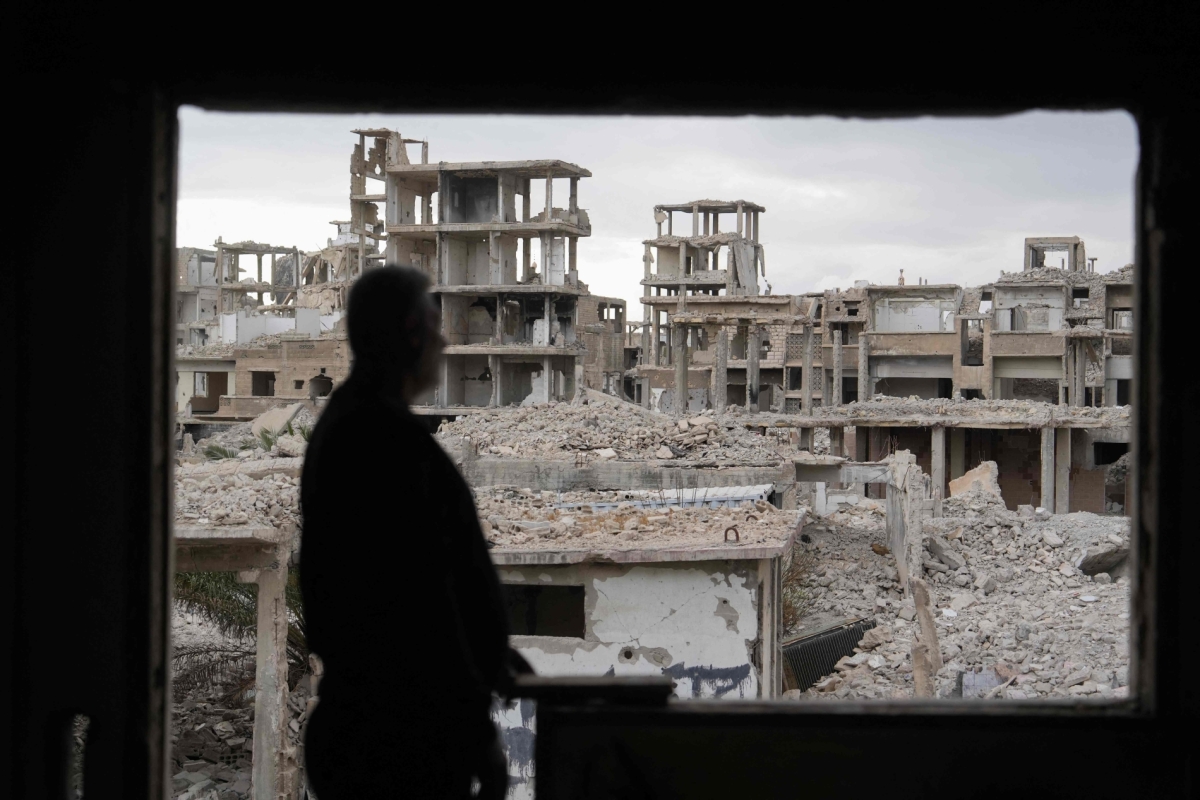
Yet the theoretical benefits collide with structural realities that threaten to undermine the entire project. The trust deficit is profound. Investors living with currency volatility and political uncertainty may hesitate to lock their capital into long-term government instruments, preferring real estate, gold, or other tangible stores of value. Sukuk also require revenue-generating assets capable of producing genuine profits. After years of war and infrastructure degradation, many public facilities cannot reliably generate income, and without rigorous feasibility studies, Sukuk risk becoming another administrative burden rather than a productive financing tool.
The banking sector presents a further constraint. The success of Sukuk depends on the liquidity and willingness of Syrian banks to subscribe to them. That, in turn, requires careful coordination between fiscal and monetary authorities to avoid crowding out — a scenario in which banks divert funds away from private-sector lending in favour of financing the government. If mismanaged, Sukuk could unintentionally suffocate private investment rather than stimulate it.
Syria’s pivot to Sukuk is therefore both necessary and fraught. It represents an attempt to rebuild financial credibility, expand access to capital, and equip the Central Bank with modern policy tools. But without trust, viable assets, and a banking sector capable of absorbing the instruments without starving the private economy, the initiative risks becoming another ambitious reform undermined by the conditions it seeks to remedy.
This article was translated and edited by The Syrian Observer. The Syrian Observer has not verified the content of this story. Responsibility for the information and views set out in this article lies entirely with the author.