Several environmental advocacy groups are calling for a statewide boycott of Polar Beverages, alleging the Worcester-based company is standing in the way of efforts to modernize Massachusetts’ bottle recycling laws.
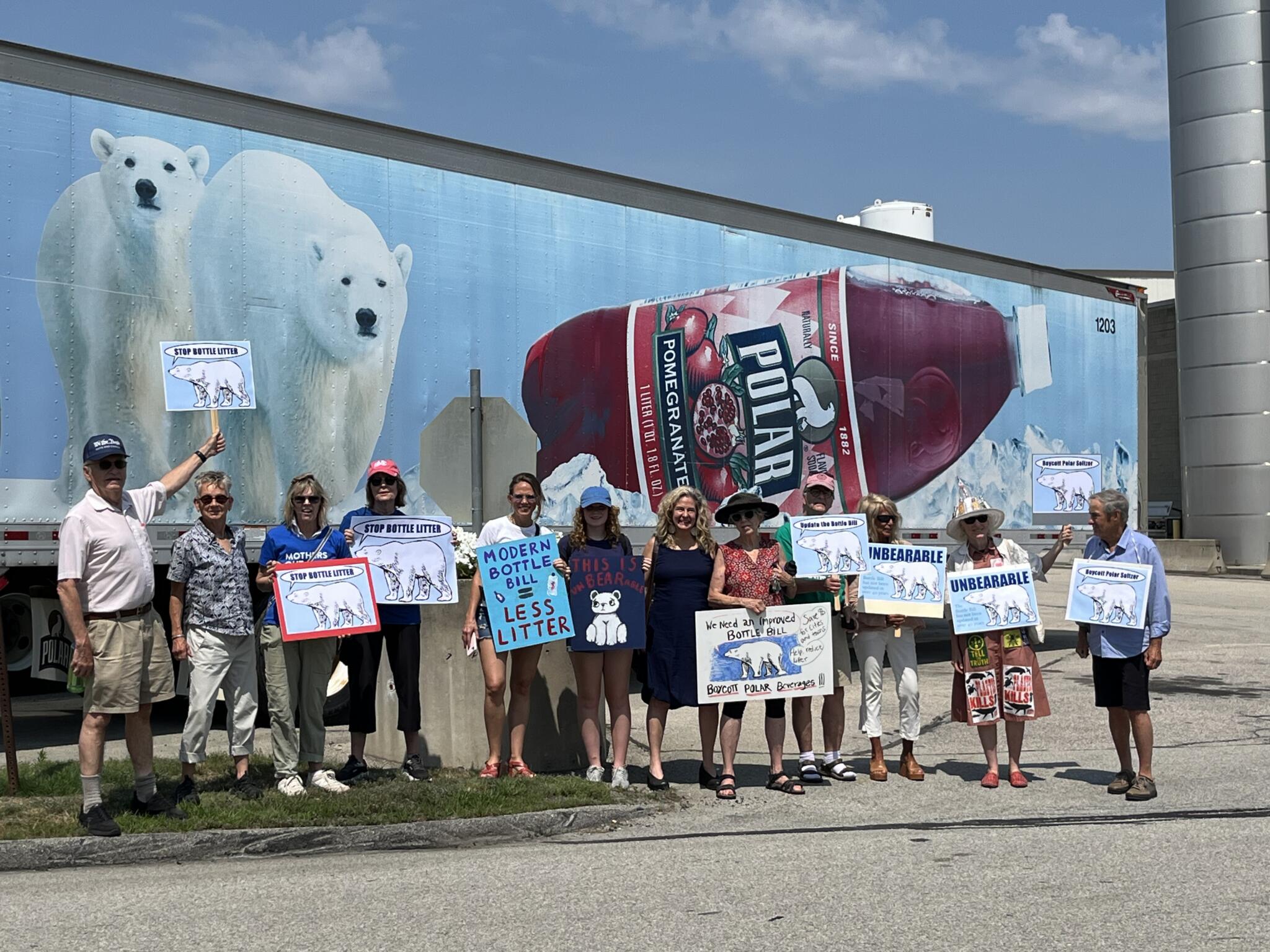
A coalition of environmentalist groups held signs as they rallied outside the company’s headquarters Tuesday to call for a two-month boycott, urging customers not to buy its products through the end of August.
Massachusetts was among the first states to adopt a so-called “bottle bill” in 1983. It requires customers to pay a 5-cent deposit fee when they buy certain beverages, though they get that money back if they return the empty bottle for recycling.
Advocates argue the law is long overdue for an update since so many bottles and cans are never returned, and they’ve pushed — unsuccessfully — for many years to increase the deposit fee to 10 cents and include more types of beverage containers.
Part of the reason these efforts keep failing on Beacon Hill is that companies like Polar are fighting the change over fears it will increase costs for them, said Kirstie Pecci with national nonprofit Just Zero.
“Beverage companies don’t want to pay their fair share for dealing with all these bottles and cans,” Pecci said.
Polar did not respond to WBUR’s request for comment.
Beverage companies like Polar are required to help oversee bottle recycling programs, and they pay a small handling fee for every returned container. They do not have to pay this fee when people recycle bottles on the curb.
Advocates argue 5-cent returns are no longer enough to motivate people to return empty containers. And they say a 10-cent bottle redemption law would put Massachusetts in line with many other states and encourage more people to return their empties. Pecci pointed to Connecticut and Oregon, states that saw a jump in bottle returns after refunds went from 5 cents to 10 cents.
Beyond upping recycling, she said the change would reduce litter and lower curbside recycling costs for cities and towns.
“Governments adopt a bottle bill because it is the most climate-friendly, material-efficient, and cheapest way to refill or recycle your bottles and cans,” she said, adding Massachusetts “should be expanding [its] system and modernizing it.”
Polar has manufacturing facilities in New York, Georgia and Texas. The company’s president and CEO, Ralph Crowley Jr., is treasurer of the American Beverage Association.
The association led a successful effort in 2014 to defeat a ballot measure to increase the bottle bill refund in Massachusetts.
Like similar bills in recent years, Pecci said the legislation is unlikely to advance before the legislative session ends this summer. However, she said, proponents of the bill hope to bring Polar and other industry players to the table to improve their chances in the future.
“No one’s trying to put any of these companies out of business,” she said, “and there’s no reason that this will hurt their bottom line.”
But, she said, the bill would “save cities and towns money, and clean up this litter.”