From vaudeville to era-defining sitcoms, Black comedy has brought us some of our biggest stars and iconic characters. In the book “Black Out Loud,” journalist Geoff Bennett explores how Black comedy has influenced how America sees itself.
Guest
Geoff Bennett, author of “Black Out Loud: The Revolutionary History of Black Comedy from Vaudeville to ’90s Sitcoms.” Co-anchor and co-managing editor of PBS NewsHour.
The version of our broadcast available at the top of this page and via podcast apps is a condensed version of the full show. You can listen to the full, unedited broadcast here:
Part I
AMORY SIVERTSON: Remember sitcoms in the ’90s? You’d sit down with your family or friends on a certain day of the week at a certain time to experience a show together and laugh along to iconic catchphrases that still get repeated to this day, like this one from the show Martin starring Martin Lawrence.
(CLIP PLAYS) You go, girl.
SIVERTSON: These shows also created lasting characters, like the lovable nerd Steve Urkel on Family Matters.
(CLIP PLAYS) Did I do that?
SIVERTSON: Many of those era-defining sitcoms centered around Black families and Black life, and they drew from a tradition of Black comedy that stretches decades into the past through a deep lineage of legendary performers. There was Redd Foxx, known to many for the ’70s sitcom Sanford and Son, but who started as a stand-up comic.
RED FOXX: I could talk about World War II because I don’t know too much about Vietnam, but I know World War II. I’m a veteran. I backed up so far in one battle, I bumped into a general. He said, “Why are you running?” I said, “I’m running because I cannot fly.”
SIVERTSON: There was Dick Gregory riffing here on the baseball player Willie Mays.
DICK GREGORY: I feel so sorry for Willie. I hate to see any baseball player having troubles, because that’s a great sport for my people. That is the only sport in the world where a Negro can shake a stick at a white man and won’t start no riot.
SIVERTSON: These are just a few of the names that helped shape a tradition of iconoclastic, creative, and often fearless comedians, who gave rise to shows that became can’t-miss viewing for kids and grown-ups alike before the turn of the century.
From The Cosby Show to In Living Color, these programs shaped how Black Americans saw themselves. And, as our guest today tells us, they weren’t just about making people laugh. They were about making people see America for what it is, by saying it out loud.
(CLIP PLAYS)
SIVERTSON: I’m Amory Sivertson, in for Meghna Chakrabarti. This is On Point. And this hour, we’re immersing ourselves in the revolutionary history of Black comedy. And joining me is Geoff Bennett.
He’s the co-anchor of PBS NewsHour, and author of the new book, Black Out Loud: The Revolutionary History of Black Comedy From Vaudeville to ’90s Sitcoms. Geoff Bennett, welcome to On Point.
GEOFF BENNETT: It is terrific to be with you. Thanks so much for having me.
SIVERTSON: Absolutely. So I want to start where you start the book, this anecdote from April 15th, 1990.
You’re 10 years old at the time, sitting in your family’s living room, watching TV. The channel is turned to Fox. Married … With Children has just ended, and then you hear this.
(IN LIVING COLOR THEME SONG PLAYS)
SIVERTSON: As you heard, this is the theme song to In Living Color, the sketch comedy show created by Keenen Ivory Wayans. Jeff, take me back to 10-year-old you seeing this show for the first time.
BENNETT: Watching that show, I remember it felt like my brain was exploding. I was in the basement of our South Jersey home with my brother, who’s five years older, and it was, that show was so funny.
It was remarkable in its audacity. I remember at the time, even though I was 10 years old, having this sort of question like, “How did they get away with this? How are they doing this on TV, and where did all these funny people come from? And so since that moment, really, just over the course of my career and working in news and working in television, I had been sitting with this question, and it was, how did all of these groundbreaking Black shows exist on the air at the same time?
How did all of these groundbreaking Black shows exist on the air at the same time?
Not just In Living Color, but A Different World, The Fresh Prince of Bel-Air, Living Single, Martin, Family Matters. Of course, The Cosby Show was on the air still at that point, but that show had launched in the ’80s. And the simultaneity was the point because it meant that you had all of these different visions and versions of Black life on the air at the same time.
It meant that it didn’t have to fall on the shoulders of one show to bear the burden of representing the entirety of Black life, which of course is impossible to do but is so often expected of Black creators. And so that was really the genesis of this book, figuring out how that happened and in talking to the producers and the executives and the actors tied to these shows, realizing I couldn’t responsibly tell the story of the 1990s and ’90s television without starting at the very beginning of Black cultural comedic expression in this country.
And so the book tracks the entire arc.
SIVERTSON: Okay, so we are going to track that arc as well, but sticking with In Living Color for a minute here, watching this cast of mostly people of color doing sketch comedy, what did that sort of unlock for you at that young age of 10 years old?
BENNETT: It was seeing jokes and comedy in a way of expressing oneself that felt familiar, but broadcast to millions.
And so it was seeing the sort of the sort of language and comedy that I would see from my aunts and uncles at a barbecue at my grandparents’ house in Camden, New Jersey, as I was growing up, reflected back. In many ways, I say that these ’90s sitcoms were mirrors. So for Black folks watching these shows, you saw yourself in versions of yourself reflected in ways that felt familiar.
And then for everybody else, they were windows. They were windows into experiences and lives and laughter that they might not otherwise have been familiar with. And In Living Color, what was so specific about that show is that it really transformed authorship. So Keenen Ivory Wayans, he wasn’t just creating a sketch show with Black performers.
For Black folks watching these shows, you saw yourself … reflected in ways that felt familiar.
And then for everybody else … they were windows into experiences and lives and laughter that they might not otherwise have been familiar with.
He built an entire ecosystem where Black writers and directors and actors and choreographers, let’s not forget the Rosie Perez and the Fly Girls and producers, they shaped this creative vision. And so if you were going to do sketch comedy in the ’90s, really the only avenue available to you was SNL.
So Keenen Ivory Wayans had to create an entire talent pipeline for that show, not just the funny members of his family, but he had to go out and find Tommy Davidson and find David Alan Grier and find Jim Carrey. David Spade auditioned for In Living Color and said that when he saw Jim Carrey’s audition, wondered why he even got the phone call, because no one could really do what Jim Carrey does. And so you have all of these now household names. You mentioned the Fly Girls, Rosie Perez, Jennifer Lopez, Carrie Ann Inaba, all came through the Fly Girls because Keenen Ivory Wayans was intentional about making sure that ’90s hip hop was also reflected on that show.
The world of Black sketch is important because it wasn’t just that they were cracking jokes. They were making fun of media portrayals of Black life. They were critiquing real issues happening in this country at the time. And so that show, the comedy operates on multiple levels simultaneously.
SIVERTSON: And we’re gonna talk more about the creation of In Living Color a little later in the hour, but I want to stick with really just the feeling, the buzz around In Living Color at the time that it launched. Do you remember what friends and family were saying about this show at the time?
Was this the sort of whatever the elementary school version of the water cooler is? What was the talk about this show and what it meant to people?
BENNETT: Oh, I remember the day after Kris Kross performed on In Living Color the kids in my middle school, they were all wearing their clothes backwards. And it was because Kriss Kross, if anybody remembers that group, that was their trademark.
They wore their clothes backwards, and that was how they performed. And so it was hilarious, I went to a diverse middle school, high school, to see all of these kids from all different walks of life who’ve just watched the same show the night before and felt compelled to show up dressed as these performers they had watched last night.
And what it speaks to was this time back when we had a monoculture, when people were watching the same thing. You referenced the idea that people would sit down in their living rooms and all watch these shows together. When I would go to colleges and talk about this book this past spring, I would have to explain this to younger audiences, that there was a time when tens of millions of people would all have these common experiences and have these shared reference points.
And there are a million reasons why the social cohesion is not what it used to be. But I think a big reason is our media consumption habits, that people are watching different things. We exist in our own different silos. But back then, certainly watching that show and Homey D. Clown or Fire Marshal Bill or like I’m saying, Kriss Kross or any one of the musical performers who would come on that show, the very next day, Monday, either whether it was at the office water cooler or at the lockers near in your high school or middle school, people were having conversations about what they were watching.
Social cohesion is not what it used to be. But I think a big reason is our media consumption habits, that people are watching different things.
SIVERTSON: And beyond showing up at school with your clothes on backwards, do you feel like watching these shows shaped you in some way? Were you finding yourself wanting to try your hand at stand-up, or how did you feel this comedy shaping you as a person coming up in the age of these, really this golden era of sitcoms?
BENNETT: Yeah, I never felt compelled to try stand-up, and at the time, these shows were funny. They were entertaining. They were appointment television. They weren’t necessarily trying to do social commentary or cultural work. I think that comes with the looking back at the collective impact, and you see, wow, what did it mean to have all of these shows on the air simultaneously?
And what did that mean for the culture? At the time, they were just, I always just felt like they were amazing cultural products and really funny TV shows. And speaking to the producers and the actors who were connected to them, to a number, they all said they were just really focused on making sure that they had a funny show week after week and that the shows were doing well in the ratings.
They weren’t necessarily focused on the cultural impact and import of them, but that came much later.
SIVERTSON: Okay. And so of course, you’re anchor of PBS NewsHour by day. You’ve had a very accomplished career as a political reporter. Why a book about Black comedy?
BENNETT: I just thought that there was a missing chapter in the story of American culture, and again, it was this question of how did all of this happen?
How did all of these shows exist on the air simultaneously? And what I discovered, it was the culmination of a story that started generations earlier, certainly with enslaved people using humor to survive and Black performers navigating minstrelsy, and we can talk about all of that later.
Part II
SIVERTSON: I want to go back to the 1870s now to a Black performer who was peaking on the vaudeville stage named Billy Kersands. What was he known for in his performances?
BENNETT: Billy Kersands was the top performer of his day. And what’s so interesting about the origins of Black comedic expression is that Black comedy in America didn’t begin with Black people controlling the joke.
It started with white performers in blackface. And in the early 19th century, minstrelsy became America’s first real mass entertainment phenomenon, and it was built on caricatures of Black life that were meant to reassure white audiences about the country’s racial order. And so you had Black people portrayed as lazy and ignorant and childlike and hypersexual and really just content in their oppression.
Black comedy in America didn’t begin with Black people controlling the joke.
It started with white performers in blackface.
And these performances, and Billy Kersands was one of these performers, they really reduced Black humanity to a collection of stereotypes that could be laughed at without empathy. And the tragedy and the irony, too, of this is that minstrelsy also helped invent the language of American popular entertainment.
So these sketches, these songs, even the comic timing and the touring circuits that defined these minstrel shows became the blueprint for vaudeville, for radio, for TV, and eventually the sitcom. And so with Billy Kersands, he was the superstar in his day. He was one of the highest paid Black performers of the 19th century.
But he was working inside this system of minstrelsy built on caricature. And so what’s really striking about him is the duality. He had to wear the mask, the blackface. But within that, you can see timing, you can see the musicality, you can see the individuality that becomes the foundation of modern comedy.
And so he represents this tension in early Black comedy, which was, how do you entertain an audience that doesn’t fully see your humanity and does not want to see your humanity? So he didn’t have the freedom to tell the truth outright. And so with him, and it’s really interesting doing the research and going back and watching some of these performances, the comedy and his humanity lives in suggestion.
It lives in rhythm, and it lives in the sense of what could be expressed without being said.
SIVERTSON: Yeah. And it’s interesting both with Kersands and then with Bert Williams. As you said, these are Black performers performing in blackface to both white and Black audiences. So what made Black audiences receptive at all to characters like the ones that Kersands and Bert Williams were portraying?
BENNETT: Because that was the only form of entertainment available. And no figure better captures the contradictions of early Black comedy better than Bert Williams. He was born in the Bahamas. He was raised in California. Williams becomes one of the most celebrated entertainers in America.
He was also a really incredible tragedy. He was unquestionably brilliant. His timing, his physical expressiveness. He had this emotional subtlety that influenced generations of performers. I think W.C. Fields was among those who admired him. Charlie Chaplin called him one of the funniest men he’d ever seen.
Yet, to achieve that success, he had to walk on stage each night wearing blackface, even though he was Black. And that image is jarring, but it really reveals the impossible choices that Black entertainers faced. And to your question, audiences had to be conditioned by decades of minstrelsy to expect that, to expect these exaggerated caricatures of Black life.
And they weren’t widely accepted by Black audiences. But again, that was the form of entertainment available and audiences Black and white became conditioned and habituated to consume that as entertainment.
SIVERTSON: I want to jump ahead a little bit to Hattie McDaniel, someone else you write about in the book, who’s most widely known for playing the maid to the O’Hara family in Gone With the Wind.
But she was actually best known before that as a comedic actress. Tell us more about her comedic style.
BENNETT: She was this gifted performer with impeccable comic timing. She had a commanding screen presence. Remarkable range. And I think if Bert Williams embodied the impossible compromises that Black comedians faced on stage, Hattie McDaniel represented those same compromises in Hollywood.
If Bert Williams embodied the impossible compromises that Black comedians faced on stage, Hattie McDaniel represented those same compromises in Hollywood.
As you mentioned, she was the first Black person to win an Academy Award for playing a mammy in Gone with the Wind. She famously said, “I’d rather play a mammy or play a maid than be one.” But it was this historic achievement, but it was wrapped in this real painful contradiction. She won the industry’s highest honor for portraying a character rooted in one of its oldest racial stereotypes.
And so like many Black actors of her generation, she didn’t have the luxury of choosing between stereotypical roles and authentic ones. The authentic roles didn’t exist. Hollywood’s vision of Black life at that time was confined to maids and cooks and servants and comic sidekicks. And the tension that has followed her, I think, has really followed Black entertainers ever since.
Was she reinforcing stereotypes by playing these roles, or was she making the most of a system designed to exclude her? And I think the answer to that question is really both. She worked within a deeply racist industry while becoming one of its most accomplished performers. I think her success really exposed the barriers that Black artists faced, even as they proved that they could excel despite those barriers.
SIVERTSON: Another person you write about is Moms Mabley, which is a character made up by the comedian Loretta Mary Aiken. She was this sharp-witted woman in grandmotherly garb that Aiken based, that she based off of her own grandmother. So we have a clip of her here from the Historic Films Archive.
It’s a performance in 1969 in which her character is talking about the much older man that she married.
MOMS MABLEY: Old. Older than his birthday. And ugly. He was so ugly, honest to goodness, he hurt my feelings. That’s right. I told him the other night, I said, “Let’s sit down and have a talk. Somebody’s got to die because I can’t put up with this.”
SIVERTSON: So Geoff, the character of Moms Mabley was able to be someone and say things about age and ugliness, but also about race and sexism on stage that perhaps Loretta Mary Aiken couldn’t have or wouldn’t have.
Is that fair to say?
BENNETT: Oh, it’s more than fair to say. That is such a great point. I think Moms Mabley is one of the most underrated figures in American entertainment. As you say, she became famous by playing this elderly woman in a floppy hat and a house dress, but that character gave her enormous freedom.
She could say things that younger women, and certainly Black women, were not expected to say publicly. And as you heard in that clip, she joked openly about relationships and sex, and even politics and power. Moms Mabley was doing social commentary long before people had the language for it.
And what’s remarkable is that she’s often remembered simply as an old lady telling jokes, but she was one of the sharpest social commentators of her era. She used humor to expose double standards about age and gender. When she’s talking about old men and old women, she’s really asking this question of who gets to the who gets to be desired and who gets to be seen as desirable and who gets to tell the story?
And another book, another point I make in the book is that Black comedy has often created space for people who were marginalized even within Black America, and Moms Mabley centered older Black women decades before television or Hollywood thought that they deserved attention.
Black comedy has often created space for people who were marginalized even within Black America.
SIVERTSON: So I want to fast-forward a bit to another comedian.
We have so many to talk about, and so I’m just trying to give us the sweeping history the abridged version of the sweeping history that you give us in the book. And I want to talk about Dick Gregory, because he took a different approach. This, his comedy didn’t shy away from talking about racism either, but he was doing it under his own name this time, and he did it in a way that seemed palatable, maybe more palatable to white audiences, which is perhaps why you call him the Jackie Robinson of comedy.
Can you say more about that?
BENNETT: Dick Gregory, boy, he fundamentally changed what a comedian could be. Before Dick Gregory, stand-up comedians generally stayed away from controversial subjects if they wanted mainstream success, and Gregory walked directly into them. He understood that laughter lowers people’s defenses, and once people laughed, they were willing to listen to difficult truths about race and poverty and politics, and even America itself.
And that’s a model you can still see in comics from Chris Rock to Dave Chappelle. And one of my favorite things about Dick Gregory is that he refused to believe that comedy and seriousness were opposites. He thought that comedy was one of the most serious art forms because it forced people to confront what could be uncomfortable realities.
So I think in many ways, Dick Gregory anticipated today’s conversations about comedy as social commentary decades before they were even mainstream.
Dick Gregory anticipated today’s conversations about comedy as social commentary decades before they were even mainstream.
SIVERTSON: Yeah, and we have a clip that speaks to some of that, because he was also an activist in practice. And you hear sometimes the pain that comes with trying to speak authentically as a Black man while also walking a line with white audiences.
Here’s him speaking on the 1961 ABC program Walk in My Shoes, where he examined changing racial relationships.
DICK GREGORY: I think the white man is laughing at the same thing a person laughs at when they slam their hand in the car door and when it’s about to heal. The problem is almost over. As Martin Luther King said, “Jim Crow is dead in the South. It’s just a matter of how expensive they want to make the funeral.” You can always laugh at problems, that’s right. Everyone in the whole world know this is wrong. So then you can make humor out of this in a manner you enlighten people on just what’s going on.
SIVERTSON: So Geoff, sticking with this theme of authenticity and fearlessness in presenting yourself authentically, we’ve gotta talk about Richard Pryor, who was a man of many firsts, but he was unapologetic about calling out racism. He was profane as I’ll get at. He didn’t shy away from being his authentic self, which, included drugs and all. And we have a clip here from Richard Pryor in concert from 1979.
RICHARD PRYOR: I had the nerve to pull out some cocaine at the dining room table.
She had never seen me do any, right? And she looked at me a long time. She said, “Boy, what’s that you putting up your nose? I said, “Cocaine, Mama.” Jesus, God, take me now, Lord. Take me now. God, save my life. Take me, God. I said, “Mama, don’t do that [expletive]. Look, I’m throwing [expletive] out, Mama. Look, $1,600 worth of down the drain, Mama.” She found out how much it cost. She said, “Your dumb [expletive]. You could’ve sold some of that back to the man you got it from!”
SIVERTSON: Geoff, I feel like the bleeps, they’re emblematic. They’re very telling. And you write about how Pryor was a huge influence on so many comedians, including Eddie Murphy, and his style of comedy was, you might say a huge thorn in the side to someone like Bill Cosby, who was a very different kind of comedian.
So can you explain that comedic ideological difference?
BENNETT: Richard Pryor is, as far as I see it, the single most influential stand-up comedian in American history. People often focus on his language or how provocative he was, but I think what made Pryor revolutionary wasn’t his profanity, it was his honesty.
Richard Pryor is, as far as I see it, the single most influential stand-up comedian in American history.
He made himself the subject. And to say that now, it’s like most comedians are, try to focus on being authentic and trying to bring their personal life to the stage. That really wasn’t the case at the time when Richard Pryor was at his peak. His fears, his addictions, his mistakes, his contradictions, his crazy childhood, his relationships, all of that became material, and the vulnerability completely changed stand-up.
And before Pryor, comedians, to include Bill Cosby in the early days, they often stood above the audience and commented on the world. Pryor invited audiences inside his own life first. And so he also insisted, as we talk about Black comedy, he also insisted that the Black experience wasn’t some sort of niche topic, that his stories were deeply rooted in Black America, but they also revealed emotions that everybody understood.
Shame and love and fear and ambition and loneliness. And so one of the central ideas of this book, Black Out Loud, is that the specificity creates universality. And Richard Pryor proved that you don’t become universal by watering down your experience. You become universal by telling the truth about it.
And that is why every major comedian that I interviewed for this book, and I would argue every major comedian working today, owes something to Richard Pryor, whether they realize it or not.
SIVERTSON: Okay, so going back to Bill Cosby for a second. In terms of representing the authentic self when to water down, when to whitewash, some people found Cosby’s approach to comedy whitewashed or elitist.
But you could really feel the difference in approach that he took in things like this famous scene from an episode of The Cosby Show featuring a conversation between Cosby and his son on the show, Theo.
THEO: Maybe I was born to be a regular person and have a regular life. If you weren’t a doctor, I wouldn’t love you less, because you’re my dad. And so instead of acting disappointed because I’m not like you, maybe you can just accept who I am and love me anyway because I’m your son.
COSBY: Theo, that’s the dumbest thing I’ve ever heard in my life. It’s no wonder you get D’s in everything. Now, you are afraid to try because you’re afraid that your brain is going to explode and it’s gonna ooze out of your ears. Now, I’m telling you, you are going to try as hard as you can, and you’re gonna do it because I said so. I am your father. I brought you in this world, and I’ll take you out.
SIVERTSON: Geoff, it feels to cater to white audiences or not to cater to white audiences really is one of the central themes of the book and embodies the trajectory of Black comedy.
BENNETT: And look, for generations, Black Americans were told that acceptance depended on presenting the right image, being educated, well-spoken, professionally successful. And that strategy wasn’t born out of vanity, it was born out of survival, and we can talk about, more about that on the other side of the break.
For generations, Black Americans were told that acceptance depended on presenting the right image, being educated, well-spoken, professionally successful. And that strategy wasn’t born out of vanity, it was born out of survival.
Part III
SIVERTSON: We’ve made our way back to the ’90s now specifically to talk again about In Living Color on Fox, that sketch comedy show that had, as you put it, had this ‘for us, by us’ spirit.
And we talked about your personal experience watching the show. I’d love for you to say more about what was in the air, in the culture, and in comedy that primed the pump for a show like this?
BENNETT: My first interview for this book was with Barry Diller, who launched the Fox Broadcast Network.
And so to the question of what was in the ether that led to all of this, it really was a business decision that sparked this creative renaissance in the ’90s. So Diller told me that when he launched the Fox Broadcast Network, he looked across the landscape of evening sitcoms, and what the three major networks, NBC, ABC, CBS, were putting on the air, as he said, was virtually indistinguishable.
And so he wanted Fox to be different. He wanted it to be bold and brash and skew younger. And when word had gone out in Hollywood, one of the scripts that he got the working title was Not the Cosby Show. Because, enterprising TV producers aren’t gonna make it hard for a Hollywood executive to green-light their show.
So it was, “Look, if you want something that’s not on NBC and not the number one show, this is Not the Cosby Show.” That show goes on to become Married … With Children. And when Married … With Children finds success, that becomes the formula, the sort of counter-cultural formula that green-lights everything else.
So you get a show like Cops, you get The Simpsons, and you also get In Living Color. Keenen Ivory Wayans had just come off of the success of the film I’m Gonna Git You Sucka, and was given the access and the agency and the funding to put, again, all of the funny people in his family on television, and then go out and find incredible other comics to join him.
And growing up in the family that he did, Keenen Ivory Wayans, he often said that his writers’ room was not a democracy, it was a dictatorship, and that for any sketch to get cleared to basically make it onto that show, it had to make him laugh. And his standards were high as a writer and a producer, and so that’s why the first, certainly the first, I’d say, three seasons of In Living Color are just unmatched.
And if you watch it today, it still holds up. I would argue, though, that a show like that could not get made today. David Alan Grier has said that there’s no way in the world a show like that could be on the air, in large part because back then, if you were to watch it and were offended, you would have to write a letter.
And good luck finding where to send your letter to, and hoping that it’s received and read. Whereas now, anybody who has a complaint, whether it’s in good faith or not, can go on social media, and there are all these sorts of, the outrage machine is what it is these days in a way that it wasn’t back in the ’90s when that show was on the air.
SIVERTSON: Yeah. You quote the head writer of the show in the book, who says that one of the things that was seminal with In Living Color was that Black people enjoyed laughing at Black people, that Black audiences were strong enough to laugh at themselves. Did that resonate with you?
BENNETT: It did. It did. And it wasn’t until much later that I realized one of the reasons that was because of the authenticity.
It wasn’t just that there were Black performers, it was that that show had Black writers in the writers’ room. Of course, Keenen Ivory Wayans was at the head of it. And so to your point about it being ‘for us, by us,’ and obviously Black people had been on TV long before the ’90s. But what is different about the ’90s, and certainly different about In Living Color, is the level of authorship, and that comes through in the work product.
And that is why I think it resonated so deeply and so differently.
SIVERTSON: I wanna hear another clip here from In Living Color. This is the character Homey D. Clown, who’s one of the most successful sketches of the show. Let’s listen to a little bit.
(CLIP PLAYS)
SIVERTSON: Geoff, Homey to me just feels like the anti … minstrel portrayal.
BENNETT: I had not thought of it that way, but you’re absolutely right.
He was a man, Homey was a man trapped in a role that demanded he smile. That demanded that he perform and make everybody else comfortable, and instead he rebelled. He refused to play the part expected of him. He used a sock, filled with who knows what it was filled with, to whack anybody who crossed his path, and the joke wasn’t that he was angry, it was that he rejected the expectation that he should always be cheerful and accommodating and non-threatening.
SIVERTSON: … The book also tells the story of so many shows from the ’90s. A Different World, which was a spinoff of The Cosby Show, also Family Matters, Martin, and a favorite of mine from this era.
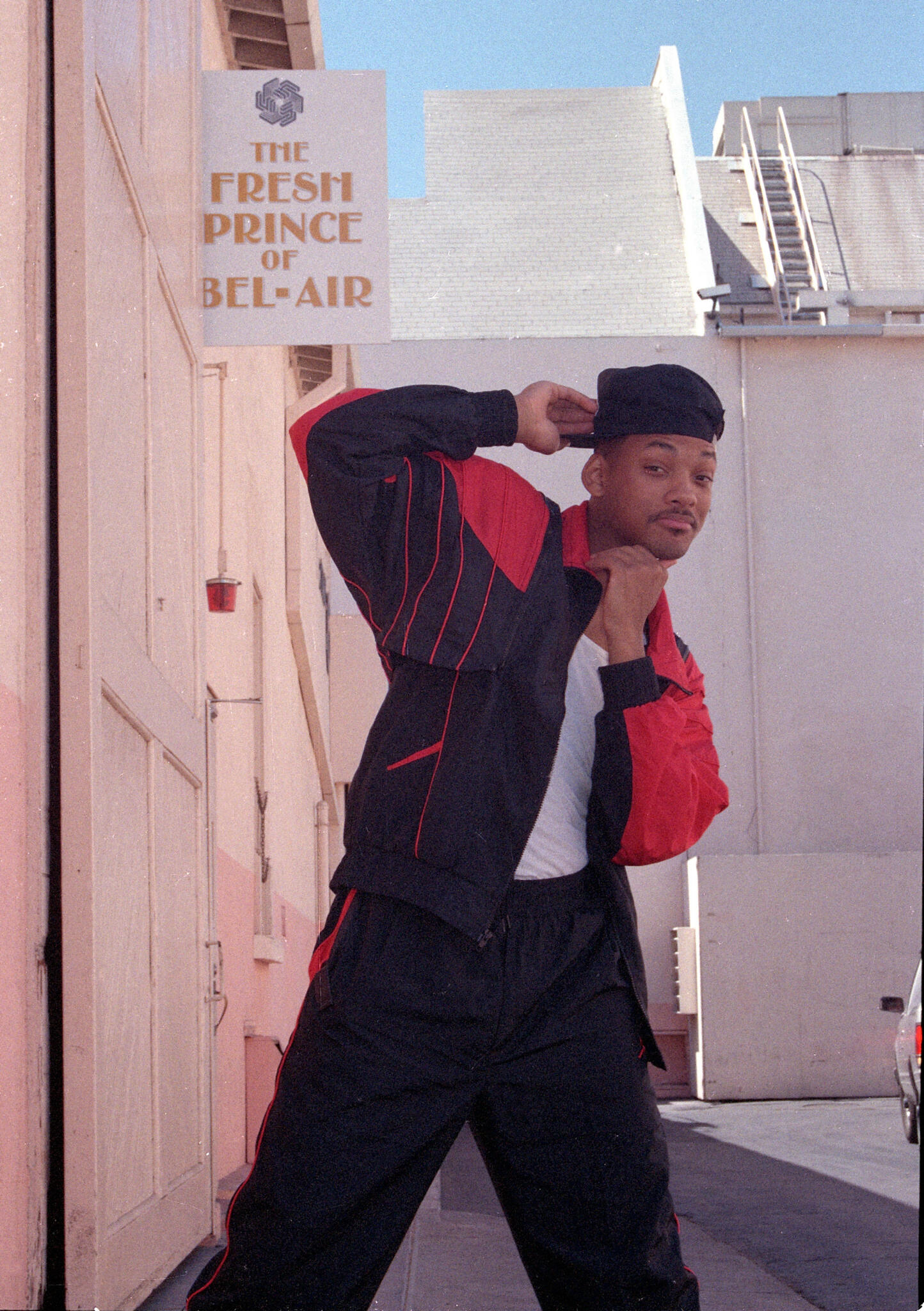
(FRESH PRINCE OF BEL-AIR THEME PLAYS)
SIVERTSON: So I was thinking about The Fresh Prince of Bel-Air a lot while reading your book and preparing for this conversation. I could sing that song in my sleep. I think I’ve seen every single episode of The Fresh Prince of Bel-Air, and I had never thought of it before as a little different from The Cosby Show because in The Cosby Show, they’re depicting this upper middle-class family.
You’ve got the doctor father, the lawyer wife exemplifying excellence and Fresh Prince had that aunt and uncle character, the [Banks family], these wealthy characters, but they juxtaposed it with Will Smith’s character mostly maintaining his authentic and lower class background. And so I guess the little epiphany that I had watching this is this to me felt like an example of a show that isn’t saying, “This is what a Black family looks like,” or, “This is what a Black family looks like,” but holds both in one show.
BENNETT: Yeah, and to your point about the theme song, on my book tour, I started every book tour conversation by playing the theme song and seeing who could get all the lyrics.
SIVERTSON: Smart man. I’d be one of them.
BENNETT: Yeah, same here. It was remarkable because again, no matter your background, where you grew up, people were watching that show and having the same experience, and that matters so much culturally.
But yeah, that show, it represented two authentic Black experiences that had rarely shared the same screen, and that mattered because the show challenged the idea that there was one right way to be Black. Carlton loved Tom Jones. Who doesn’t love Tom Jones? He wore sweater vests.
He embraced elite institutions. He was much like the Keaton character on oh, gosh, that other sitcom is escaping my, the name of it. … But Will loved hip-hop, he loved basketball, he carried himself with swagger, and they constantly teased each other.
But underneath those jokes was this larger conversation about class and culture and belonging. And the show asked questions that I think Black folks were already asking. Who gets to define Black authenticity? Can you be privileged and still be connected to your community? Is success something that you inherit or is it something you build?
And so it balanced comedy with, I think, remarkable emotional depth. I interviewed Karyn Parsons, who played Hilary Banks. And she said a couple of things she said were pretty remarkable. One was that she didn’t initially understand the show to be a hit because as far as she was concerned, The Cosby Show was the only game in town.
And it wasn’t until she said she was in a supermarket and opened the back of a TV Guide. I guess we should explain TV Guide, for people who are unfamiliar, was a small magazine, a physically small magazine that would like chronicle what was happening in TV, but in the back of the TV Guide it would tell you the top-rated shows of the week.
And Karyn said that she saw Fresh Prince listed and couldn’t believe it. And that, over time, even her character, the Hilary Banks character, which at the time was understood to be spoiled and bratty and above it all, but that younger audiences, she said, when they watch that show now on streaming or in syndication, they see Hilary Banks as somebody who is just really confident and knows what she wants and goes out and gets it.
And so it’s really interesting to see how that show holds up and how it resonates differently across different generations these days.
SIVERTSON: And on this point of representation, I was really struck by a point that Jaleel White, the actor who played Steve Urkel on Family Matters made to you that characters in Black shows are often expected to represent Black people, be representative of Black people in a way that white characters aren’t, as you talked about.
But, he put it as, Seinfeld doesn’t speak for all Jewish people, Friends doesn’t speak for all white people, but no one ever thought that they should or that they did. And that Black characters are not examined with that same lens. So as someone who grew up watching these shows, what did you glean from them about who you were or who you could be or who you actually wanted to be?
BENNETT: The sense that you could do all of it and be all of it, and that really the possibilities were limitless. And that wasn’t just reflected in television. It was, that was largely instilled in me by my parents and by my community growing up. But there was something, I think, deeply affirming about just seeing the range of Black life on TV at that time, whether it was the comic genius and chaos of a Martin Lawrence or four young professional women figuring out how to navigate life and love on Living Single.
Or Arsenio. Arsenio obviously wasn’t a sitcom but king of late night, at least culturally as far as I’m concerned. Or Showtime at the Apollo, which was in syndication at that time. Even daytime TV. Oprah, let’s not forget, was the king of daytime, or queen of daytime TV. So just across the board culturally to see yourself reflected in so many different ways, in a way that doesn’t exist now.
Or I guess you could argue it exists differently. It doesn’t have the same resonance because, again, people are in their own silos, and people don’t, no sort of cultural product cuts through the mainstream in the way that it did back then. It was just so affirming and, I think, impactful for so many of us who grew up in that generation.
SIVERTSON: Yeah. And speaking of Living Single, this show about four friends, really six friends, but four women living in New York. I wanna sneak in one more clip here. We have a clip from an episode featuring the characters Maxine, the lawyer, and her on-again, off-again love interest, Kyle.
(CLIP PLAYS)
KYLE: So wait, let me get this straight. You want me to be your man?
MAXINE: Just for tonight, just through dinner.
KYLE: Do you know what this could do to my reputation?
MAXINE: Yes. And you can pay me later.
KYLE: You got an awfully smart mouth for somebody who’s so desperate.
MAXINE: I am not.
KYLE: I see an ex-boyfriend, a fine fiancé and a spinster.
MAXINE: Okay, I’ll give you anything you want. Name your price.
KYLE: Oh, come on, Max, I’m disappointed. Now look, I know we may go off on each other every now and again, but we’re friends, right? And you in trouble. Baby, of course I’ll help you out.
MAXINE: Thanks, Kyle. I owe you.
SIVERTSON: So Geoff, you write about Maxine Shaw, the character of Maxine Shaw, attorney-at-law, and just the powerhouse of a figure that she was.
And you cite all of these people who were influenced just by that one character from Congresswoman Ayanna Pressley to Kamala Harris. And it made a comment that you made earlier in the book or a statement that you made earlier in the book really click for me when you suggest that without Black comedians, there might not have been an opening for figures even outside of comedy or at least that we think of as being outside of comedy, Colin Powell or Barack Obama or even you.
So how did characters like Maxine Shaw and the others that we’ve talked about shape people in a way that we might not expect?
BENNETT: Yeah. The Maxine Shaw character in particular is important. There’s an entire lane of academic research that looks at the Maxine Shaw effect, and it speaks to the number of women, Black women in particular, who were encouraged or influenced to go into high-powered positions because they were able to see Maxine Shaw attorney-at-law do that on that show.
And Maxine wasn’t simply the Black lawyer. She was competitive, she was funny, and she was ambitious and vulnerable and flawed. And there’s something important about, again, seeing that reflected if you happen to be Black and for other people to see that play out because I think the culture has a way of pushing our politics.
And there’s a durability to our culture that does not exist in our politics. Would we have had marriage equality in this country as early as we did were it not for a show like Will & Grace or for an Ellen DeGeneres being so public about her life? You could argue that wouldn’t have been the case.
You could argue that there wouldn’t have been, again, a Colin Powell or even a President Barack Obama were it not for The Cosby Show cementing these ideas of ambitious and successful Black folks that happened to be the number one show on television for, I think it’s fair to say, almost a decade.
And that’s why these shows, I think, were important on a cultural level. It wasn’t just that they were funny, but they were also cementing in the culture’s imagination about the full complexity and the full possibility of Black life.
SIVERTSON: You spent four years writing this book, Geoff, and I’m curious what learning about and writing about and revisiting Black comedy through the years for this book taught you about yourself.
BENNETT: I think what it taught, even though I’ve covered national politics, I’ve always really been focused on the cultural story because I think cultural criticism and understanding what we laugh at and what we enjoy and what we like to watch and what we consume it really tells us about who we are as a country.
And so focusing on Black comedy from enslaved people joking in secret to performers navigating minstrelsy to Moms Mabley talking about aging to Dick Gregory challenging America to Richard Pryor exposing human vulnerability, I think the central mission hasn’t changed. There’s certainly a through line, and it’s that Black comedy in particular has always helped Americans understand who they are, sometimes before they were ready to hear it.
The first draft of this transcript was created by Descript, an AI transcription tool. An On Point producer then thoroughly reviewed, corrected, and reformatted the transcript before publication. The use of this AI tool creates the capacity to provide these transcripts.